 Jesuit Father Thomas Reese has published an interesting piece over at NCRonline entitled “Women Deacons? Yes. Deacons? Maybe.” I have a lot of respect for Fr. Tom, and I thank him for taking the time to highlight the diaconate at this most interesting time. As the apostolic Commission prepares to assemble to discuss the question of the history of women in diaconal ministry, it is good for all to remember that none of this is happening in a vacuum. IF women are eventually ordained as deacons in the contemporary Church, then they will be joining an Order of ministry that has developed much over the last fifty years. Consider one simple fact: In January 1967 there were zero (0) “permanent” deacons in the Latin Rite of the Catholic Church (the last two lived and died in the 19th Century). Today there are well over 40,000 deacons serving worldwide. By any numerical measure, this has to be seen as one of the great success stories of the Second Vatican Council. Over the last fifty years, then, the Church has learned much about the nature of this renewed order, its exercise, formation, assignment and utilization. The current question, therefore, rests upon a foundation of considerable depth, while admitting that much more needs to be done.
However, Father Reese’s column rests on some commonly-held misperceptions and errors of fact regarding the renewal of the diaconate. Since these errors are often repeated without challenge or correction, I think we need to make sure this foundation is solid lest we build a building that is doomed to fall down. So, I will address some of these fault lines in the order presented:
- The“Disappearance” of Male Deacons
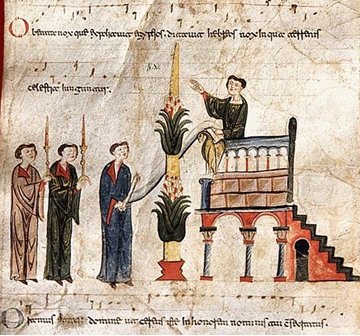 Father states that “[Women deacons] disappeared in the West around the same time as male deacons.” On the contrary, male deacons remained a distinct order of ministry (and one not automatically destined for the presbyterate) until at least the 9th Century in the West. This is attested to by a variety of sources. Certainly, throughout these centuries, many deacons — the prime assistants to bishops — were elected to succeed their bishops. Later in this period, as the Roman cursus honorum took hold more definitively, deacons were often ordained to the presbyterate, leading to what is incorrectly referred to as the “transitional” diaconate. However, both in a “permanent” sense and a “transitional” sense, male deacons never disappeared.
- The Renewal of Diaconate as Third World Proposal
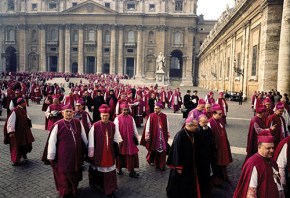 Father Tom writes that his hesitancy concerning the diaconate itself “is not with women deacons, but with the whole idea of deacons as currently practiced in the United States.” (I would suggest that this narrow focus misses the richness of the diaconate worldwide.) He then turns to the Council to provide a foundation for what follows. He writes, “The renewal of the diaconate was proposed at the Second Vatican Council as a solution to the shortage of native priests in missionary territories. In fact, the bishops of Africa said, no thank you. They preferred to use lay catechists rather than deacons.” This statement simply is not true and does not reflect the history leading up to the Council or the discussions that took place during the Council on the question of the diaconate.
 As I and others have written extensively, the origins of the contemporary diaconate lie in the early 19th Century, especially in Germany and France. In fact there is considerable linkage between the early liturgical movement (such as the Benedictine liturgical reforms at Solesmes) and the early discussions about a renewed diaconate: both stemmed from a desire to increase participation of the faithful in the life of the Church, both at liturgy and in life. In Germany, frequent allusion was made to the gulf that existed between priests and bishops and their people. Deacons were discussed as early as 1840 as a possible way to reconnect people with their pastoral leadership. This discussion continued throughout the 19th Century and into the 20th. It became a common topic of the Deutschercaritasberband (the German Caritas organization) before and during the early years of the Nazi regime, and it would recur in the conversations held by priest-prisoners in Dachau. Following the war, these survivors wrote articles and books on the need for a renewed diaconate — NOT because of a priest shortage, but because of a desire to present a more complete image of Christ to the world: not only Christ the High Priest, but the kenotic Christ the Servant as well. As Father Joseph Komonchak famously quipped, “Vatican II did not restore the diaconate because of a shortage of priests but because of a shortage of deacons.”
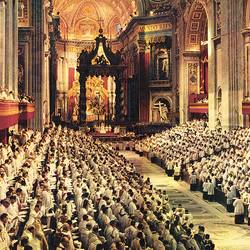 Certainly, there was some modest interest in this question by missionary bishops before the Council. But it remained largely a European proposal. Consider some statistics. During the antepreparatory stage leading up to the Council (1960-1961), during which time close to 9,000 proposals were presented from the world’s bishops, deans of schools of theology, and heads of men’s religious congregations, 101 proposals concerned the possible renewal of the diaconate. Eleven of these proposals were against the idea of having the diaconate (either as a transitional or as a permanent order), while 90 were in favor of a renewed, stable (“permanent”) diaconate. Nearly 500 bishops from around the world supported some form of these 90 proposals, with only about 100 of them from Latin America and Africa. Nearly 400 bishops, almost entirely from both Western and Eastern Europe, were the principal proponents of a renewed diaconate (by the way, the bishops of the United States, who had not had the benefit of the century-long conversation about the diaconate, were largely silent on the matter, and the handful who spoke were generally against the idea). Notice how these statistics relate to Father Tom’s observation. First, the renewed diaconate was largely a European proposal, not surprising given the history I’ve outlined above. Second, notice that despite this fact, it is also wrong to say that “the African bishops said no thank you” to the idea. Large numbers of them wanted a renewed diaconate, and even today, the diaconate has been renewed in a growing number of African dioceses.
One other observation on this point needs to be made. No bishop whose diocese is suffering from a shortage of priests would suggest that deacons would be a suitable strategy. After all, as we all know, deacons do not celebrate Mass, hear confessions or anoint the sick. If a diocese needed more priests, they would not have turned to the diaconate. Yes, there was some discussion at the Council that deacons could be of assistance to priests, but the presumption was that there were already priests to hand.
In short, the myth that “the diaconate was a third world initiative due to a shortage of priests” simply has never held up, despite its longstanding popularity.
- Deacons as Part-Time Ministers
Father cites national statistics that point out that deacons are largely unpaid, “most of whom make a living doing secular work.” “Why,” he asks, “are we ordaining part-time ministers and not full-time ministers?”
 Let’s break this down. First, there never has been, nor will there ever be, a “part-time deacon.” We’re all full-time ministers. Here’s the problem: Because the Catholic Church did not have the advantage of the extensive conversation on diaconate that was held in other parts of the world, we have not fully accepted the notion that ministry extends BEYOND the boundaries of the institutional church itself. Some of the rationale behind the renewal of the diaconate in the 19th Century and forward has been to place the Church’s sacred ministers in places where the clergy had previously not been able to go! Consider the “worker-priest” movement in France. This was based on a similar desire to extend the reach of the Church’s official ministry outside of the parish and outside of the sanctuary. However, if we can only envision “ministry” as something that takes place within the sanctuary or within the parish, then we miss a huge point of the reforms of the Second Vatican Council and, I would suggest, the papal magisterium of Pope Francis. The point of the diaconate is to extend the reach of the bishop into places the bishop can’t normally be present. That means that no matter what the deacon is doing, no matter where the deacon is working or serving, the deacon is ministering to those around him.
We seem to understand this when we speak about priests, but not about deacons. When a priest is serving in some specialized work such as president of a university, or teaching history or social studies or science at a high school, we would never suggest that he is a “part-time” minister. Rather, we would correctly say that it is ALL ministry. Deacons take that even further, ministering in our various workplaces and professions. It was exactly this kind of societal and cultural leavening that the Council desired with regard to the laity and to the ordained ministry of the deacon. The bottom line is that we have to expand our view of what we mean by the term “ministry”!
- “Laypersons can do everything a deacon can do“
Father writes, “But the truth is that a layperson can do everything that a deacon can do.” He then offers some examples. Not so fast.
 Not unlike the previous point, this is a common misperception. However, it is only made if one reduces “being a deacon” to the functions one performs. Let’s ponder that a moment. We live in a sacramental Church. This means that there’s more to things than outward appearances. Consider the sacrament of matrimony. Those of us who are married know that there is much, much more to “being married” than simply the sum of the functions associated with marriage. Those who are priests or bishops know that there is more to who they are as priests and bishops than simply the sum of what they do. So, why can’t they see that about deacons? There is more to “being deacon” than simply the sum of what we do. And, frankly, do we want priests to stop visiting the sick in hospitals or the incarcerated in prisons simply because a lay person can (and should!) be doing that? Shall we have Father stop being a college professor because now we have lay people who can do that? Shall we simply reduce Father to the sacraments over which he presides? What a sacramentally arid Church we would become!
The fact is, there IS a difference when a person does something as an ordained person. Thomas Aquinas observed that an ordained person acts in persona Christi et in nomine Ecclesiae — in the person of Christ and in the name of the Church. There is a public and permanent dimension to all ordained ministry that provides the sacramental foundation for all that we try to do in the name of the Church. We are more than the sum of our parts, we are more than the sum of our functions.
- “We have deacons. . . because they get more respect”
 With all respect to a man I deeply admire, I expect that most deacons who read this part of the column are still chuckling. Yes, I have been treated with great respect by most of the people with whom I’ve served, including laity, religious, priests and bishops. On the other hand, the experience of most deacons does not sustain Father’s observation. The fact is, most people, especially if they’re not used to the ministry of deacons, don’t associate deacons with ordination. I can’t tell the number of times that I’ve been asked by someone, “When will you be ordained?” — meaning ordination to the priesthood. They know I am a deacon, but, as some people will say, “but that one really doesn’t count, does it?” I had another priest once tell me, “Being a deacon isn’t a real vocation like the priesthood.” If it’s respect a person is after “beyond their competence” (to quote Father Reese), then it’s best to avoid the diaconate.
No, the truth is that we have deacons because the Church herself is called to be deacon to the world (cf. Paul VI). Just as we are a priestly people who nonetheless have ministerial priests to help us actualize our priestly identity, so too we have ministerial deacons to help us actualize our ecclesial identity as servants to and in the world. To suggest that we have deacons simply because of issues of “respect” simply misses the point of 150 years of theological and pastoral reflection on the nature of the Church and on the diaconate.
In all sincerity, I thank Father Reese for his column on the diaconate, and I look forward to the ongoing conversation about this exciting renewed order of ministry of our Church.
 Let me state from the outset that this essay is not pointed at any particular political party or candidate in the United States. I write it, not as a political scientist, but as a Catholic deacon who is trying to understand the current state of American political life; consider this a small reflection undertaken as part of my own formation of conscience.
 a paratrooper in the “Band of Brothers” who jumped into France on D-Day, and his letter to his brother following D-Day had a strong impact on all of us. (
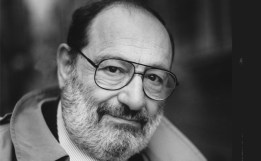 So it was interesting recently to come across a 1995 essay by Umberto Eco, the great Italian author (The Name of the Rose), scholar and philosopher, entitled “Ur-Fascism.” Written for the New York Review of Books (22 June 1995),
  Eco points out the first feature of Ur-Fascism is a cult — worship — of tradition. This of course does not deny the importance of tradition itself, as I read him. Rather it is a question of emphasis and loss of balance: when this emphasis on tradition is taken to an extreme that it becomes traditionalism, an extremist point of view. Traditionalism taken to this extreme is found in other times, cultures and systems beside Fascism, of course. In fascist hands, however, traditionalism becomes focused on past glories, past identities, past expressions of truth understood in radical opposition to various forms of rationalism and rationalistic thought. Eco points out that such a response is ancient, reflected in various schools of thought that reacted negatively to classical Greek rationalism. In fact, perhaps the best way to think of this traditionalism that Eco is talking about would be as a kind of Gnosticism. As a result of this worldview, there is no need for new learning, and it reflects an extreme anti-intellectual stance: “Truth has been already spelled out once and for all, and we can only keep interpreting its obscure message,” Eco writes. So, Ur-Fascism would contend mightily with those who suggest that there might be other points of view to consider: this would explain frequent criticism of “intellectual elites” and others who not only seek to uncover the Truth that has existed for all time, but who might also suggest that this Truth might be understood in various ways under differing circumstances. In short, the Fascist says, “We know the Truth, so don’t listen to the ‘intellectual elites’ who will only confuse you.”
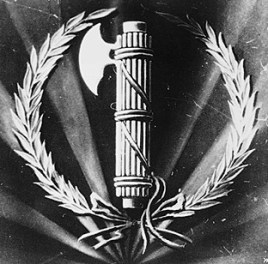 Such irrationalism is based on what Eco calls “the cult of action for action’s sake”. The fascist sees action as good in itself and therefore action is taken “before, or without” any prior reflection. In the fascist view, thinking is a form of emasculation.
 Yet again, Eco is succinct and on point:
 Certainly, sometimes people are out to get us! Terrorists have made that terribly, tragically, and repeatedly obvious. However, look what Eco points out:
 9.
9.  10.
10. 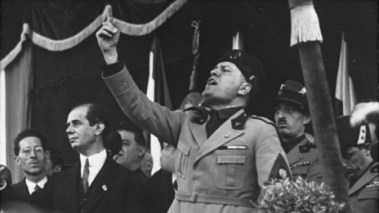 14.
14. 
 As I write this, reports are coming in from Baton Rouge about yet another attack with multiple casualties. The world is reeling from the endless chain of violence and death of recent months. On Friday, the PBS series Religion and Ethics Newsweekly ran a program on the Order of Deacons in the Catholic Church. Given the state of the world, one might think this an odd or even irrelevant topic. Upon reflection, however, I believe that there are some important dots to connect. It is precisely because of the current state of violent death, destruction and havoc that the diaconate — properly understood — might offer a glimmer of hope. After all, it was precisely because of the “abyss of violence, destruction and death unlike anything previously known” (John Paul II, referring to World Word II) that the Order of Deacons was renewed in the first place; we’re here to help do something about it. So we shall review the PBS story against that critical backdrop.
 THE PBS PROGRAM: Religion & Ethics Newsweekly
 “In the Middle Ages the role of deacons began to fade as the power of priests and bishops grew. In the 1960s, the Second Vatican Council restored the role of deacons – but only for men.” The evolving role of deacons throughout history is far more complicated than that, and overlooks the fact that the diaconate never completely disappeared, but became primarily a stepping stone to the priesthood. I fully acknowledge that the history of the diaconate in all of its complexity goes far beyond what can be covered in such a brief program, but still: the broad brush strokes of the history could have been recognized and acknowledged. This is also when the program shifts to the question of the possibility of ordaining women as deacons. I will deal with that question below.
 Now, on the PLUS side: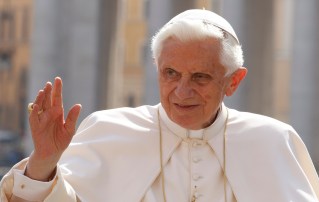
 So, what is the connection? How can the diaconate be understood against that much larger and violent backdrop? The most important question of all is perhaps, why do we have deacons in the first place?
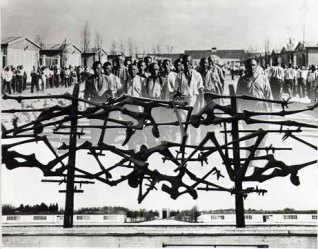 In our time, as I’ve written about extensively, the Second Vatican Council decided overwhelmingly that the diaconate should be renewed as a permanent ministry in the church once again, even to the extent of opening ordination to married as well as celibate men. The bishops in Council did this largely because of the insights gleaned from the priest-survivors of Dachau Concentration Camp. Following the war, these survivors wrote of how the Church would have to adapt itself to better meet the needs of the contemporary world if the horrors of the first half of the 20th Century were to be avoided in the future. Deacons were seen as a critical component of that strategy of ecclesial renewal. Why? Because deacons were understood as being grounded in their communities in practical and substantial ways, while priests and bishops had gradually become perceived as being too distant and remote from the people they were there to serve.
 The diaconate today, fifty years after the Council, has matured greatly. Those who would talk intelligently about the diaconate need to keep that in mind. Over the past fifty years, formation standards have evolved to better equip deacons for our myriad responsibilities, for example. The diaconate has, at least in those dioceses which have had deacons for several generations, become part of the ecclesial imagination. In some dioceses we have brothers who are deacons, fathers-in-law and sons-in-law who are deacons, fathers and sons who are deacons. In one archdiocese, an auxiliary bishop is the son of that archdiocese’s long-time director of the diaconate. As I mentioned above, the diaconate looks and feels different from one diocese to another and while it is tempting to generalize whenever possible, it is particularly dangerous.
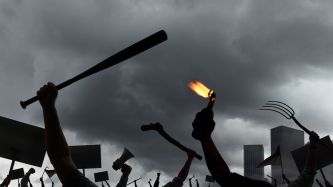 Here is my point: If we deacons were restored in response to Dachau and similar world shattering violence, translate “Dachau” to Baton Rouge. “Dachau” to Nice. “Dachau” to “Black Lives Matter”. “Dachau” to 9/11. “Dachau” to every act of senseless terror and random violence. What are we doing to confront these tragedies? What are we doing to work toward a world in which THEY can no longer exist? This is so much more than who gets to exercise “governance” (a technical canonical term) in the Church, or who gets to proclaim the Gospel in the midst of the community of disciples.
  I hope that there will be more media programs on the diaconate. I hope that not only will they be done accurately, but that they will also be done with a sense of the vision and potential of the diaconate.
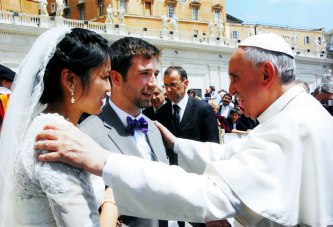 The Catholic blogosphere has been buzzing recently over some comments made by Pope Francis about marriage. Specifically, he remarked that some sacramental marriages are “null” because the bride and groom come from a “culture of the provisional” and do not truly understand the nature of a permanent commitment. Initial reports said that the pope’s original words were that “most” sacramental marriages were null, and then were modified from “most” to “some” or “a part of”. Here’s the original Italian for those who would like to offer their own English translation: “E per questo una parte dei nostri matrimoni sacramentali sono nulli, perché loro [gli sposi] dicono: ‘Sì, per tutta la vita’, ma non sanno quello che dicono, perché hanno un’altra cultura.”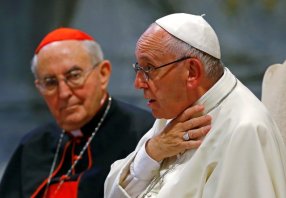
 It seems pretty clear and straightforward that, whether the pope originally said “most” or “some” marriages is pastorally irrelevant to the point he’s trying to make: that because we are now living in such a culture of the provisional, everyone struggles with the ability to make lifelong commitments; on one level, they may think they understand the nature of permanence, but on another level, they may be incapable of making such a judgment. The pope is not speaking here as the Legislator or as a judge in a marriage tribunal: he’s speaking from the perspective of an experienced pastor.
 The bottom line, it seems to me, is pretty straightforward: The first step in listening to the pope is to look at the overall message he is trying to make and to whom he is making it. Generally speaking, with Pope Francis, he chooses to speak as who he is: a pastor. He does not speak as an academic theologian, or as a canon lawyer, nor should he, in my opinion. He is first, foremost and always, a Pastor: that’s his frame of reference, that’s his motivation, that’s his primary concern. Theology, canon law, curial structures, and all the rest of the ad intra organs of the Catholic Church exist to SUPPORT that pastoral effort. We all look at the world through the lenses we’ve been given in life: as teachers, as lawyers, doctors, farmers, business people, parents, and even deacons. For some canon lawyers to be upset and concerned by the pope’s comments is only natural, but they should not be considered the first — or only — line in interpretation of papal statements.
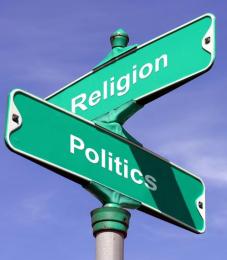 I have written a lot on this subject, but it is one that bears revisiting every election cycle. As I write this, it seems certain that the two nominees for this year’s presidential election will be Donald Trump for the Republicans and Hillary Clinton for the Democrats. In my lifetime I have never experienced anything approaching the madness of the primary process, and the general campaign promises more of the same. So, I hope this review is helpful, since deacons fall into some unique categories on this subject under canon law!
 One often hears that the reason we clergy are supposed to be impartial with regard to support or opposition to particular political parties, campaigns or candidates is because “the Church” might lose its tax-exempt status. Often, after making such a claim, chest-pounding ensues as the claimant declaims, “Some things are just too important to worry about such things! If we lose tax exempt status, so be it! We have to stand up for what we believe.” In the Navy, we refer to this as the “damn the torpedoes, full speed ahead” response. Here’s the problem. This isn’t about tax exempt status. It is, rather, about the universal law of the Latin Church, which couldn’t care less about our tax exempt status.
 We clergy exist, according to Church teaching (cf. especially Lumen gentium #18) to build up the People of God. Our actions then must be understood with that end in mind: are the words I’m using, the actions I’m taking, the positions I’m teaching all serving to build up, or do they tear down. It is easy in the heat of the moment to let our emotions get the better of us, and especially when the rhetoric surrounding our current political “discourse” is so heated and volatile, we might succumb to the temptation to be just as superheated in our responses. Again, not only does our teaching enlighten us in this regard, so too does our church law, as shall be seen below.
 Canon 285 directs that “clerics are to refrain completely from all those things which are unbecoming to their state, according to the prescripts of particular law.” The canon continues in §3: “Clerics are forbidden to assume public offices which entail a participation in the exercise of civil power,” and §4 forbids clerics from “secular offices which entail an obligation of rendering accounts. . . .” Canon 287, §1 reminds all clerics that “most especially, [they] are always to foster the peace and harmony based on justice which are to be observed among people,” and §2 directs that “they are not to have an active part in political parties and in governing labor unions unless, in the judgment of competent ecclesiastical authority, the protection of the rights of the Church or the promotion of the common good requires it.”
 So where does this leave us? Deacons, although clerics, may participate in political life to a degree not permitted other clerics under the law. However, they are required by particular law in the United States to obtain the prior written permission of their diocesan bishop to do so. I find that two other aspects of this matter are too often overlooked. First, is the requirement under the law that all clerics (and, most significantly, permanent deacons are not relieved of this obligation) are bound by c. 287 always “to foster peace and harmony based on justice.” This is a critical point for reflection for all clerics: How do my actions, words, and insinuations foster such peace and harmony, or are my actions serving to sow discord and disharmony? Since permanent deacons may become more engaged in the political sphere than presbyters (with the permission of their bishop), this will take on particular relevance for deacons. Second is the whole area of participation in political campaigns. Deacons may only participate in their own or someone else’s political campaign with the prior written permission of their bishop.
 Things are so much more complicated today than in years past, with all of the various social media available. Tweets can replace reasoned response, a Facebook status can mimic a political platform, and even a “like” can raise political tempers. Furthermore, what about the deacon’s family and their rights and obligations to participate fully in the political process? In one common example, what if the deacon’s family wants to put a yard sign supporting a particular candidate in the yard, or to put a bumper sticker on the family car? Today, when political support is often reflected through the social media, all of us might well reflect on how our opinions stated via these media constitute active participation in someone’s political campaign.
 The Extraordinary Jubilee of Mercy focused over the last few days on the ministry of deacons. Today the Holy Father celebrated Mass in Saint Peter’s Square and thousands of the world’s deacons were there. The Holy Father’s homily is a short but powerful lesson in diakonia.

 One thought has remained with me from the first reading of Pope Francis’ Amoris Laetitia: this is an ADULT document. It is written by a mature adult man who is comfortable in his own relationship with God and with other people, able to see things both as they are and as they could be. Through the lens of his own life’s experience he recognizes his own weaknesses and failures and owns his own need for God’s forgiveness and the help of others to get through any given day. This mature adult man has written a document that presumes his readership is similarly disposed. He writes directly, explicitly, and knowledgeably about the human condition, the role of the Church, and the relationship of the two. It is, in short, a text written by an adult for other adults. As
  First, I think an adult spirituality is
  Second, an adult spirituality is
  Third, an adult spirituality
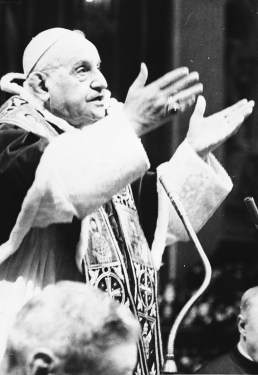

 The core of the Church’s teaching on conscience is found in Vatican II’s Gaudium et spes (GS), 16:
 One thing many observers forget, however, is that we are bound to follow our conscience, even if that means we are responsible for errors we make! GS 16 continues:
 We have long thought that simply by stressing doctrinal, bioethical and moral issues, without encouraging openness to grace, we were providing sufficient support to families, strengthening the marriage bond and giving meaning to marital life. . . . We also find it hard to make room for the consciences of the faithful, who very often respond as best they can to the Gospel amid their limitations, and are capable of carrying out their own discernment in complex situations.
  The weekend after AL was presented to the world, a friend presented me just that scenario. “What would happen if a divorced and remarried couple, who had refrained from receiving communion for many years, began receiving communion again? That would be a terrible scandal, and the pope says we are to avoid scandal!” What if John and Jane Doe’s story included the fact that they had gone to the pastor and, under his guidance, pastoral judgment and advice, in consideration of many factors known only to the two individuals involved, both John and Jane decide in conscience that each should return to the reception of Holy Communion? This process of conscience formation, which as the pope reminds us, is not done with a view to sidestepping the law. However, it is done with due consideration of unique aspects of their own past experiences and current responsibilities for their children and so on. And, they each reach a decision point in conscience. And, “according to it [each of them] will be judged. The conscience is a person’s most secret core and sanctuary, in which the person is alone with God, whose voice echoes in his depths.”
 The headlines surrounding a recently-released study scream: “Increasing number of Americans consider Christianity ‘to be extremist'” followed by the quote: “The perception that the Christian faith is extreme,” says Barna Group, “is now firmly entrenched among the nation’s non-Christians.” [
 On the negative side, however, since 1054, some of these Eastern churches (not all of them) broke with Rome and became what is referred to now as the Orthodox Churches. While theology formed a part of the rationale between the split (consider the filioque debate, for example), the larger issues revolved around the authority of the See of Rome. Only over the last 100 years or so have we seen some real progress in restoring full communion. Then, of course, in the 16th Century we find Latin Christianity fracturing even more through the theological and ecclesial reforms demanded by Martin Luther, John Calvin and others. Within the framework of evolving philosophical, theological, political and social trends, these disagreements quickly moved out of the university setting and into the streets, creating the chasms between Christians we still experience today, despite Christ’s prayer at the Last Supper, “that they all may be one, Father, as you and I are one.”
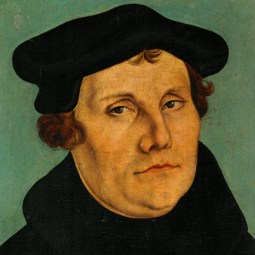
 Consider a basic world view. How do Christians view the world? Some groups of Christians have a very positive view of God’s creation, frequently citing the words of Genesis in which God proclaims creation to be “good.” Creation is, therefore, in this view, good by nature — with evil entering into the picture only later through the deliberate, free will choices of human beings. Other groups of Christians have an opposite view of the world, seeing creation as inherently flawed. Martin Luther, for example, frequently wrote things such as, “our righteousness is dung in the sight of God. Now if God chooses to adorn dung, he can do so.”
 Consider how inclusivist (“catholic”) or exclusivist various Christian groups can be. One of my own saddest experiences in this regard occurred some years ago when I was still on active duty in the Navy. A good friend was part of the Protestant chapel community on our base. He was participating in the annual Holy Thursday reenactment of the Last Supper, put on by the Protestant chaplains. I went over to help get the apostles into their beards and costumes and stuck around to watch it. Shortly before leaving to go to the Catholic chapel for the Mass of the Lord’s Supper, I watched the beginning of the communion service following the reenactment. The senior Protestant chaplain stood and give directions to the assembly on how to come forward for communion. Ministers of particular denominations would be on other side, and adherents of those denominations were to go to “their own” minister; a “general communion” was being offered down the main central aisle of the chapel, and those who were not in the other two churches could receive in the “general” line. Naturally, of course, it struck me that I was about to head over to our own Mass, during which only Catholics could receive Communion. It left me quite saddened to see — at the moment when you would think Christians could be MOST united — we were the most divided.
 So, today, we have Orthodox Christians, Catholic Christians, Evangelical Christians, Pentecostal Christians, Non-Denominational Christians, along with other forms of Baptists, Lutherans, Reformed, and on and on and on. Because of many reasons, such as the “world view” distinctions mentioned above, some of these Christians look for everything to be black and white, clearly distinguished. Sin, for example, is sin. Something is either sinful or it is not. There is no gradation in sinfulness: telling a lie (regardless of situation or intent) is as grave as murder. In this view, you are either with me totally and completely or you are against me totally and completely. Other Christians seem to say that anything goes if it’s what you want. You determine everything yourself about what you will choose to believe and so on. Then there are Christians in the middle, who marry philosophy and theology, reason and faith. Given this diversity then, we come to the question raised by the article: Are Christians extremists?
 That raises the need to define the other term of the argument: How do we define “extremist”? In the list of statements included in the study, I found myself agreeing that some of them certainly reflected “extremism” as I understand it, while others do not. However, ALL them made me think and to reflect, and that is always a good thing.
 Deacons Today: Servants in a Servant Church