Another Phenomenal Woman of Color: Sister Thea Bowman

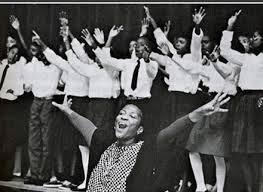
thea3All of us have been touched and blessed by the life of Dr. Maya Angelou.  Her recent passing had all of us of a certain age reflecting on her life and impact on our own lives.  I re-read her wonderful poem “Phenomenal Woman” (read it here), and my mind wandered to the other phenomenal women I’ve known: ALL of the women in our family, for example, every one of them: my wife, mother, sisters, cousins, daughters!  And then, listening to the rhythms of Dr. Angelou reading some of her own poetry, I was reminded of still another phenomenal woman of color: the dynamic, brilliant, multi-talented, and courageous Sister Thea Bowman, who died of cancer at age 52 in 1990.  Born and raised in Mississippi, Thea was a religious sister, singer, actress, teacher, liturgist, dramatist, Ph.D. with a particular expertise on fellow Mississippian William Faulkner, and above all, a passionate evangelist.

thea2I remember first hearing of Sister Thea many years ago, shortly after leaving the seminary.  Many of us seminarians had been helping out in African-American communities as we could during the civil rights movement, and soon word began to spread about this fiery young sister who was appearing on the scene.  Although she had earned her Ph.D. in English at the Catholic University of America, and became known as an expert on Faulkner, she was never a stereotypical academic!  Her principal mission was to enable, empower, awaken and inspire people, and her influence both within and outside of the African-American community is incalculable.

Over the last few days, I’ve mentioned her name to several people and to my amazement they had never heard of Thea.  This must not be allowed to happen!  I’m going to put up two videos here.  First is a biography of Sister Thea produced. shortly after her death.  As you can see, she continued to inspire even after the cancer that was killing her had confined her to a wheelchair.


The second video is truly remarkable.  The quality of the recording is not very good, so let me explain what you will see.  The US Bishops meet in general assembly twice a year.  This video is from one of those meetings, in 1989.  The bishops, as you will hear from the late Bishop John Ricard, had formed a Committee to support Black Catholics, and Sr. Thea was one of the consultants to that committee.  Terminally ill, she was invited to address the bishops, and — well, you will see what happens.  Keep that in mind: from her wheelchair, a dying Thea brings the bishops to their feet.

How many other Theas and Mayas are out there, still finding their voices?

RIP, Dr. Angelou.  RIP, Dr. Bowman.

Pray for us.

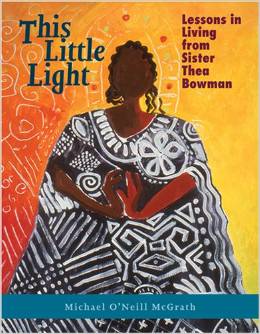
UPDATE: I was just informed that Brother Mickey McGrath has recently published his own work on Sister Thea.  Here’s a link to Amazon.com in case you’re interested.  I haven’t had a chance to enjoy it yet, but can’t wait to do so!

A Fresh Look at St. John XXIII

John XXIII by Mickey McGrathI don’t often review books, but here’s another pleasant exception!

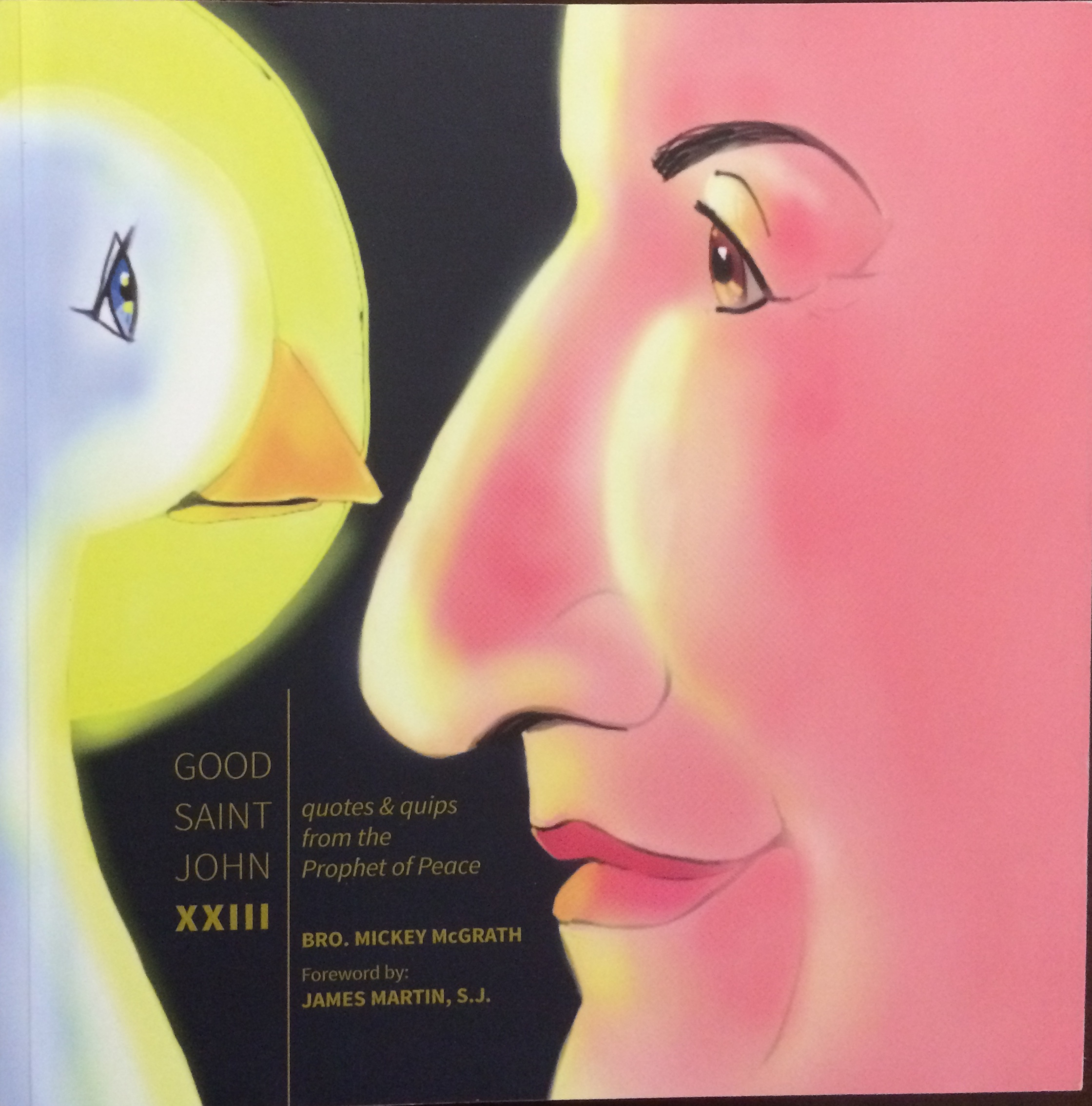
I recently received a copy Brother Mickey McGrath’s new book on St. John XXIII, entitled Good Saint John XXIII: Quotes & Quips from the Prophet of Peace (Princeton: Clear Faith Publishing, 2014).  Once again, Mickey’s art dazzles and explodes exuberantly from each page.  There’s a wonderful introduction by Father Jim Martin which sets the stage very well.  Jim makes the point that Mickey’s art is always joyful, and this is so true — and also appropriate for this particular subject.

St. John XXIII was fond of a saying he found in Teilhard’s work, that “joy is the infallible sign of God’s presence.”  Joy filled St. John’s approach to the papacy, even during the darkest days dealing with wars, brinkmanship, illness and frustration.  Mickey captures all of this in his book, filled not only with “quotes and quips” from St. John himself, but by Pope Francis, St. Francis de Sales, and others: all through the lens of the man still known to millions as the “Good Pope John.”

I often give retreats based on the spirituality of St. John, and I will certainly be making use of Brother Mickey’s beautiful work (with his prior permission of course!).  I would encourage everyone to get at least one copy, because they will make great gifts as well.

Thanks, Mickey, and God bless!

The Point Remains: It’s “The Mass of Pius V”

francis elevation[Editorial Comment: I have prayed over what to do about this post.  I remain convinced that the overall point I want to make remains valid.  My mistake, for which I have apologized, was to specify a particular blogger (Father Zuhlsdorf) as being among those who make the mistake in question.  I stand by that apology.  I also stand by the fundamental thrust of my original posting; namely, that there are people who do associate the name of St. John XXIII inappropriately with the Mass of Pius V.  There is an appropriate and correct way to do that, since St. John DID promulgate an editio typica of the Mass of Pius V in 1962.  There are also inappropriate and incorrect ways of describing that reality as well, and THAT was the point I was trying to make.  So, I have edited the original posting to remove references to “Fr. Z” and still make the point I wished to make.]

I write this post with respect, although with an obvious and unapologetic sense of intellectual frustration.  Clearly the topic I want to explore is not a “Kingdom issue” or something that need be at the forefront of every person’s daily concerns!  However, for a lifelong Catholic like myself, a student of the Church and her liturgies, and someone for whom the Church as People of God, Mystical Body of Christ and Temple of the Holy Spirit carries great significance, this is something that I think must be addressed. So, what is it?

It is the tendency of some commentators to refer to the 1962 editio typica of the Missale Romanum as “The Mass of St. John XXIII”.  I’m not sure why such an error is being made, and I don’t want to ascribe any motivation to something which may be nothing more than a simple error of fact.  It does seem, however, that this description of the Mass seems to be made most often by critics of the Mass of Paul VI, so perhaps it is their way of suggesting a contrasting hermeneutic of church and liturgical worship.  I don’t know.  Assuming that this is nothing more than a simple error, then, this post is offered as fraternal correction.

Here’s the deal.  As we all know, a wide variety of ancient liturgical texts developed.  These took a variety of forms and often varied widely from place to place.  There were also attempts over the years to consolidate or to unify liturgical practice in the Latin Church, often following the patterns used by the Church in Rome.  There are many good studies of all of this so there is no need to recount those details.  However, the custom of “naming” the Roman Missal is what concerns me here.

1896 Missale Romanum Title PageIn 1570, following the decisions of the great Council of Trent, Pope Pius V promulgated a new editio typica of the Roman Missal.  This became known, then, as the “Mass of Pius V.”  In fact, I have open on my desk at the moment an 1896 printing of the Roman Missal, and the title page states: “Missale Romanum, ex decreto sacrosancti concilii tridentini restitutum, S. Pii V Pontificis Maximi”.  Ah, “but Deacon, but Deacon,” you’re probably saying, “St. John XXIII came up with his own typical edition in 1962!”  Let’s continue, and all will be made clear.

Following that first typical edition of the so-called “Tridentine Mass”, many subsequent popes made changes to the Mass of Pius V, and some of these popes issued their own typical editions: Clement VIII in 1604, Urban VIII in 1634, Leo XIII in 1884, and Benedict XV (reflecting much of the work of his immediate predecessor, St. Pius X) in 1920.  In 1951, Pope Pius XII issued a number of significant changes to the Missal, especially involving Holy Week, but none of these changes were placed into a new typical edition.  Finally, in 1962, St. John XXIII published the last of these typical editions.  Now, here’s the point: at no point in all of this history did we as a Church change the attribution of the name of the Mass.  When Clement VIII issued his typical edition, we didn’t start calling it the “Mass of Clement VIII”; when Urban VIII issued his in 1634, we didn’t call it the “Mass of Urban VIII”; when Leo XIII issued his, we didn’t. . . , well, you get my point.  It was ALWAYS, even in 1962, referred to as the “Mass of Pius V.”

Want more proof?  Pope Paul VI issued the first typical edition of a post-conciliar Roman Missal in 1969 (although earlier changes had been made), and it became known as the “Mass of Paul VI.”  Then, he issued another typical edition in 1975, and it was still the “Mass of Paul VI.”  In 2002, St. John Paul II issued the third typical edition of — you guessed it, the “Mass of Paul VI.”  We didn’t start calling it the “Mass of St. John Paul II”, did we?  Of course not: it is still, to this day, the “Mass of Paul VI.”

Readers of the original version of this post have pointed out, of course, the very legitimate use of the term “Missal” to describe the various editions of the Mass; so, for example, one might refer to the “Missal of Urban VIII,” or the the “Missal of St. John XXIII.”  This is not my point, although I must say that I have yet to hear anyone refer to the current edition of the Roman Missal as “The Missal of St. John Paul II, either.  If one wishes to speak of the “Missal of St. John XXIII” wouldn’t we also speak of the “Missal of St. John Paul II”?

Pope Pius VAs I said at the outset, this is not an issue upon which the Reign of God depends.  I guess my real plea is to remind all of us that the Mass is that of Jesus Christ.  I would hope that, whichever Missal is being used for the full, conscious and active participation of the entire church, we seek clarity and unity with charity.  For those times when I have not practiced charity, I apologize to those who have been hurt.

God bless all who visit here.

St. John XXIII: His Prayer for Children

St. JohnBeing in Rome for the recent canonization of St. John XXIII and St. John Paul II brought back many memories for me, especially about “the Good Pope John” as the Italians (and the world) referred to him.  Several years ago I was in St. Peter’s Basilica and wanted to pray at St. John’s tomb, which had been moved from the crypt below the papal altar to the Altar of St. Jerome in the main body of the Basilica.  There were only a handful of people in the Basilica, so I went to a security guard and asked him where Pope John was.  He nodded and escorted me to the spot.  As he turned to leave, he said, “Deacon, please pray for me and my family to the Good Pope John.”

I was only eight when St. John was elected and I was thirteen, and in high school seminary, when he died.  His papacy was to have a lasting effect on my own development and interests.  Always interested in the workings and teachings of the Second Vatican Council, I eventually earned my doctorate with a specialization in Ecclesiology precisely because of St. John and the Council.

ANSA-John23Hospital-255x318Anyway, I recently came across some old videos of St. John, including some scenes of him visiting sick children in the hospital on his first Christmas as pope (1958).  Behind the images is the audio of his conversation with the children and I was moved by his comments.  It was wonderful to hear them in his own voice and not simply in a written text.  If I can find a version of this video that is not copyrighted I will provide a link to it; for now, here’s my quick translation of the talk; his simplicity, spirituality and joy are all in evidence.

 “Do you know that when the pope prays the rosary, it is possible for him to remember the whole world?  For example, do you know at what point he remembers all the children?  Not just the Catholic children or the non-Catholic children but each and every living child?  When he gets to the Third Mystery, when Jesus is born, when he appears as a child, and the union between Divinity and humanity, between heaven and earth begins, I say those ten Ave Marias for all the children born in the 24 hours before I began to recite my rosary.  So, here’s a secret: every child as soon as it is born receives a prayer from the pope because I believe there is nothing as sweet in the family as the innocence of a child.  I believe it is right that that child be remembered by someone who represents the union of two souls: that of humanity with that of God, by someone  who always bears this in mind. ”

So simple.  So beautiful.  So powerful.

St. John XXIII, pray for us.

The Ambo: The Open Tomb of Christ

Empty TombTry this on for size: the ambo from which we proclaim the Gospel and preach has its origins in the earliest days of the Church, as a sign of the open tomb of Christ from which the deacon would proclaim the Good News of salvation and new life.

In reviewing some material on early pioneers of the renewed diaconate, I came across this wonderful insight from an early promoter of the diaconate in Spain: Bishop Pere Tena Garriga, who passed away earlier this year.  He served as a renowned professor of liturgical theology for many years, was then the Secretary of the Congregation for Divine Worship and the Discipline of the Sacraments at the Holy See from 1987-2004, and also served as Auxiliary Bishop of the Archdiocese of Barcelona from 1993 until his retirement in 2004.

Tena GarrigaShortly before his death, Bishop Tena Garriga was interviewed by Deacon Rob Mascini from the Netherlands, the former long-time President of the International Diaconate Center headquartered in Rottenburg, Germany. Deacon Mascini has now completed and published (in Dutch) a wonderful book on the international pioneers of the renewed diaconate and we are working to get it translated and published in English as well. Bishop Tene Garriga was one of those pioneers.

During the bishop’s interview, he recalled not only the ravages of global war and depression on Spain (as well as the rest of the world), but also the particular tragedies surrounding the Civil War and the horrors which still affect so many people in Spain. He spoke of the death of Franco in 1975 as a great “relief and memorable moment” for all in Spain. It was only at this point that the Church could truly rebuild itself in light of the Second Vatican Council, and one of the elements of that rebuilding was the renewed diaconate. As a theologian and later as bishop, Garriga was an early proponent of a renewed diaconate in Spain, following the lead of the Council Father and Cardinal-Archbishop of Barcelona, Narciso Jubany Arnau. Following the death of Generalissimo Francisco Franco in 1975, Jubany Arnau was central in his country’s transition from dictatorship to democracy. In 1977, he was instrumental in the formation of an interested group of priests and laity who became known as “The Friends of the Diaconate.”

Empty Tomb 2During the interview with Deacon Mascini, the retired bishop stressed the role of preaching as critical to the ministry of the deacon. He referred first to the ancient liturgies, often in the catacombs, in which the episkopos would celebrate Mass over the bones of the martyrs. The deacon, likewise, was directed by the bishop to proclaim the Gospel from an open tomb nearby in order to stress the fact that the Gospel leads us out of our own tombs and into new life. The bishop remarked, “Do you realize that the ambo of today represents the open grave of Jesus on Easter morning? The deacon filled the role of the angel who proclaimed the resurrection.” He continued, “Today in the old basilicas of Rome you can still see the high ambos where the deacons later proclaimed the Gospel. Next to the ambo stands the Easter candle, representing the risen Christ. It is also the place from which the deacon chants the Exultet. . . . He proclaims life and light for the communion he is part of, and who he serves. Together with his bishop, the deacon should lead the church in such a way that the concrete message of life is a constant source of hope. Rooted deep in the deacon’s ministry is a sacramental dimension that is essential for the Church.”

This idea of the ambo as a representation of the empty tomb of Christ on Easter is a stunning challenge to all of us charged with proclaiming the Gospel, not only during the Mass, but through our lives. It can also focus our preaching as the constant call to move from death to life for all the people we serve.

Over the years I have been writing about the reasons behind the renewal of a diaconate permanently exercised in the Church today. Repeatedly we have found that the inspiration for the diaconate is to be found in the concrete and often messy needs of very real people facing very real tragedies, horrors and terrors today. The diaconate did not emerge out of a theological theory or some abstract principle: our task is proclaim life in the face of death, hope out of despair, and meaning out of chaos. Understanding the ambo as representing the empty tomb of Christ should inspire us all.

Bishops, Blogs and the Clergy: Accountability and Obedience

Holy SpiritThe recent fracas over a blog hosted by a deacon in England has revealed some interesting fault lines in the development of communications strategies in the contemporary Catholic world. Add to the normal ecclesial relationships involved based on our sacramental theology of Holy Orders and canon law, the American penchant for seeing everything through the lens of personal rights and freedom, and you have a fascinating matrix of meaning. What follows is not intended as in any way comprehensive or exhaustive on the subject, but I would like to raise certain things for reflection and consideration.  It is also important to remember that these comments are focused on the Latin Church of the Catholic Church.

First, let’s consider two points about the relationship between a cleric and his bishop.

Point #1: The cleric has become a cleric because he was ordained by a bishop. This ordination has certain effects, both sacramental and canonical.  The sacramental effect configures the ordinand in a particular way with Christ; I will address the canonical effect shortly.  Since 1972 and the revisions made to the sacrament of Holy Orders by Pope Paul VI, one enters the clerical state by ordination as a deacon through the laying on of the bishop’s hands and the invocation of the Holy Spirit. (Prior to 1972, one entered the clerical state, not through ordination at all, but through the liturgical rite of “tonsure”; the new cleric was then considered “capable” ( “capax” in Latin) of receiving sacramental ordination. The analogy might be with farming: one first plows a furrow and prepares the land to receive the seed and be fruitful; tonsure was that necessary first step.)

Deacon-2Point #2: During the liturgy of ordination, and prior to the moment of ordination itself, the ordinand makes a series of promises to the bishop. The most dramatic promise comes when the ordinand approaches the bishop, puts his hands in the bishops’ while the bishop asks: “Do you promise respect and obedience to me and to my successors?” (If the ordinand is being ordained by a bishop other than his own, the words are changed slightly to reflect that he is promising obedience to his own diocesan bishop and not to the ordaining bishop.) Through this promise and subsequent ordination, the newly-ordained deacon is sacramentally changed at the core of his being, and also becomes linked permanently in relationship with his bishop and the diocesan church. This particular effect of ordination also has a canonical effect, and is referred to as incardination. For example, on 25 March 1990, I was ordained into the Order of Deacons by His Eminence James Cardinal Hickey, then the Cardinal-Archbishop of Washington, DC. I made the promise of obedience to Cardinal Hickey and his successors, which has now included Cardinal McCarrick and Cardinal Wuerl. Over all of the years since, although I have served in a variety of places outside of the archdiocese as well as within the archdiocese, I have always remained incardinated in the Archdiocese of Washington, DC. That is my ecclesiastical “home”.

Concerning the notion of obedience, this is no mere profession of blind obedience to the bishop, nor is it simply a legal requirement to preserve good order and discipline.  Holy Orders, as we are told repeatedly in Vatican documents on the diaconate and the priesthood, is at its core about relationships: the relationship of the ordained with Christ, the relationship of the clergy with their bishop, for example, and the relationship of the clergy with the people we serve, or with each other. Ordination is not simply about the individual being ordained, but is actually about the entire Church. For example, it is often helpful to state that a person is not ordained “a deacon” or “a priest”; rather, he is ordained into the Order of Deacons or into the Order of Presbyters. We never operate alone: we are called into a community of service. Therefore, obedience sets the standard for this community. Obedience, in its theological roots, refers to listening and hearing (Latin: ob + audire) the Word of God through the power of the Holy Spirit working through others, and in the case of ordination, that means recognizing the Holy Spirit working through the bishop. It acknowledges in humility that the ordinand recognizes that, through the Bishop’s own ordination into the Order of Bishops, he has received the Holy Spirit in a unique way, the same Holy Spirit he is about to invoke upon the ordinand. The “promise of obedience” then is a profound theological as well as legal moment of that new relationship. Both our theology and consequently our law abhors the notion of a “vagus” cleric: an “unattached” cleric who is not incardinated somewhere, a cleric who is not somehow attached to a particular Church and exercising ministry under the “oversight” (episkopē” in Greek) of a bishop or other legitimate ecclesiastical superior.

IncardinationBefore turning to this particular example, one more technical point to make.  There are two broad categories of clergy: so-called “secular” (or diocesan) clergy, where the relationship is focused on the particular geographical community known as a diocese, headed by a diocesan bishop.  The other broad category are “religious” clergy, who are members of various religious communities that are most often not geographically restricted.  Vows are made (unlike diocesan clergy who do not make vows) upon entrance into the particular religious community, and the religious superior is not a diocesan bishop, but a religious superior; religious clergy serve wherever their congregation serves, and that might be worldwide.

With this as background we come to the current situation of a cleric and his bishop and the deacon’s blog.

The deacon in the current situation is member of the diocesan clergy, bound by his promise of obedience to his bishop.  Someone asked about Deacon Greg Kandra and his famous “Deacon’s Bench” blog: yes, if Greg’s bishop were to decide that Greg should no longer host his blog, he would be expected to give it up.  As clergy, we surrender a certain amount of freedom which lay people would have in a similar situation.  According to Vatican II’s Dogmatic Constitution on the Church (Lumen gentium), #18, all clergy exist for one reason: to build up the Body of Christ.  It is one of the responsibilities of the diocesan bishop to assess this “on the ground” and to make determinations about the building up of the Body of Christ in his own diocese.  As clergy, we are public persons.  As such, we cannot really say that “in this activity I am operating as a private person” with regard to the church.  We give that ability up upon ordination.  We now represent Christ and we also represent the Church.  St. Thomas Aquinas famously taught that a cleric acts “in persona Christi et in nomine ecclesiae” (“in the person of Christ and in the name of the Church”).

Dolan at Santa CruceCardinal Dolan, in a recent talk at Rome’s University of Santa Croce during a conference on communications, pointed out that we must “adhere to the best and highest standards. . . .  How we say something is just as important as what we say.”  In this observation he is echoing St. John XXIII, who frequently spoke of the permanence of religious truth on the one hand, and the ways in which those truths are expressed on the other.  How we communicate is just as important as the content of what we have to say.  As a screenwriter once put it, “Is coarseness a substitute for wit, I ask myself?”  Truth is one thing; a Christian should be communicating that truth in a Christian manner; there is no room for “snarkiness”, demeaning characterizations, ad hominem arguments or anything of the like.  This is so much more than just “being nice” to others.  For clergy in particular, it is about doing what “builds up” the Body, not acting in a manner which derides and  tears down the Body.  That’s really the gold standard: When I write, when I speak, am I building up the Body of Christ, or serving to tear it down?

If we are not building up the Body, and we are clergy, then it is the obligation of our bishop or religious superior to take corrective action on behalf of the diocesan church.  So, when we come across a blog hosted by a member of the Catholic clergy, consider the following points:

1) How well is the cleric in question reflecting a positive, constructive, and energetic vision of the Church?  If the blog is characterized by negative, hand-wringing, woe-is-me attitudes about the Church, find another blog to visit!

2) How does the cleric communicate, especially about others with whom he may disagree?  For example, Cardinal Dolan stressed the importance of “never caricaturing or stereotyping those who oppose the Magisterium and bishops at every opportunity.”  Even in the face of  “mean, vicious, and outward attacks,” he said, we must “always respond in charity and love,” he exhorted.  “We follow the instruction of Jesus by not responding back to with harsh words of our own.”  The use of demeaning, sarcastic and mocking language has no place in Christian communication, especially by members of the clergy, and the cleric should be rightly taken to task if this is part of his communication “style”; it’s simply not consistent with being Christ-like in the community.  If you find this on a blog supposedly run by a Catholic cleric, find another one!

3) As public ministers of the Church, no member of the clergy should be reticent about being transparent and accountable about his own ecclesiastical “credentials”: who is his ecclesiastical superior, for example, and how does his blog relate to his overall ministry within the broader communion of the Church?  Obviously, I’m not suggesting disclosing information which might be dangerous to his safety, but certainly his public identity as a cleric in a particular religious community or diocesan church is not unreasonable.  If a cleric is unwilling or unable to provide such bona fides, it will probably be better to visit someone else!

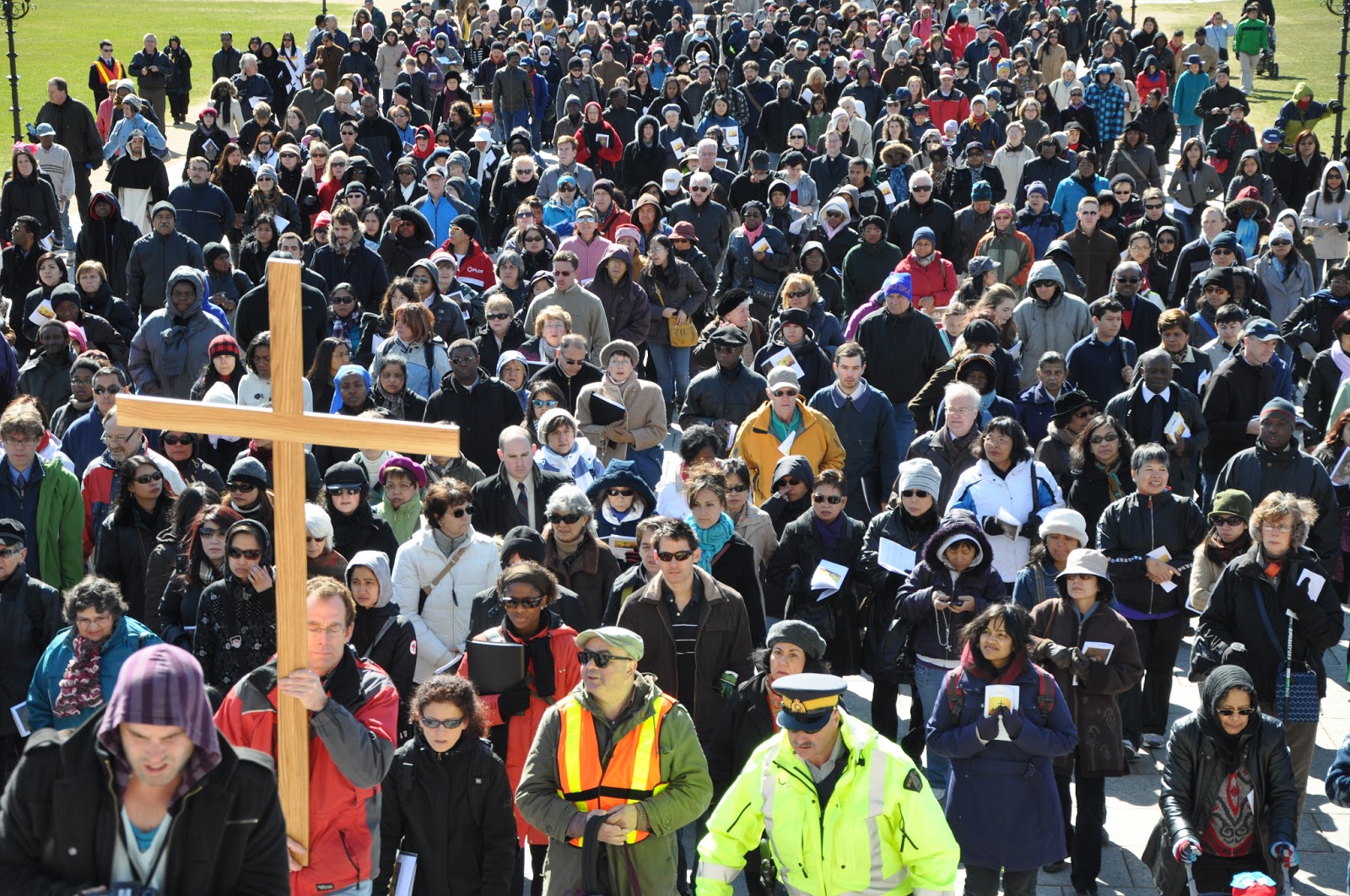
ottawa good friday xviThe bottom line, in my opinion, is the building up of the Body of Christ, the Church.  We clergy do this as part of a larger context, not as a collection of individual ministers, but as a communion of ordained ministers who share in the sacrament of Holy Orders.  It is no coincidence that “communio theology” has become one of the most paradigmatic forms of ecclesiology since Vatican II, an ecclesiology fully embraced by the papal magisterium.  Unlike other forms of Christianity, in which everything revolves around the individual’s relationship with God, our perspective is different.  While we certainly hold for the individual’s profession of faith, we do so as part of the larger Trinitarian communion of disciples.

As summarized at Vatican II, we are the People of God, the Mystical Body of Christ, and the Temple of the Holy Spirit.

It’s all about relationships.


Reflections from the Water’s Edge: The Canonizations in Perspective

I wrote the following reflection in Rome last Monday as the experience of the canonizations was still fresh.  I post it here as a way to conclude my blog series on the event.

three popes            I know what you’re probably thinking: “No, not another item on the canonizations!”  But I’m not writing now about the theological, political, or even sociological import of the recent canonizations of St. John XXIII and St. John Paul II on 27 April.  Others have already analyzed the event, its pros and cons, and these conversations certainly need to continue!  However, what I want to do is much simpler.  When all is said and done, what was it like to be in that crowd, and ministering to the people in that crowd, especially those who were furthest away?

For a variety of reasons, I had found myself being asked to assist with the distribution of Communion during the Mass of Canonization.  I was excited to be asked, of course, but also a little nervous.  I’ve been asked before, and sometimes something unexpected would come up at the last minute to throw the whole thing off.  So I was cautiously excited about this opportunity!  Something else struck me from the very start.  This was going to be the largest Mass I’d ever attended and who knew exactly where we’d be assigned to distribute communion?  I decided that I wanted to take the Pope’s repeated direction to serve on the fringes of society, and what better way to do that than to request a position away from St. Peter’s Square?  My request was granted, and I was assigned to part of the group of priests and deacons who would assemble at the church of Santa Maria in Traspontina along the Via della Conciliazione, and we would be heading away from St. Peter’s and toward the Tiber to serve.

Via della ConciliazioneThe day began early, of course, and we were told to be in the parking lot of St. John Lateran in time to catch the first of eight buses leaving at 5:00 AM for the Vatican.  Just to be sure, I was there before 4:00 AM in case plans changed.  As we loaded the buses, I joined a group of Polish priests along with part of the Vatican Choir.  Interesting conversations along the route!  By the way, this is the only way to travel in Rome: escorted the entire route by carabinieri clearing the way; we made it to the Vatican in record time, I’m sure.

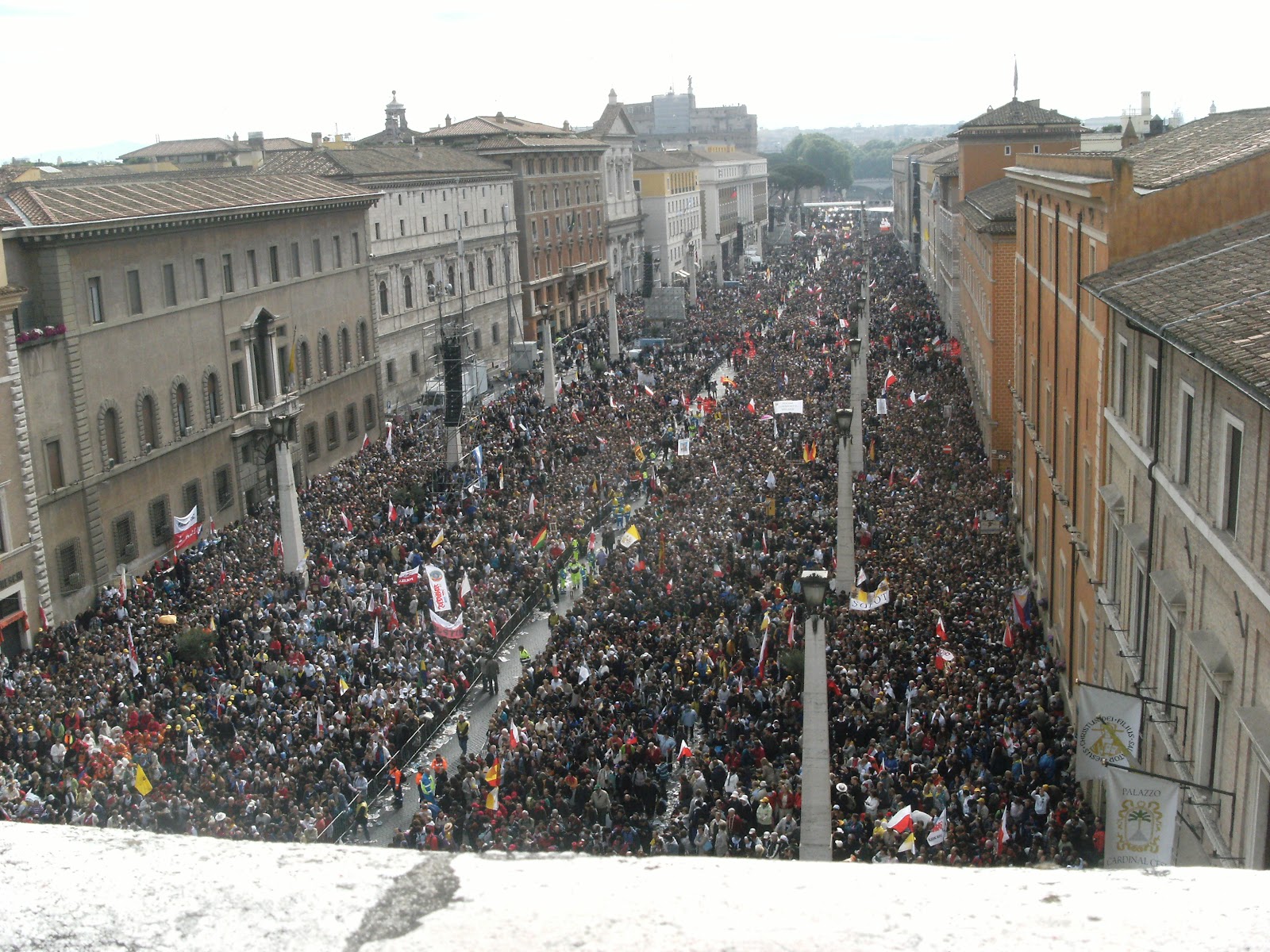
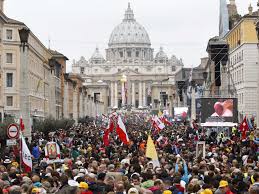
After getting off the bus, we were formed in our various groups and given additional credentials to participate in the Mass.  And then, by foot, we were escorted from the “Holy Office” area around the perimeter of Bernini’s famous colonnade, and into the Via della Conciliazione.  What a sight greeted us there!  Officials had positioned waist-high barricades across the entire street, and people were packed in behind those barricades the entire length and breadth of the street and all of its tributaries.  There was a small “aisle” down the middle being used for emergency support teams, and even at this early hour, they were assisting a number of people.  We were led down this aisle until we got to the front of the church.  There we had to wait while officials figured out a way to get us (about 200 of us, all told) from the middle of the street and into the the church.  Eventually, after a half hour of gesticulations and shouting and talking on walkie-talkies and cell phones, that was all worked out and in we went.

The next few hours, waiting for the papal Mass to begin in the Piazza San Pietro, was surreal, but blessed.  Here we were, just a few feet from that vast crowd of pilgrims, some of them singing softly, some increasingly distressed by the press of the crowd itself, and all wanting so much to be a part of things and to get as close as they could.  We were inside a quiet, darkened, beautiful church, and we joined in prayer for the people.  After morning prayer led by the pastor and the clergy of the parish, we celebrated Mass at 8:00 AM, during which the hosts we would be distributing later were consecrated.  Ciboria filled tables that flanked the sanctuary.

When our Mass was over, a screen was set up so we could follow the papal Mass.  This was not simply out of curiosity: our own movements would be timed to those of the Holy Father.  Immediately following the consecration we were invited to vest in our albs and stoles, and then we processed, two by two, into the sanctuary to take up a ciborium and then continued our procession, lining up facing the front doors of the church.  As the Lord’s Prayer began, the doors were opened and we processed into the street, turning to the left, away from St. Peter’s and in the direction of the Tiber.  Every ten meters or so, two of us would drop out of procession and take positions facing the assembly.  I was at the end of the line, so I got to go the farthest, finally taking up a position along a street aptly named after Pope, now Saint, John XXIII.  As the Pope finished his Communion, we immediately began our own distribution to the people.

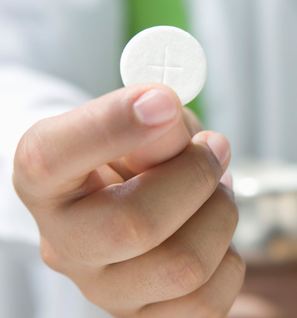
eucharist01Words cannot describe the power of the moment.  I saw later that the priests distributing Communion near the papal altar had attendants with them carrying umbrellas over them; we had no such niceties.  Our attendants were carabinieri working crowd control, but now helping out with getting people positioned to receive Communion.  The assembly was orderly, but anxious to receive.  A few people held up fingers indicating how many hosts they wanted, almost like they were in a restaurant ordering something.  Needless to say, these requests were not accommodated, and we distributed Communion on the tongue to all who presented themselves.  And, for the most part, people were as reverent as if they were in their parish churches at home.  To see the eagerness, the joy, the “this will all be worthwhile if I can just receive communion” looks on their faces, when all along they thought they were “stuck” along the fringes with no way to participate in what was going on at the other end of the street.  Yet here they were, receiving the Body and Blood of Christ right where they were, in life and at that Mass.

As Communion was finishing in the Piazza, so too were we.  As far as I could tell, all who had wanted to receive Communion along the route were able to do so, and it was such a privilege to be a part of that.  We returned to the church, took off our vestments, and after the pope’s final blessing, we were escorted out a back door of the church and returned to the streets.

I know there are many issues surrounding these, or indeed, any canonizations.  As a theologian myself, I’ve participated in many of them!  We can and must debate those issues.  But for a few blessed moments yesterday, in the midst of all the apparent chaos, the primary matter was the blessing of serving, touching, and ministering to people from around world who had only one thing on the minds and in their hearts: to be a part of this larger communion we call church, at a very special time in her history.  It is a blessing I now want to carry to the people who were not able to be here, both inside and outside the Church herself.

The Canonization Chronicles: Thoughts on the Day

street view canonizationsThere is a reason why this post is about twelve hours later than I intended it to be.  It took that long for me to get out of the neighborhood of the canonizations!  All the roads in and out of the area were closed down, so no taxis were available, and the buses, though advertised as running, where nowhere in evidence during the hour and a half I waited!  But don’t get me wrong — I wouldn’t have missed any of this for the world.

Let me tell you about the day itself as some of us experienced it.  I haven’t seen any of the TV coverage yet, but here’s what some of us saw and experienced.

2:45 AM: Got up to get ready for the trip to Saint John Lateran, where we are to meet the buses.

3:15: Taxi to St. John Lateran

3:45: At St. John Lateran, and I’m the only person here!  Did I misinterpret the instructions we’d been given?  Am I in the right place at the right time?  I decide to wait until 4:00 before getting too concerned.  I sit on the steps of the Basilica and wait.

Roma Cristiana bus4:00 AM: Cars start dropping people off and soon there are dozens of people milling about.  The first two buses arrive; there will be eight altogether. But here’s the funny bit: If you’ve ever been to Rome, you’ve seen the “Roma Cristiana” double decker buses going everywhere.  Well, those are the buses that have been chartered for us this morning!  We all feel like we’re going on a tour!

4:15 AM: The Navy officer in me has to admit that the Romans have organized this well, with great precision and attention to detail.  There’s a monsignor here who could pass for Patton in his ability to get the right people on the right buses!  I’m on bus number two, along with a group of Polish priests and part of the Vatican choir.  Interesting groups!

5:00 AM: Right on the dot and right on schedule, we leave.  Best trip I’ve ever taken to get around Rome.  Carabinieri on motorcycles lead the way and act as traffic controllers as our eight buses make a quick trip over to the Vatican.  I’m on the upper deck, so the view is really cool.

0427pope5:30 AM: We arrive at the Vatican, next to what used to be known as the Holy Office (“Sant’Uffizio”).  How to describe the scene.  Bedlam?  Chaos?  As we were approaching, the crowds exploded in numbers.  There were groups already walking toward the Vatican, with their leaders holding up the guide flags as if they were strolling around at Wating for canonizationslunchtime!  All over, there were groups starting to wake up after camping on the streets on pads, cardboard and blankets.  People were crowding along the bridge approaches, and the underpass was packed.  When we arrived, we were rushed off the bus and told to wait in a group nearby for further instructions.
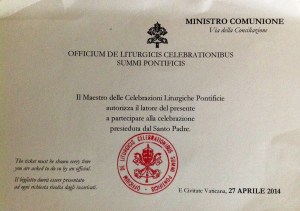
photo (1)5:45 AM: We were now given NEW credentials to participate; these were from the Vatican itself (the previous credentials were from the Vicariate).  We were then escorted “a piedi” (by foot) around St. Peter’s and the Via della Conciliazione.  And then I saw a remarkable sight: As we approached the Ancora Bookstore (on the right) and the Vatican Press Office (on the left), we saw security people at barricades.  Beyond them, stretching across the entire street and extending down all the way to the Tiber, was a sea of people.  I wish I’d had a camera to record the images.   Rather eearily, they were relatively quiet, standing there.  In the darkness, it was more than a little surreal!  Down the center was a narrow walkway kept open  by metal barricades, and we were escorted down this path.  It was also being used by the emergency services people to help people who had collapsed or were in need of assistance.  Some groups sang softly.  We quickly made our way to Santa Maria in Traspontina, but then there was a snag.  There was no way to get from the center of the street into the church!  After about a half hour of phone calls, working the walkie-talkies, lots of gestures and shouting, a pathway was negotiated and we got into the church before the throng filled up again.
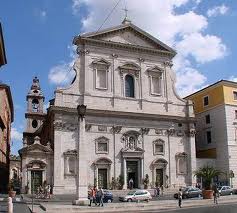
S. Maria in Traspontina6:00 AM:  In the quiet, darkened church we found places to sit and get comfortable.  The photo to the left was obviously taken during daylight and without the crowds in front of it!  All of us priests and deacons had little bags with us carrying our albs and stoles, so we settled in quietly and prayed for the safety of those outside.   We were welcomed by the pastor of the church and invited to make ourselves comfortable.

7:30 AM: We began Morning Prayer together, led by the pastor and a (transitional) deacon; more about him later.

S. Maria in Traspontina38:00 AM: We began the celebration of Mass in the church.  Long tables were arranged behind the altar itself, and there were literally dozens of ciboria filled with hosts arranged there.  During our Mass, all of these were consecrated and would be the Hosts we would distribute later to the people outside gathered for the Mass of Canonization.  It was a beautifully simple Mass.  No musicians except for one of the deacons who served as cantor to get us going.  We sang a cappella and kept thinking and praying for the pilgrims outside.  It was like we were in a bubble of prayer.

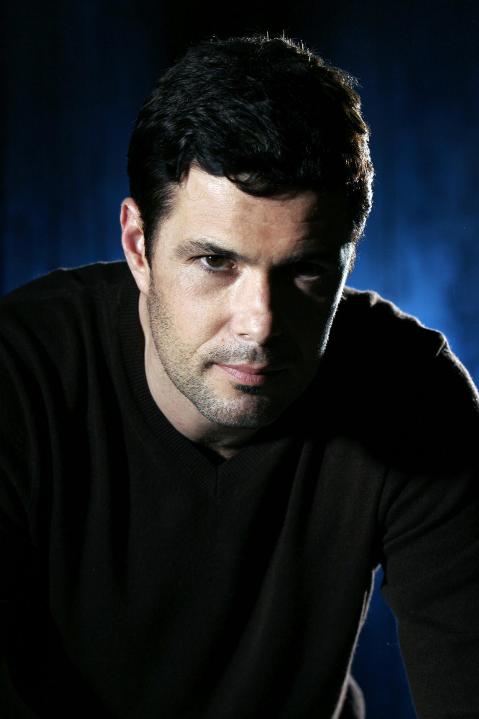
479px-Almeida_Day_4Oh, and here’s the deacon who assisted: ever wonder what happened to the actor who played Tony Almeida on the series “24”?  He’s here in Rome, a deacon at this church!  Seriously, if this isn’t Carlos Bernard, they could be twin brothers.

9:00 AM: After Mass a large screen was set up so we could follow the Mass of Canonization, which was to start at 10:00.  More than just for our entertainment, we were told that we would be timing our own movements based on the Mass.

10:00 AM: The Mass begins as the Pope enters.  Here we go.  Our schedule is like this.  After the pope’s homily is completed, we are invited to vest.  We quickly put on our albs and stoles and form two lines leading into the sanctuary.  We each take a ciborium and the line forms heading to the front doors of the church.  As soon as the Lord’s Prayer begins at St. Peter’s, they open the doors of Santa Maria, and out we go, two by two.  We move to the central path I mentioned before, and turn immediately to the left, AWAY from St. Peter’s and toward the Tiber.  Every ten meters or so, one of us “drops out” of line and stands in front of the crowd.  I’m toward the end of the line, so I wind up where I’d hoped to be all along — down near the Tiber.  I notice something I hadn’t before: the cross street where I am standing, getting ready to distribute Communion, is named after St. John XXIII.  Those who know of my love for St. John will realize just how special this location was!  I’ve marked my location on the map at right.  You can see St. Peter’s on the left, and I was standing as indicated by the yellow arrow on the right.
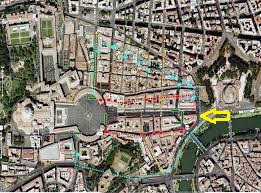
overhead view of route


We all turned to watch the big screen TVs, and as soon as the Pope had finished his own Communion, we turned and began distributing communion ourselves.  How to describe the moment?  First we were up against barricades, surrounded and assisted by carabinieri, and people had to struggle to get to us as we reached as far as we could into the crowd.  We had been told to distribute Communion only on the tongue, and not into the hand.  The wisdom of this became quite apparent.  Some people were holding up their hands, and indicated how many hosts they wanted, like they were asking for seats in a restaurant!  But most were as reverent as if they were in church.  We offered Communion with the Latin words, “Corpus Christi”, since there were so many different cultures and languages present, it was the only way to communicate.  I didn’t stay just in one place; I tried to move to different positions so people could get forward more easily, and I noticed that all of us were doing that as well.  For all of the crowds, this was an amazingly intimate experience, sharing the Body and Blood of Christ with so many people who simply wanted to be part of this sacramental moment in time.

After about 10 or 15 minutes, I had no more hosts, and began making my way back to the Church; by the time communion was finished in St. Peter’s, we were finished as well.  As the Pope was reading the Prayer after Communion, all of us were back inside Santa Maria.  A crew from the Discovery Channel was present with us, and I was interviewed briefly after the Mass, and then — it was over!  The pope did a drive-by along the route, but even he had trouble navigating through the crowds!pope at canonizations2

The rest of the day, as I said at the beginning, was spent trying to navigate my way OUT of the area!  The rains held off during the ceremonies, thank God, but they began in the early afternoon, making walking around the area pretty cold, damp and miserable!  I even dozed for a while on the steps of the Vatican Press Office waiting for the rain to let up a bit.  Finally, about 8 PM, things were relatively normal, I found a taxi, and headed to the residence.

I can’t describe adequately how special this time has been.  Not only pertaining to the two new saints of ours, and all of the attention being paid about whether or not this should be done, or if one or the other of these two men should be declared a saint — whatever!  What has been the most amazing thing has been the people, from all over the world, here to celebrate their faith and their love.

So often, we think of “church” in terms of our own parishes.  True enough.  Sometimes, we think of “church” in terms of diocese or country — also, true enough.  We can get critical and say, “Why doesn’t the Church do _____?” (Fill in the blank with your own ideas here.)  But experiencing the Church like this, from Poles who can’t ever get enough of St. John Paul II, who restored their own national pride and sense of freedom and solidarity, to the people from Bergamo whose love for St. John XXIII was just as palpable, to the Americans, French, Chinese, Belgians, Sudanese, Sardinians, Romans, Spanish,  Germans, Netherlanders, Africans from every country on that continent, Koreans, Filipinos,  Australians, New Zealanders, and Brits, plus others I’ve forgotten: THIS is the face of the Catholic Church, and this is the kind of impact Pope Francis is having on the enthusiasm and the joy people brought with them to Rome.  Were there problems?  Oh, you bet!  Will people go home with bad experiences along with the good?  Undoubtedly.  But for the majority of people, those inconveniences and challenges were nothing compared to the overall joy of being here and being together.

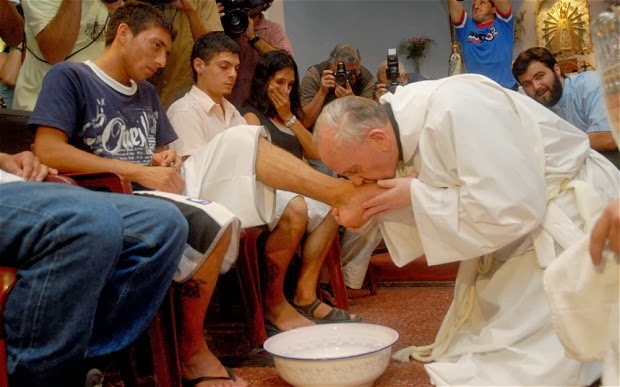
Francis-feet-drugs-poor-EPA


The Canonization Chronicles: Rebuilding Rome (or at least a part of it!)

The pace of life in and around St. Peter’s is really so full of energy and enthusiasm right now, the best word I’ve seen to describe comes from NCR reporter Joshua McElwee — a carnival.  The constuction and preparation of the altar and platform and other structures in the Piazza is one thing.  I’ve lost count of the various national and regional flags, the languages being spoken, and even the number of times street vendors have approached with the finest souvenirs ever made!  Really!  They told me so!

Everything is new and fascinating in this Eternal City right now, at least the parts closest to the Vatican.  New structures have been built, especially the press scaffolds and so on.  Traffic has been completely re-routed around the Vatican, and most of the shops and cafes and restaurants will be closed all day tomorrow because of the press of the crowds.

photo 1It has been another wonderful day with friends and new acquaintances. I had a quick coffee with NCR reporter Joshua McElwee, and then, after meeting with brother deacons Rob Mascini (the Netherlands) and Enzo Petrolino (Italy), I wandered over to the Borgo Pio, one of my favorite streets in Rome, just around the corner from St. Peter’s.  Always a fascinating place people watching!

There was even some nice music for pranzo. . . .

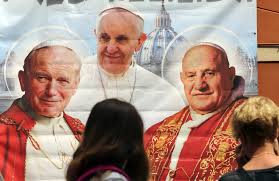
After wandering around this morning and early afternoon, with the temperature rising fast, I stopped outside the Libreria Editrice Vaticana (bookstore) near the Vatican Press Office for a lemonade.  Soon a couple came up and asked me in halting Italian if they could sit down as well!  I answered “sure” in my best Midwestern English, and met a delightful couple from Chicago.  While they are thrilled with the canonizations in a general way, they’re really hoping to encounter Francis.  This seems a very three popescommon response.  People are happy for the two popes being canonized, but in the hearts of many, Francis is already a saint as well, and he’s still with us!  One of the most common images (of which I have many in my bag already) shows the two new saints flanking  Pope Francis who is in the middle and slightly elevated over Pope John and Pope John Paul II.

My new friends told me that this was their first ever trip to Rome, but that they were already looking forward to coming back when things would be less hectic.

Among all the various national groups, the one that stands out are the Poles.  As one person put it to me, “The Poles are back!”  There are signs and songs and shouts all over the place; I can only imagine what will happen tomorrow when Pope John Paul II is announced as “Saint John Paul.”  But Pope John is not forgotten.  I saw several groups of people John’s home diocese of Bergamo: from young and old,  clergy, religious and laity,  all of whom are literally camping in St. Peter’s Square.  Although the police are trying to tell people they can’t do that, no one has yet started removing them either.  It will be interesting to see what happens on that score as well.

I had a delightful conversation with CNS reporter Carol Glatz and then decided to grab a taxi and return to our lodgings and rest for tomorrow.  But, with every respect to my friends and colleagues, the highlight of the day was about to happen, completely by chance.


The Via della Conciliazione is now a pedestrian thoroughfare.  People are simply walking up and down the whole length of the street, and the only motorized vehicles allowed now are related to public safety.  Along the way, I encountered this delightful group of children being entertained by some local workers.  Enjoy the video.  It makes my day every time I watch it!

I have come back to the religious house where I’m staying where they young rector from the Congregation of Mariannhill Missionaries (CMM) and I took a light supper in the kitchen and talked about many things.  Born and raised in South Africa, Fr. Musa is excited about the new energy being found in and about the church.  He won’t be able to attend the canonizations tomorrow because he serves in several parishes on the weekend, but he asked for special prayers at the canonization and promised his in return.  The house has pilgrims from the United States (well, just me), the Netherlands,  and Germany.  There was a young woman from Michigan staying here, according to Musa, but she called him to say that she was going to camp out in St. Peter’s Square tonight.

As for me, I will be getting up at 2:45 AM.  Sister Philomena, the 84-year old dynamo who runs the kitchen, is putting out some breakfast things for me tonight, and Musa is getting up to arrange a taxi at 3:30 AM.  (The taxi company wouldn’t arrange things in advance!).  He said it was his way of participating in the event.  I’ll take the taxi to Saint John Lateran to pick up the bus which will take us to the edge of Vatican City.  There we will be met by officials from the Vatican’s Pilgrimage office at 5:00 AM and escorted to the church of Santa Maria in Traspontina to await the Mass and our service as ministers of communion.

So, it’s off to bed for a few hours sleep.  Tomorrow will be an incredible day!  Oh, and the forecast calls for rain and storms, but only AFTER the conclusion of the Mass.  We shall see. . . .

The Canonization Chronicles: Notes from Friday, 25 April

It was a busy day today, and these scattered thoughts reflect some of the craziness that’s building around here.

Queue for St. Peter'sIt was still another gorgeous Roman day.  As I entered the Piazza San Pietro, it was obvious that the crowds are building in both numbers and intensity.  There were long lines yesterday to get into the Basilica, but nothing like today!  The queue wrapped around the piazza and into the Via della Conciliazione.  The crowds today were often celebrating in parish, organization, or even national groups.  One sizable group had brought in a large wooden cross, secured it in a stand, and serenaded passersby with a variety of songs and hymns for at least an hour.  Other groups were singing around the Square as well.  I would estimate — very unofficially — that the crowd in the Square today was at least triple what was there yesterday — and tonight, a deacon friend from Rome told me that they are now estimating as many as five million people to be “attending” the canonization ceremonies at venues all over town.  One group today was practicing their “John Paul II, we love you” chant, although I didn’t hear a similar chant for Pope John.  The press scaffolding next to the Vatican Communications Office seemed quite crowded today, much more so than yesterday.

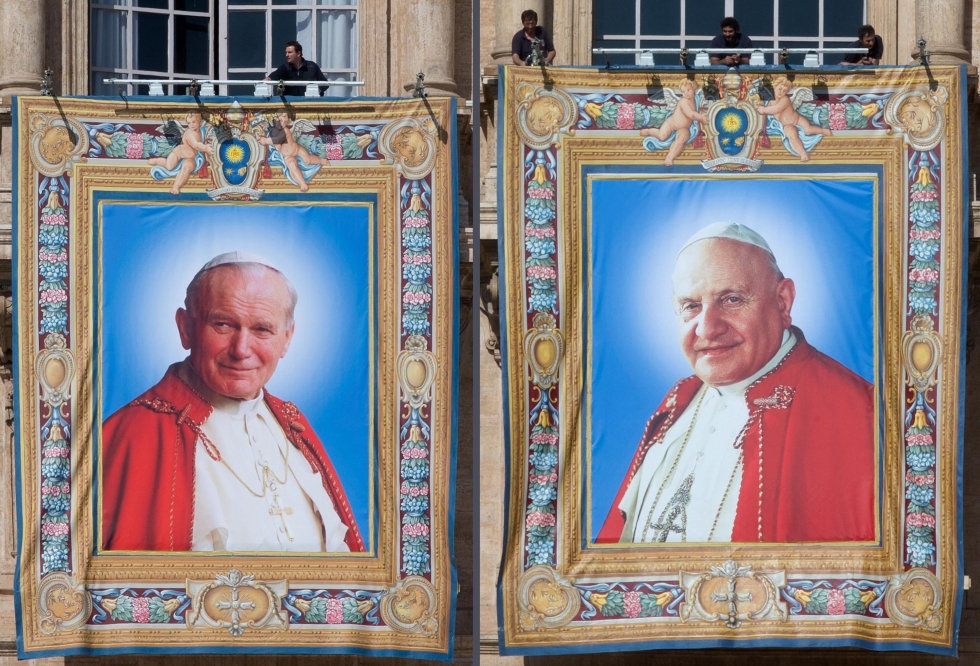
double_popesPerhaps the most visible change of all today, however, was the hanging of the tapestries with the portraits of the two new saints from the front of the Basilica.  They’re not hanging together like this; that’s just a camera trick. St. John is on the right side of the Basilica and St. John Paul is on the left side of the Basilica.  The tapestries seem smaller than what I would have expected when you see them against the full size of the Basilica, but maybe that will change for Sunday!

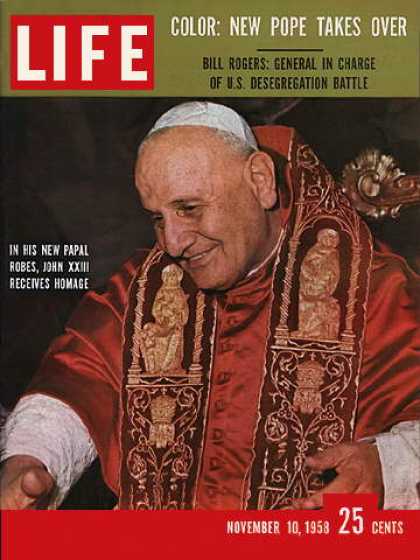
John in LifeBefore going on, I’d like to add a bit about Pope John.  Personally, I am sorry that so many people have forgotten just how popular, inspiring and influential  Pope John was in his day.  When he died on Pentecost, 1963, a proposal to proclaim him a saint immediately, “Santo Subito”, was chanted by the people and circulated among the world’s bishops who were preparing to return to Rome for the second session of the Council.  It was proposed that the Council itself, when back in session, make the proclamation of sainthood (under the leadership of Pope John’s good friend and successor, Pope Paul VI).  Although Pope John was extraordinarily popular and beloved for his simplicity, humor and pastoral concern, the bishops decided that to proclaim him a saint immediately would be unseemly; there also seemed to be a sense that it would be better to wait until “Pope John’s Council” was successfully concluded as his legacy before proceeding further.  Obviously, these are two very different men, and this is not a popularity contest!  Still, I hope that younger people who have really only known St. John Paul II and his recent successors might be inspired by this canonization to study and learn about St. John XXIII and Pope Paul VI.  To understand where we are today on many levels in the Church, a person really needs to understand those two popes of the Council and the first years of its implementation.


As I wandered around the Square talking with people, and later in conversations with friends, there was a general enthusiasm about the leadership of Pope Francis, his genius at linking these two new pope-saints, and his own unique stamp on exercising the Petrine ministry.  The only concern raised was that he has made himself so open and vulnerable that he may be attacked!  The numbers at his Wednesday audiences are stunning, and he has begun the audiences much earlier, arriving in his popemobile sometimes as early as 9:30 AM so he has more time to meander through the crowds before taking his position on the platform for the formal portion of the audience.

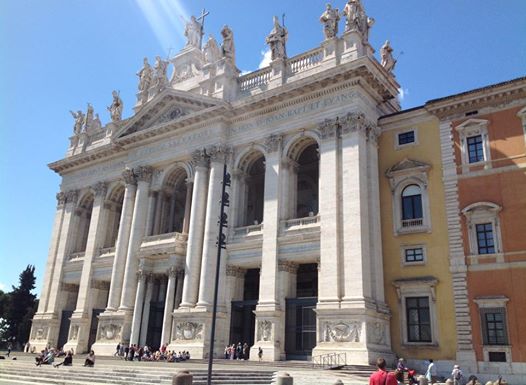
St. John LateranFinally, a brief word about the instructions we’ve received for Sunday.  I must leave the monastery in which I’m staying at 3:30 AM for the trip to St. John Lateran.  I have included a picture of St. John Lateran in bright sunshine which I took yesterday; that’s not a view I’ll have at 5:00 AM on Sunday morning!

At some time between 4:30 and 5:00 AM, a special bus will take us priests and deacons who are distributing communion from the Lateran to the church of Santa Maria in Traspontina at the other end of the Via della Conciliazione from St. Peter’s (a week ago, we were told the bus would leave at 5:30; that’s been changed.  Maybe by Sunday, it will change even further.  I intend to be there in plenty of time!).  At Santa Maria we will vest in alb and white stole and wait for the Mass of Canonization to begin at 10:00 AM, when we will make our way out the front doors of the church into the Via della Conciliazione.  Eventually, we will distribute Communion to those communicants in the area.  We have been told to distribute communion only on the tongue (actually, the instructions say “data in bocca” (given into the mouth), in order to prevent someone from taking the Host in the crowd and giving it to another.

I’m going to St. Peter’s tomorrow morning; it will be interesting to see what happens next as the numbers build along with the excitement!

Santa Maria in Traspontina

Santa Maria in Traspontina on the Via della Conciliazione