The Extraordinary Synod and Battling Cardinals: Perspectives from Vatican II

synod bishopsIt begins this Sunday, 5 October 2014: the Extraordinary Synod on the Family in the Context of Evangelization.  The media, religious and secular, have been all over it.  The topic itself is so broad that almost everyone can find issues affecting themselves or other members of their families, leading to the questions, “How will the assembled bishops respond?  How will this affect me and my family?”

kasper

Cardinal Walter Kasper

Much has been made of the very public debate going on between Cardinal Walter Kasper on the one hand and other Cardinals such as Raymond Burke and Gerhard Muller on the other.  “We can’t change church teaching!”, some cry,
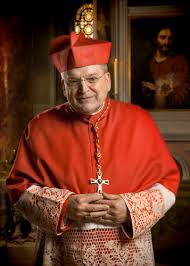
Cardinal Raymond Burke

Cardinal Raymond Burke

“Mercy, mercy!” cry others.  “There will be no change to the teachings of the Church, because they are the teachings of Christ Himself,” report some; “we must find new ways of responding to the crises that face today’s families,” respond others.  And, at least according to some observers, all of this public debate by such high ranking prelates is simply unseemly, with fingers being pointed at the other side, saying, “Well, he started it!”

What shall we make of all this?  As the members of the Extraordinary Synod gather in preparation of the opening Mass of the Synod on Sunday, perhaps we can place all of this in some historical and ecclesiological context, using the Second Vatican Council as a guide.

Peter vs Paul_21) Kasper vs. Burke: “Cardinals shouldn’t fight in public; it’s just wrong!”  Well, prior to — and during — Vatican II, cardinals and other bishops often engaged in public debates, wrote letters, published opinion pieces and so on.  It was all part of the process, and this is no different.  Ever since St. Paul and St. Peter got into it over the question of who could become Christian, bishops have disagreed, sometimes publicly and loudly, to anyone who would listen.  Consider it part of the necessary public discourse for such important issues.  But I also invite people to avoid polarization!  When two people argue, one could be right and the other wrong, both could be right, or both could be wrong!  These issues, like life itself, are complex and demand rigorous, comprehensive argument, but no one is helped by a “white hat, black hat” mentality.

2) Even the fault lines of the arguments are similar to those surrounding the Council.  The Pope had called for an ecclesial aggiornamento (updating), and the response from some bishops was that you could NOT update the Church without weakening church teaching, giving the impression that what had gone before was wrong and now being corrected, or that God’s truth was somehow being compromised.  Other bishops responded that doctrine develops (certainly picking up cues from Cardinal Newman’s work in the 19th Century), and that the pastoral needs of the 20th Century demanded new and more pastorally effective approaches.  None of this was new THEN, nor is it new NOW.  This is what led St. John XXIII to teach, in his opening address to the Council:

John OpeningThe substance of the ancient doctrine of the deposit of faith is one thing, and the way in which it is presented is another. And it is the latter that must be taken into great consideration with patience if necessary, everything being measured in the forms and proportions of a magisterium which is predominantly pastoral in character.

This seems to me to be precisely what Pope Francis is asking for, and what Cardinal Kasper is attempting to do: he is not questioning “the ancient doctrine of the deposit of faith,” but rather “the way in which it is presented.”  Furthermore, the framework for both content and method must be “predominantly pastoral” in character.  The pope included all of this in his opening address precisely because there had been such vehement debate on these points during the antepreparatory and preparatory phases leading up to the Council itself.  Fifty-two years ago this month, St. John was concerned that the bishops of the world be clear on what he was asking for, and what he perceived the Church and the world needed most.

3) Keep the relationship of theology and law in proper perspective.  This is very important, especially in the current debates.  Theology precedes law; law is not a source for theology.  Law develops out of the theology which comes first.  It is because we believe certain things about God and ourselves that we then develop laws which reflect those prior realities.  Looked at another way, we don’t start with the law and then develop a theology — or at least we shouldn’t!  Why do I bring this up?  Because in some of the recent breathless exchanges on the issues surrounding the Synod, there have been appeals to what the law has to say, while the “other side” has been speaking theologically.  Yes, theology and law intersect, certainly!  But the law serves theology, not the other way around.  Consider a debate between a medical doctor and a lawyer over the nature of a particular disease.  The doctor is going to look at the disease from within her own framework of science: causes, methods of transmission, treatments.  The lawyer is going to look at the same disease from with his own framework of the law: actions, responsibilities, jurisprudential history.  Same disease, different ways of addressing it.
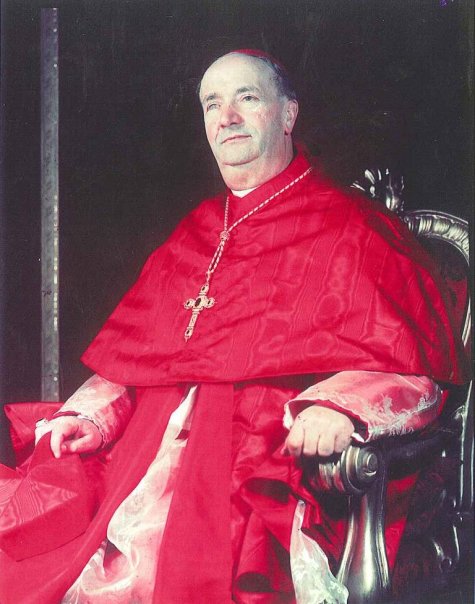
ottaviani

Cardinal Alfredo Ottaviani

During Vatican II, especially during the often fiery first session, the Prefect of the Holy Office (now known as the Congregation for the Doctrine of the Faith) was not a theologian at all.  The Prefect was a respected canon lawyer, Cardinal Alfredo Ottaviani.  Think about that: a canonist responsible for guarding the church’s doctrinal office.  This led to some fiery exchanges during the First Session of the Council, as many of the world’s bishops took to the microphone to complain publicly about the way Cardinal Ottaviani and his curial staff was dealing with theologians around the world.  It led the aged Cardinal to respond passionately in defense; he refused to stand down at the end of his allotted time and eventually one of the Cardinal-Moderators simply unplugged his microphone.  Cardinal Ottaviani left the Council and did not return for a couple of weeks in protest.

But consider this.  As I wrote above, we need to avoid a “white hat, black hat” approach to these arguments.  During Vatican II’s debate on war and peace in 1964 and 1965, there was no stronger opponent of ALL warfare than Cardinal Ottaviani.  To read his interventions on the subject, you could easily hear the voice of any number of folks “on the left” who were arguing to outlaw all war.  On this issue at least, the canonical lion was more “liberal” than almost everyone in the “progressive” group of bishops.  Just like everyone else, bishops are complex human beings who defy easy characterization.

As I also said above, public debates between bishops is no new thing.  But it is also important, when assessing an argument, to discern the frame of reference being used by the respective participants.  Theologians such as Cardinal Kasper are speaking and evaluating things theologically; canonists such as Cardinal Burke are doing the same, but canonically.

This all goes back to St. John XXIII’s point, to paraphrase: Certain points of theology cannot change, perhaps; but the way they get enshrined in practice and in law can and sometimes must change.
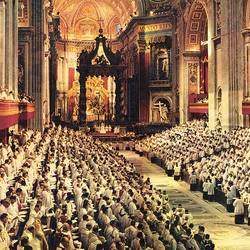
Vatican II

Vatican II

4) Since we’re looking at the Council, what did those bishops have to say about the current question?  You can rest assured that whatever documentation emerges from the Synod, there will be multiple references to the Pastoral Constitution on the Church in the Modern World (Gaudium et spes), especially paragraphs 47 to 52, which focus on the nobility of the family. Read the whole document here.  Many of the challenges identified in the preparatory work for the Synod were already realities identified by those bishops five decades ago: these are not new challenges.  In many ways, the work of these two synods (this year’s and next’s) can be understood as an extension or a continuation of the Council’s work.

5) Keep your expectations reasonable, and follow closely; this is going to be fun!  On the one hand we should not expect too much from this year’s Extraordinary Synod.  Its purpose is to prepare for NEXT year’s ORDINARY Synod.  The debates this year will help refine the questions and procedures to be dealt with more formally next year.  Synods like this do not hold the magisterial weight of a General Council (such as Nicaea, Trent, Vatican I or Vatican II), but they will certainly lead to significant developments nonetheless.  I would expect that no papal document will result from this first, Extraordinary Synod.  Pope and BishopsFollowing the Ordinary Synod next year, however, there should be an Apostolic Exhortation from the Holy Father.  I would also hope that, following this Extraordinary Synod, there might be another opportunity for listening sessions around the world in which experiences and opinions are sought from a wide variety of people.  And, hopefully, sufficient time will be given for the process, unlike last year in which tight deadlines prevented many people from responding to the questionnaire set out from the Synod office.  Again, our model can be Vatican II.  In between the Council’s sessions, bishops went home and consulted with many of their own experts on matters they would be discussing in the following session.  It was a graced time of mutual exchange and shared learning and consultation.

May this synodal process over the next year or so be fruitful and benefit the common good of all!

Swiss Guards

When Passion Goes Too Far: Crossing the Line

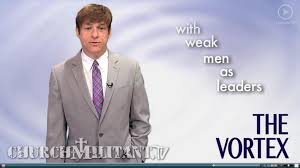
voris on dolanIt is nothing new for many people to be passionate about the Catholic Church, whether that passion is directed against the Church or for the Church.  However, passion should be balanced with compassion. As a theologian whose special interest is ecclesiology — the theology of church — I try to be aware of what’s going on in and around the church.  I try to avoid extreme positions on either side of the spectrum, firmly believing the ancient maxim “in medio stat virtus“, “virtue stands in the middle.”  Presuming the truth of that claim, then, we might conclude that “at the extremes stand weakness,” and perhaps even sin.  As one approaches the extremes, then, it becomes important to know where the boundaries are, the lines that one must not cross if it is truly truth and virtue that is sought.  For this reason I think it is important for us to consider the recent activities of a supposedly Catholic commentator by the name of Michael Voris.  I would not normally pay much attention to his work since in the several times I’ve reviewed it, I have found it consistently unbalanced and “over the top.”  But I was recently directed to a couple of his most recent broadcasts which seem even more so, and in my opinion, can give us a good example of how passion brought to the extreme crosses the line.  So, while I am loath to draw attention to his work on the one hand, I think that we also have a responsibility to challenge such extremism so we can all avoid it in the future.  Simply hoping that this kind of thing will just disappear if we ignore it is simplistic, dangerous and naive.

Mr. Voris has recently targeted for particular attention the Cardinal Archbishop of New York, Timothy Dolan.  (For full disclosure: I have known Cardinal Dolan for many years, first meeting him briefly when we were both in the seminary, and again more closely during the years I served on the senior staff of the USCCB.)  While there may be more videos like these out there, these two will give a sense of what is going on.  Watch them here and here.  

One of my first reactions when I watched them for the first time was what I would do if someone said such things about me in such a public forum!  Certainly I would be consulting an attorney about whether such videos might constitute slander or libel.  But the legality of these videos, at least under US law, is a matter far beyond my qualifications or competence.  I can only examine them as a theologian, so let’s begin by highlighting just a few of the claims Mr. Voris makes in the videos above.

Cardinal-DolanCardinal Dolan is accused of being “a wicked bishop”, of being “under the grip of the devil.”  He is accused of not caring for or loving the Church, and that he apparently no longer believes in Hell.  He is accused of “giving your blessing to a group publicly celebrating their sin,” and that “you give your approval to mortal sin. . . You give active homosexuality a free pass in your Archdiocese.”  Then Mr. Voris expands his list of complaints, accusing Cardinal Dolan of not supporting “faithful Catholics.”  He has, according to Voris, never publicly condemned Islam as “a heresy and a false religion that does not have supernatural faith.”  The Cardinal, he claims “has been a non-stop source of scandal” and is “not fit to be a bishop.”  Voris wants the Cardinal and any other bishops who agree with him (the Cardinal) to repent their sins and resign their office.

Where to begin?  While reasonable people might certainly disagree with the actions of any bishop, just as one might with any leader, one must certainly stop there, without going on to try to infer motivation or motive.  I am sure that if Cardinal Dolan were asked about these things, he would completely and fully reject all of these assertions, and with good reason. To lump together, as Mr. Voris does, sexual orientation and sexual activity is to miss an important distinction made in the teaching of the church.  Nowhere has Cardinal Dolan ever sanctioned sinful behavior by anyone, nor does the record indicate that he has ever given anyone a “free pass” on sin of any kind.  There is no substantiation of any kind for a claim that the Cardinal has lost his faith, or that he is not striving to provide for the cura animarum of the people of New York — all the people.  To spring from a criticism of certain decisions into a full blown attempt to characterize another person’s intentions and motivations — much less that state of that person’s soul — is not only fatally flawed logic, it is seriously deficient in Catholic morality.

But perhaps most disturbing is the challenge offered by Mr. Voris toward the end of the first video: “Do not think that the punishment visited on you will not be the most severe when you die, perhaps even before you die, if you do not change.”  He then cries, “Now is the time for an authentic Catholic uprising.”  For me, these statements are most disturbing and downright frightening. I suppose coming from a person whose website is called “Church Militant,” this should not be surprising.  Still, couched in such militaristic tones and context, one could easily infer a call to physical violence against the Cardinal and other bishops.

The last point I wish to highlight is the claim made in the crawler at the bottom of the video.  It is an advertisement for a paid subscription to the site, which professes to be “100% faithful to the Magisterium.”  I must confess that when I first saw that claim, while watching the video and its assertions about Cardinal Dolan and other “wicked bishops,” I laughed out loud.  How a person could claim to be completely faithful to the teaching authority of the Church while at the same time denigrating those men whose ministry includes being authoritative teachers of that Magisterium is simply nonsensical.

What are we to make of all of this?  Let’s review some basics.

PentecostThe Magisterium is not simply a “who”; it is a “what.”  Magisterium refers to the teaching authority of the Church, a Church we believe guided by the Holy Spirit.  Every person, in some way or another, and in the broadest sense of the term, participates in this teaching authority, constantly learning and sharing this faith.  Think of parents, for example, teaching and forming their children in faith, as they are charged at baptism; they are part of the magisterium in this broad sense.  But in a very specific and particular way, the highest human teachers in the Church are the College of Bishops, always in communion with each other and with the head of the College, the Pope.  Unless and until an authoritative judgment is made by the College (always in communion with the Pope), or by the Pope himself, that a bishop is no longer part of that College, then the bishop in question remains an authoritative teacher.  It is not within the competence of someone else (like Mr. Voris, or myself) to judge when a bishop is no longer teaching authentic or faithful doctrine.  In fact, I will go further and suggest that, if there should be a presumption of veracity and accuracy in presenting the Church’s teaching, that presumption goes to the bishops, not to anyone else.  Put simply, Mr. Voris is neither qualified nor competent to make the judgments he is attempting to make.

Do bishops disagree with one another?  Of course they do, but not about the fundamentals of the faith.  They may disagree over pastoral strategies, over how a particular situation will be dealt with in their diocese, and they will be certainly be judged on the exercise of their ministry when they stand before God.  But disagreement in practice does not necessarily mean a break in communion.

God as JudgeAm I saying that bishops never make mistakes?  Of course not!  Bishops make mistakes just like the rest of us, and they also deserve the benefit of fraternal correction.  Some bishops commit crimes and should be held accountable under civil, criminal and canon law.  But no one has appointed any of us to take the place of God in judging us all for our sins.  Alone we will stand before God and take responsibility for the way we’ve lived our lives.

Let’s take just one example from the litany of complaints made by Mr. Voris, and analyze just how wrong he is.  He condemns Cardinal Dolan for not publicly condemning Islam as “a heresy and a false religion”.  While this may be what he believes, it is NOT what the Catholic Church teaches (remember the claim that he is 100% faithful to the Magisterium?).  What DOES the Magisterium of the Church teach about Islam?

IslamHere’s some truly authentic magisterial teaching, found in Vatican II’s Dogmatic Constitution [please note that well — it is a DOGMATIC text, dealing with the most fundamental issues of faith and church] on the Church (Lumen gentium), #16:

But the plan of salvation also includes those who acknowledge the Creator.  In the first place amongst these there are the Mohamedans, who, professing to hold the faith of Abraham, along with us adore the one and merciful God, who on the last day will judge mankind.

Later, this thought is developed in the same Council’s Declaration on the Relation of the Church to Non-Christian Religions (Nostra Aetate), #3:

The Church regards with esteem also the Moslems. They adore the one God, living and
subsisting in Himself; merciful and all- powerful, the Creator of heaven and earth, who has
spoken to men; they take pains to submit wholeheartedly to even His inscrutable decrees, just as
Abraham, with whom the faith of Islam takes pleasure in linking itself, submitted to God. Though
they do not acknowledge Jesus as God, they revere Him as a prophet. They also honor Mary, His
virgin Mother; at times they even call on her with devotion. In addition, they await the day of
judgment when God will render their deserts to all those who have been raised up from the dead.
Finally, they value the moral life and worship God especially through prayer, almsgiving and fasting.

Since in the course of centuries not a few quarrels and hostilities have arisen between Christians and Moslems, this sacred synod urges all to forget the past and to work sincerely for mutual
understanding and to preserve as well as to promote together for the benefit of all mankind social justice and moral welfare, as well as peace and freedom.

Vatican IIIn fact, even earlier — when talking about religion in general, the bishops of the Council (that “episcopal college” mentioned above) taught at #2:

The Catholic Church rejects nothing that is true and holy in these religions. She regards with sincere reverence those ways of conduct and of life, those precepts and teachings which, though differing in many aspects from the ones she holds and sets forth, nonetheless often reflect a ray of that Truth which enlightens all men.

When a person claims to speak with complete faithfulness to the Magisterium, then, we should expect that this person would be echoing these teachings, which Cardinal Dolan has certainly done.  The Church does NOT teach what Mr. Voris teaches: that Islam is “a heresy and a false religion.”

Finally, I want to return to the threatening language used by Mr. Voris when he refers to punishment that he thinks may happen to Cardinal Dolan after he dies, “or even before you die,” and when he issues his call for an “authentic Catholic uprising.  I would refer Mr. Voris and anyone else who is interested to the following canons from the Code of Canon Law:

Can. 1372 A person who makes recourse against an act of the Roman Pontiff to an ecumenical council [note: such as Vatican II]  or the college of bishops is to be punished with a censure.

Can. 1373 A person who publicly incites among subjects animosities or hatred against the Apostolic See or an ordinary [note: such as Cardinal Dolan] because of some act of power or ecclesiastical ministry or provokes subjects to disobey them is to be punished by an interdict or other just penalties.

It would be interesting to hear the opinion of a canon lawyer with regard to these canons as they might apply in this instance.

Many lines have been crossed in these ranting diatribes by Mr. Voris against Cardinal Dolan and any other bishops Mr. Voris decides to condemn.  Lines of civility, lines of Christian charity, and lines of faithful adherence to what the Church actually teaches have all been overstepped..  One would hope that Mr. Voris will himself be open to fraternal correction.  We just heard about this in the Gospel last Sunday.  As Christ taught his disciples 2,000 years ago, as well as his disciples today:

 If your brother sins against you,
go and tell him his fault between you and him alone.
If he listens to you, you have won over your brother.
If he does not listen,
take one or two others along with you,
so that ‘every fact may be established
on the testimony of two or three witnesses.’
If he refuses to listen to them, tell the church.
If he refuses to listen even to the church,
then treat him as you would a Gentile or a tax collector.

voris on dolan 2Mr. Voris is entitled and free to make his own judgments about things.  However, he is not free to play fast and loose with the truths of our faith or to challenge and mock the legitimate and authoritative exercise of servant-leadership by a bishop in communion with the Church, regardless of his own personal disagreement with those teachings or that bishop.  Yes, Cardinal Dolan will someday give an accounting of his stewardship; so, too, will Mr. Voris and the rest of us.

A Voice from Vatican II: “The Switches are Thrown!”

There is so much barbarism and tragedy in the world today.  Why, then, am I blogging again on the Second Vatican Council?  Simple.  Others far more competent and knowledgeable than I are already offering their own insights.  I also believe that the Council, fifty years on, continues to offer us a point of view — a hermeneutic, if you will — through which to confront today’s pastoral challenges.

br051205Konig_1With that in mind, I recently came across an interview given fifty years ago by the influential young Cardinal Archbishop of Vienna, Austria, Franz Cardinal Koenig.[1] Before turning to the interview itself, however, it will be helpful to know something about the man himself.

Franz Koenig was born in 1905 into a farming family, the eldest of five children.  At the age of fourteen he entered the seminary for the diocese of Sankt Pölten, Austria.  He studied ancient and modern languages, literature, philosophy and humanities; he drew and painted and wrote poetry and drama.  He continued his education in Rome at the Pontifical Gregorian University, where he obtained a doctorate in philosophy in 1930.  He was ordained a priest in 1933 and earned another doctorate in theology in 1936. Throughout his time in the university he took courses on experimental psychology, biology, mineralogy, physics, chemistry and languages, but he wasn’t finished yet.  He continued post-doctoral studies at the Pontifical Biblical Institute, Rome (old-Persian religion and languages) and then obtained a fellowship for two semesters at the Faculty of Sociology of the Catholic University of Lille, France, where he obtained a diploma. He spoke German, English, Italian, French, Spanish, Russian and Latin, and could understand Syriac, ancient Persian and Hebrew.  His language skills would later prove invaluable on his many missions as a papal representative.

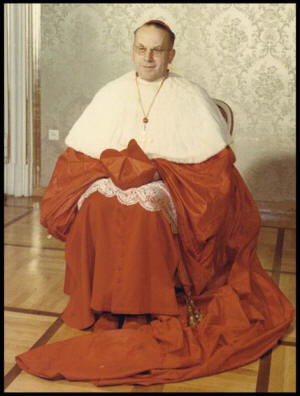
tn_konig7_jpgIn 1937, he returned to his home diocese and took on a variety of pastoral ministries, often involving the youth of the diocese.  Due to the Nazi regime in Austria, Fr. Koenig’s activities in teaching youth in defiance of Nazi law, made him a target of the Gestapo.  After the war, he was sent back to school in preparation for an academic career.  In 1945, when the University of Vienna reopened and he took courses in law, finance and economics, statistics, political science, linguistics, Syriac texts, ancient and modern history, modern philosophy, comparative anatomy, methodology of botany, morphology of plants, and more. He served as Professor of religion at the College of Krems from 1945-1948. In 1947, he also became a lecturer on the Old Testament and on comparative theology at the University of Vienna. Finally, he taught moral theology at the University of Salzburg from 1948 until 1952, when he was ordained a bishop at the age of 47.  Within four years, at the age of 50, he became the Archbishop of Vienna and was one of the first Cardinals named by St. John XXIII in 1958.  When he died in 2004 at the age of 98, he was last remaining Cardinal made by Pope John.  Cardinal Koenig was a close friend of Pope John’s, and his duties as Cardinal involved outreach to non-Christians and to a variety of locales around the world.  He was a strong proponent of outreach to all peoples, once saying that “As chaplain in St Pölten, I learned that I have to go to the people, that they must know me before we can have any meaningful talk,” he said. “So when I came to Vienna, I had no great political strategy or concept. I simply felt that I wanted contact with people of every persuasion. . . .  I wanted a dialogue with all people, and that included the leading political figures.”

KONIG FRANZ (+2004)1In 1964, the Council was in its Third Session.  Cardinal Koenig granted an interview which focused on the work of the Council as it was beginning to see the final directions various issues were going to take.  The Constitution on the Liturgy (Sacrosanctum Concilium) had already been promulgated at the end of the previous session (1963), and work was nearing completion on the landmark Dogmatic Constitution on the Church (Lumen gentium).  Much work remained, but the end was in sight, even if it would take a fourth and final session to complete everything.  And at the beginning of the interview, Koenig offered a wonderful insight about the work of the Council: “The switches are now thrown in the right direction.”  The metaphor is most apt, emphasizing that the impact of the Council itself will only truly be known in the decades following the event of the Council.  The Council was putting the institutional Church on a particular course, and only in the years to come would the results of those “thrown switches” be known.

He continued the image by saying, “We must appreciate the overall influence emanating from these deliberations, the impact resulting from them and we should realize that the gears certainly cannot be thrown into reverse anymore.”  Citing the work going on with dogmatic Constitution Lumen gentium)and the document on the pastoral responsibilities of bishops (the Decree Christus Dominus), Koenig observed that “easily 80% of the council Fathers are fully behind the innovations now proposed, especially in regard to what has been called the collegial principle, which in practice implies a decentralization and internationalization of the Church.”  He was being very conservative in his estimates.  By the time the final voting on these documents took place, Lumen gentium was approved by a vote of 2,151 placet to 5 non placet, and Christus Dominus by a vote of 2,319 placet to 2 non placet.

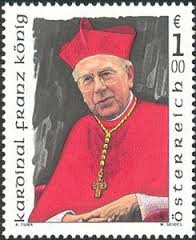
koenig stampThroughout the interview, Cardinal Koenig keeps to his theme that the Council is only the beginning of reform.  Citing world hunger as one example, he says, “We should face [it] realistically by expressing our concern for it and thereby inaugurate the sort of collective initiatives which eventually lead to tangible results.”

For we who serve fifty years later, I suggest that this long-range view remains essential in our own approach to ministry and the terrible pastoral needs of the world today.  How practical and yet how humble is the attitude expressed by so many of the Council Fathers, as we see in this particular case.  They fully accepted that the problems of the world would be best served, not merely by trying to devise immediate, tactical responses, but rather to place the Church on a proper course and to “inaugurate” strategic initiatives which might only bear fruit years later.

As we serve today, focused on the immediate needs of our people, do we also allow ourselves to be long-range thinkers and dreamers?  How might we “throw switches in the right direction” so that parishioners fifty or one hundred years from now will benefit, long after we are gone?  What will be the long-range implications of what we do today?  Certainly there are matters that cannot be left for the future: barbarism, terror and violence demand immediate attention!  And yet, in addition to thinking tactically, how might we also plan strategically?

???????????????????????????????????????

[1] The full interview may be found at Placid Jordan, OSB, “Interview with Cardinal Koenig,” in Council Daybook: Vatican II: Session 3, September 14 to November 21, 1964 (Washington, DC: National Catholic Welfare Conference, 1965), 181.  All quotations in this column are taken from that interview.

The Chiapas Decision: About More than Mayan Deacons

Chiapas DeaconsA few days ago, Deacon Greg Kandra posted an item on the restoration of diaconate ordinations in the Diocese of San Cristóbal de Las Casas in the State of Chiapas in Mexico. Read it here.  This is, of course, great news for the people of that diocese.  However, it is a decision which has far greater ramifications than the diaconate itself.  At issue is a renewed sense of ecclesial identity.  While some describe this as a “win” for a rehabilitated Liberation Theology, I believe it goes even farther than that.

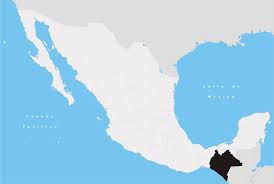
Chiapas2First, we need to get our bearings.  Chiapas is the southernmost state in Mexico; it shares its eastern border with Guatemala. Chiapas is home, not simply to Mayan descendants, but twelve recognized ethnic populations.  Poverty is extreme, the terrain is rugged, and the people for centuries isolated from other parts of the region.  The history of the area is one of suppression of the indigenous peoples.

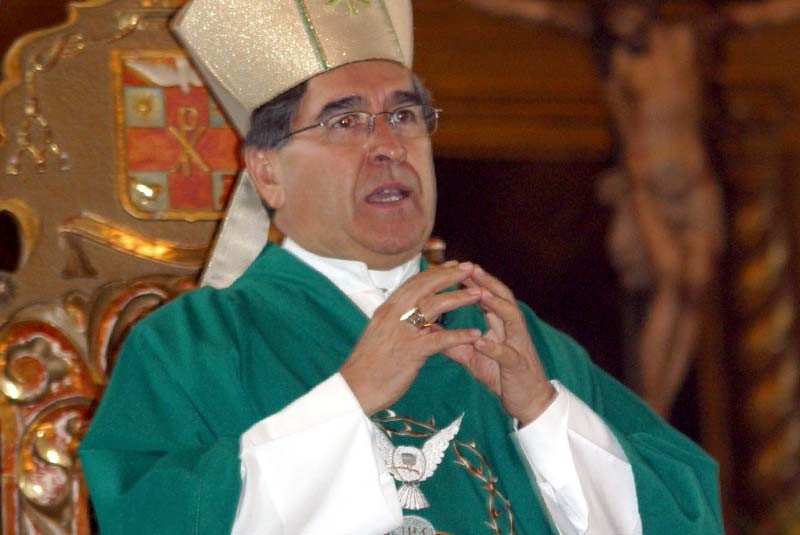
Second, we meet a young bishop named Samuel Ruiz Garcia.  Born in 1924, Samuel Ruiz was ordained a priest at 24 and was named bishop of Chiapas at age 35.  He went to seminary in Mexico and in Rome, completing a doctorate in Sacred Scripture after his ordination.  He was appointed bishop in November, 1959, and ordained and installed in January, 1960.  He remained bishop of that diocese for forty years, retiring as required at age 75, in 2000; he died in 2011.

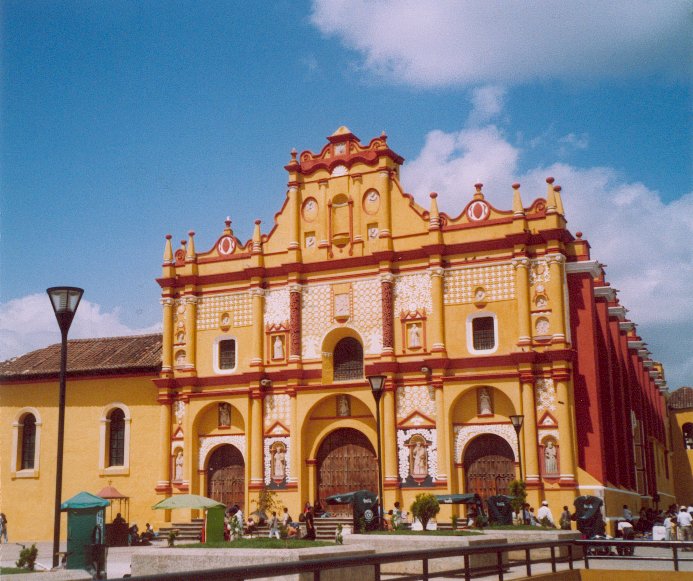
Samuel Ruiz2Moving to Chiapas, and following a tour the diocese which was accomplished largely by mule in order to reach some of the remote areas of the diocese, the bishop was greatly affected by the way the indigenous peoples were being treated.  Not unlike Bishop Oscar Romero in El Salvador, he was moved to do all he could to secure their rights and freedom.  Within two years he was attending the Second Vatican Council with its own renewal of ecclesiology, especially its ideas of collegiality, subsidiarity, co-responsibility, and human dignity.  Following the Council he was one of the guiding lights behind the Medellin Conference (1968) with its own focus on regional social justice.  His efforts involved adopting and adapting principles of what became known as liberation theology, which drew the ire of Mexican political leaders as well as Church officials.  He expanded efforts of inculturation, small base communities, and new catechetical methods.  And, after Pope Paul VI renewed a permanent diaconate in 1967, he looked into the diaconate as a way of encouraging and providing for indigenous religious leadership throughout the diocese.

I am not competent to discuss the civil and political aspects of Bishop Ruiz’ tenure, but from an ecclesiological standpoint, his forty years as diocesan bishop became a model for what is rightly termed “autochthonous” leadership.  Autochthonous has been defined as “indigenous” or “native”: specifically, “indigenous rather than descended from migrants or colonists”.  Bishop Ruiz’ obituary in the New York Times observed:

During his 40 years of presiding over a Roman Catholic diocese in Chiapas State, Bishop Ruiz cast light on abuses suffered by the Indians and sought to bring them into the church as equals with other Mexicans, challenging the rigidly stratified social order. . . .

Bishop Ruiz attracted a fervent following among Indians in Chiapas, who called him “Tatic,” which means “father” in a Mayan language. On Tuesday, Indian parishioners filled the cathedral in San Cristóbal de las Casas, a colonial town in the Chiapas highlands, for a memorial Mass that also commemorated the 51st anniversary of Bishop Ruiz’s ordination there. . . .

Bishop Ruiz was influenced by the Second Vatican Council, which in the 1960s called for bringing the Catholic faith to people in a way that reflected their own cultures. . . .

Starting in 1970, Bishop Ruiz ordered translations of the Bible and other religious texts in the indigenous languages of Chiapas. He trained Indian catechists, or instructors, to organize village assemblies throughout the mountains and jungles of the diocese. By the end of his tenure, there were more than 20,000 Indian catechists in Chiapas, said Pablo Romo, a former Dominican priest who worked with the bishop.

“He made the word of God accessible to the people,” Mr. Romo said.

chiapas-samuel-ruiz-funeral-3In addition to those 20,000 catechists, Bishop Ruiz ordained hundreds of deacons: by the time of his retirement in 2000, there were 341 deacons in his diocese, out of a total in all of Mexico of only 800!  Several news sources have reported that this number is the largest number of deacons in any Catholic diocese in the world, this is not accurate; several dioceses in the United States exceeded that number, even in 2000.  Regardless, it is a significant indication of Bishop Ruiz’ commitment to indigenous religious leadership.  It also got him into difficulties with the Holy See.

There were only 60 priests in the diocese, and Rome became concerned that there were so many deacons in relationship to the priests.  There were rumors, later found to be completely false, that Bishop Ruiz was ordaining women as deacons, as well as encouraging his deacons to join with rebel factions against the government. However, the Holy See’s interest was not only with Bishop Ruiz: In a pattern to be repeated elsewhere in Latin America, it is reported that St. John Paul II replaced as many as 86 of 100 Mexican bishops in two years alone, between 1997-1998. In 1997, two seminaries were closed.  The fear that Marxist applications of liberation theology were overshadowing its positive aspects, created great concern, and liberation theology as a whole came under considerable negative scrutiny.  John Paul II and Benedict XVI were both critical in their negative assessment of liberation theology, with Benedict XVI at one point apparently referring to it as “deceitful.”  (I’m still looking for the precise quote, however.)  Although Bishop Ruiz had been asked by the Holy See to suspend ordinations of any more permanent deacons, he continued.  Finally, his successor reluctantly agreed to a suspension, which the Holy See made permanent in 2001.

Felipe Arizmendi of ChiapasBishop Felipe Arizmendi, who has continued Bishop Ruiz’ pastoral plan for autochthony, has been in constant dialogue with the Holy See for the last fourteen years, attempting to explain his position, including his need to ordain as many as 200 new permanent deacons.  Until now, that has seemed an impossible task.  Many people confuse “autochthonous” with “autonomous” and they are two very different things.  No one wishing to maintain communion with the See of Peter would propose an “autonomous” church, and Bishop Arizmedi makes that position quite clear: that is NOT what they are doing.  An “autochthonous” structure, however, focuses on indigenous leadership, strongly enculturated by the people themselves.  It is this that Bishop Ruiz, and now Bishop Arizmendi, has sought.

But things seem to be changing.  Last year, Pope Francis welcomed Fr. Gustavo Gutierrez to the Vatican and honored a “founding father” of liberation theology.  In isolation, that may have been little more than a long-overdue sign of respect for Fr. Gutierrez and his ministry over many decades.  However, with this lifting of the ban on ordaining deacons in the diocese, perhaps more is at work here.

As I have long maintained in my own research and writing on the diaconate, we can never consider the diaconate out of the context of the entire Church.  Bishop Ruiz, and now Bishop Arizmendi, did not simply ordain deacons to have deacons.  They see the diaconate as it should be seen: as a sign of the servant-Church itself.  These deacons are serving as part of the larger pastoral plan to have an autochthonous church structure, much like those still in place in our Eastern Catholic churches, and which were the common polity of the ancient Church.  To read more about that, the wonderful work of another bishop, John R. Quinn, archbishop-emeritus of San Francisco, is most informative and helpful.  Find his books here.

Could this be part of a gradual movement in this direction, under the leadership of our first Latin American Pope?

In a June 12 letter following announcement of his intention to ordain 100 new deacons, Bishop Arizmendi lamented that 50 years after Vatican II revived the permanent diaconate, “in many parts its importance is still not understood.” I echo that sentiment, and pray for those about to be ordained to the service of the Chiapas vineyard of the Lord!

SanChristobal Cathedral


Priest to Deacon: “Being a deacon is not a REAL vocation.”

laying on of handsFrom the inbox comes a note from a very concerned brother deacon.  A priest recently told him that there was no real sacramental significance to being a deacon, unlike the ordinations of presbyters or bishops, which change a person at the very core of their being.  As another deacon once remarked to me after a Conference, a priest once told him that “being a deacon is not a REAL vocation, like being a priest or a religious.”  I have heard both of these observations before, and want to reassure my brother deacons that, contrary to the mistaken opinions of some of the priests involved (and others, of course): being a deacon IS a real vocation, and our ordination is just as “sacramentally effective and significant” as any other ordination to the other orders that make up the Sacrament of Holy Orders!

What’s going on here?  Why is there such confusion about this?  Let me suggest a few answers.  Perhaps this could be part of a conversation and ongoing formation offered to our seminarians and priests (and it wouldn’t hurt for deacons and lay folks to remember it, too!).

1) A “theology of the diaconate” is only just now being developed.  This may seem surprising, but when you think about it, it makes sense.  For about a millennium or so, “being ordained” was usually summed up in (reduced to?)  reflections on “being a priest.”  That was the order that mattered the most, since this was the order (of presbyters) who “confected the Eucharist”, and all other orders were preliminary to, and led to, the presbyterate.  For quite a while, even being a bishop was understood primarily through the lens of the priesthood, with the responsibilities of being a bishop understood primarily as a matter of jurisdiction, not sacramental significance.  This point of view was overturned at the Second Vatican Council, which restored a more ancient understanding of Orders, first by reclaiming the more ancient theological understandings of the episcopate (see Lumen gentium, ##18-27), returning the diaconate to an order to be exercised permanently, and by authorizing the restructuring of the entire Sacrament of Holy Orders; Pope Paul VI implemented those decisions between 1967 (when he adjusted canon law to permit the ordination of “permanent” deacons) and 1972 (when he suppressed, in the Latin Church, first tonsure, the minor orders of porter, lector, exorcist and acolyte, and the subdiaconate; he concurrently authorized LAY ministries of lector and acolyte, no longer to be ordinations, but lay institutions).  This means, vis-a-vis the diaconate, that for the first time in more than a millennium, a person could be ordained to a major and permanent order of the ministry (the diaconate) without eventually seeking ordination to the presbyterate.  Therefore, given the large scale absence of “permanent” deacons for so long, there was no proper theology of the diaconate-qua-diaconate.

The Holy See recognized this in a 1998 document from the Congregation for Catholic Education (#3):Ratio et Directorium

The almost total disappearance of the permanent diaconate from the Church of the West for more than a millennium has certainly made it more difficult to understand the profound reality of this ministry. However, it cannot be said for that reason that the theology of the diaconate has no authoritative points of reference, completely at the mercy of different theological opinions. There are points of reference, and they are very clear, even if they need to be developed and deepened.

So, what are these “points of reference” offered by the Holy See?

A.  First of all we must consider the diaconate, like every other Christian identity, from within the Church which is understood as a mystery of Trinitarian communion in missionary tension. This is a necessary, even if not the first, reference in the definition of the identity of every ordained minister insofar as its full truth consists in being a specific participation in and representation of the ministry of Christ. This is why the deacon receives the laying on of hands and is sustained by a specific sacramental grace which inserts him into the sacrament of Orders.

B. The diaconate is conferred through a special outpouring of the Spirit (ordination), which brings about in the one who receives it a specific conformation to Christ, Lord and servant of all. Quoting a text of the Constitutiones Ecclesiae Aegypticae, Lumen gentium (n. 29) defines the laying on of hands on the deacon as being not “ad sacerdotium sed ad ministerium”,(6) that is, not for the celebration of the eucharist, but for service. This indication, together with the admonition of Saint Polycarp, also taken up again by Lumen gentium, n. 29,(7) outlines the specific theological identity of the deacon: as a participation in the one ecclesiastical ministry, he is a specific sacramental sign, in the Church, of Christ the servant. His role is to “express the needs and desires of the Christian communities” and to be “a driving force for service, or diakonia”, which is an essential part of the mission of the Church.

C.  The matter of diaconal ordination is the laying on of the hands of the Bishop; the form is constituted by the words of the prayer of ordination, which is expressed in the three moments of anamnesis, epiclesis and intercession. . . .  [NOTE: The matter and form of the diaconate, presbyterate and episcopate were clarified and promulgated by Pope Pius XII in his 1947 Sacramentum Ordinis.   One would hope that by now this document would have found its way into seminary curricula! ]

holyorders2D. Insofar as it is a grade of holy orders, the diaconate imprints a character and communicates a specific sacramental grace. The diaconal character is the configurative and distinguishing sign indelibly impressed in the soul, which configures the one ordained to Christ, who made himself the deacon or servant of all. It brings with it a specific sacramental grace, which is strength, vigor specialis, a gift for living the new reality wrought by the sacrament. “With regard to deacons, ‘strengthened by sacramental grace they are dedicated to the People of God, in conjunction with the bishop and his body of priests, in the service (diakonia) of the liturgy, of the Gospel and of works of charity’”.  Just as in all sacraments which imprint character, grace has a permanent virtuality [The Latin original has: Sicut in omnibus sacramentis characterem imprimentibus, gratia permanentem virtualem vim continet]. It flowers again and again in the same measure in which it is received and accepted again and again in faith.

E. In the exercise of their power, deacons, since they share in a lower grade of ecclesiastical ministry, necessarily depend on the Bishops, who have the fullness of the sacrament of orders. In addition, they are placed in a special relationship with the priests, in communion with whom they are called to serve the People of God.

F. From the point of view of discipline, with diaconal ordination, the deacon is incardinated into a particular Church or personal prelature to whose service he has been admitted, or else, as a cleric, into a religious institute of consecrated life or a clerical society of apostolic life.(13) Incardination does not represent something which is more or less accidental, but is characteristically a constant bond of service to a concrete portion of the People of God. This entails ecclesial membership at the juridical, affective and spiritual level and the obligation of ministerial service.

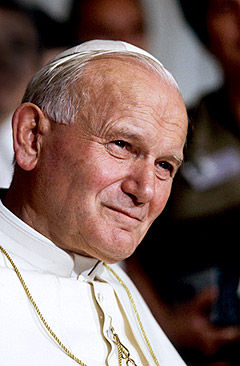
jpii2.  If this were not enough to demonstrate the proper character of a vocation to the diaconate, consider the words of soon-to-be Saint John Paul II, who offered a series of catecheses on the diaconate in 1993.  He observed with great clarity a theme he would make several times during his papacy:

The exercise of the diaconal ministry—like that of other ministries in the Church—requires per se of all deacons, celibate or married, a spiritual attitude of total dedication.  Although in certain cases it is necessary to make the ministry of the diaconate compatible with other obligations, to think of oneself and to act in practice as a ‘part-time deacon’ would make no sense. The deacon is not a part-time employee or ecclesiastical official, but a minister of the Church. His is not a profession, but a mission!  

So, why does any confusion persist on this matter?  Let me offer a couple of suggestions.

3.  The sacramental question of HOW the deacon participates in the one Sacrament of Holy Orders has developed since the release of the documents on the diaconate in 1998.  Following some initial changes to the Latin editio typica of the Catechism of the Catholic Church back in 1994, Pope Benedict in 2009 issued motu proprio Omnium et Mentem.  In this document, canon law (specifically cc. 1008 and 1009) was changed to reflect that only presbyters and bishops act in persona Christi Capitis (“in the person of Christ, the Head of the Church”), while deacons serve in a ministry of word, sacrament and charity.  This distinction, however, does not — and should not — be taken to suggest that deacons are no less ORDAINED into sacred ministry (which is the point of the canons on this point!) or that our ordination is no less sacramentally significant.  The canons simply reflect a theological position that there are two modalities of participation in the ONE Sacrament of Holy Orders. [Here’s an interesting side note: the change to canon law only affected the Code of Canon Law for the Latin Church; the Code of Canons for the Eastern Catholic Churches does not use the language of in persona Christi Capitis, so the distinction did not need to be made there.]

4.  I think that, since the Council, there has been legitimate concern on the part of many presbyters that the specific nature of the presbyterate has been under assault.  One bishop who participated in all four sessions of the Council as a young bishop, once remarked to me that he considered it a great shortcoming of the Council that they did not spend more time on the nature of the priesthood itself.  “After all,” this bishop said, “We spent considerable time talking about the sacramental nature of the episcopate, and we developed wonderful texts on the nature and role of the laity.  We even renewed the diaconate!  But we did not take into proper account the profound impact all of that would have on the presbyterate itself.”  As a result, many of the functions which had become part of the presbyterate prior to the Council now began to be disbursed to other ministers, both lay and, now, deacons.  This means that there is a certain concern that the presbyterate itself is being somehow “eroded” as others assume their own rightful and legitimate places in ministry, both within the Church and in the world.

But the bottom line remains:vocation

Deacons are ordained, and are permanently changed in the core of our being by that ordination (what we used to call in days gone by as “ontologically changed”).  We are always and everywhere full-time ministers, as St. John Paul II so passionately proclaimed, even when that ministry occurs outside the normal institutional structures of the Church.  During those same catecheses in 1993, John Paul II also reminded people that “a deeply felt need in the decision to re-establish the permanent diaconate was and is that of greater and more direct presence of Church ministers in the various spheres of the family, work, school, etc., in addition to existing pastoral structures.”  The diaconate is a sacrament and a proper vocation.  It is perhaps also a useful reminder to many of our sisters and brothers that we are all gifted with many “proper vocations” — calls from God! — in our lifetimes.  Our baptisms themselves constitute our primal vocation, before all others, for example!  Some of us are called to religious life, some are called to matrimony, some are called to Orders, and some of us are called to several of these at the same time!  Our God is a most generous God, and attempts to characterize one vocation over against another is to deny that divine generosity and to misunderstand the nature of vocation in the first place.

Now,  let us all go out and serve one another!

2012012311fishers_of_men_1_inside

“That All May be One”: International Week of Prayer for Christian Unity

banners_semana-oracion-unidad1-EN largeThis week (18-25 January) we observe the annual International Week of Prayer for Christian Unity.  You can read the message from Cardinal Kurt Koch, the Cardinal-President of The Pontifical Council for Promoting Christian Unity here.  There are many resources available for our use throughout this week, including these from the United States Conference of Catholic Bishops. This initial reflection on the Week is just that: a starting point.  Much more remains to be developed.  For now, let’s start at the beginning, which is quite simple yet profound: We Christians are already united — in a common baptism!  Before getting into our differences, let’s start at our point of unity.

While some folks seem to get more than a little nervous about things like this, it is important to remember that our concern for unity goes all the way back to Christ himself:

“I ask not only on behalf of these, but also on behalf of those who will believe in me through their word, that they may all be one. As you, Father, are in me and I am in you, may they also be in us, so that the world may believe that you have sent me.  The glory that you have given me I have given them, so that they may be one, as we are one,  I in them and you in me, that they may become completely one, so that the world may know that you have sent me and have loved them even as you have loved me.  Father, I desire that those also, whom you have given me, may be with me where I am, to see my glory, which you have given me because you loved me before the foundation of the world.  (John 17: 20-24)

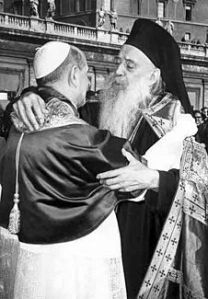
paul-athenagorasThis year we celebrate the fiftieth anniversary of the promulgation of the Second Vatican Council’s landmark document on Ecumenism, Unitatis Redintegratio, which gave added impetus to Catholic participation in the effort.  It is also the fiftieth anniversary of the historic meeting between Pope Paul VI and the Patriarch of Constantinople, Athenagoras.  Pope John XXIII, from the beginning of his papacy in 1958, had made Christian unity a goal.  On 5 June 1960, during the early preparations for the Council, Pope John established a “Secretariat for Promoting Christian Unity” as one of the preparatory commissions for the Council, and appointed Cardinal Augustin Bea as its first President. This was the first time that the Holy See had set up an office to deal uniquely with ecumenical affairs.

 [From the Vatican web site:]  At first, the main function of the Secretariat was to invite the other Churches and World Communions to send observers to the Second Vatican Council. Already, however, from the first session (1962), by a decision of Pope John XXIII, it was placed on the same level as the conciliar commissions. The Secretariat thus prepared and presented to the Council the documents on ecumenism (Unitatis redintegratio), on non-Christian religions (Nostra aetate), on religious liberty (Dignitatis humanae) and, together with the doctrinal commission, the dogmatic Constitution on Divine Revelation (Dei Verbum).

As a kind of introduction to the week’s prayer, consider some insights from the Council itself.  From Lumen gentium, the Dogmatic Constitution on the Church, we read the following:

baptisms-570x27915. The Church recognizes that in many ways she is linked with those who, being baptized, are honored with the name of Christian, though they do not profess the faith in its entirety or do not preserve unity of communion with the successor of Peter. . . .  We can say that in some real way they are joined with us in the Holy Spirit, for to them too He gives His gifts and graces whereby He is operative among them with His sanctifying power. Some indeed He has strengthened to the extent of the shedding of their blood. In all of Christ’s disciples the Spirit arouses the desire to be peacefully united, in the manner determined by Christ, as one flock under one shepherd, and He prompts them to pursue this end. (17*) Mother Church never ceases to pray, hope and work that this may come about. She exhorts her children to purification and renewal so that the sign of Christ may shine more brightly over the face of the earth.

This week we stress that unceasing prayer for unity.  But it also serves to remind us that we believe in the very real power of our common baptism, and that we already are in communion, even if it is not yet a perfect communion, with other baptized Christians.  The Decree on Ecumenism builds on this idea:

AllSaints3. . . .  In subsequent centuries much more serious dissensions made their appearance and quite large communities came to be separated from full communion with the Catholic Church-for which, often enough, men of both sides were to blame. The children who are born into these Communities and who grow up believing in Christ cannot be accused of the sin involved in the separation, and the Catholic Church embraces upon them as brothers, with respect and affection. For men who believe in Christ and have been truly baptized are in communion with the Catholic Church even though this communion is imperfect. The differences that exist in varying degrees between them and the Catholic Church-whether in doctrine and sometimes in discipline, or concerning the structure of the Church-do indeed create many obstacles, sometimes serious ones, to full ecclesiastical communion. . . .  But even in spite of them it remains true that all who have been justified by faith in Baptism are members of Christ’s body, and have a right to be called Christian, and so are correctly accepted as brothers by the children of the Catholic Church.  Moreover, some and even very many of the significant elements and endowments which together go to build up and give life to the Church itself, can exist outside the visible boundaries of the Catholic Church: the written word of God; the life of grace; faith, hope and charity, with the other interior gifts of the Holy Spirit, and visible elements too. All of these, which come from Christ and lead back to Christ, belong by right to the one Church of Christ.

Sean and AnnePerhaps, during the coming week, we can begin our prayer by celebrating the common foundation we share. Our communion may be imperfect, but it is no less real. For example, a recent photo of Boston’s Cardinal Sean O’Malley being blessed by Methodist pastor Rev. Anne Robinson during an ecumenical prayer service has created quite a stir around the internet.  Some people have been scandalized; others have questioned the Cardinal’s judgment, and still others have praised it.  Even canonist Edward Peters had to weigh in to clarify concerns and allay some fears.  Read his comments here.  As he points out: “No canon or liturgical law prohibits baptized non-Catholics from making the Sign of the Cross nor from using Holy Water in accord with its character. Thus, one Christian making the Sign of the Cross on another Christian’s forehead (in explicit commemoration of one’s baptism or not) is simply something to be explained to those not used to seeing it performed by a female Protestant minister on a Catholic cardinal. . . .”  In short, then, I think the image of this blessing of one Christian by another has really little to say about whether one is ordained or not; rather, it should be a powerful witness to all Christians of the common character of our shared baptism.

Certainly, many things still divide Christians.  But if we can start from a common foundation, future steps toward full communion seem far more achievable.

The Once and Future Pope Francis

It seems like Pope Francis is everywhere in the media these days.  Not only is he Time Magazine’s “Person of the Year”, he was named “Person of the Year” as well by the London Times, and even “The Advocate.”  Just today, I noticed today that Esquire Magazine has name him the Best-Dressed Man of 2013!  For a man who less than a year ago was a retired Archbishop in South America, this is quite a switch.

Over on Facebook, a friend noticed wryly that the media was now focused on Pope Francis’ Urbi et Orbi (“to the city and to the world”)message of world peace, as if this were a dramatic new statement launching the Church into hitherto unknown directions seeking peace and justice around the world.  Obviously, all prior popes, especially those of the past century or so, have focused on the same themes; there is nothing new in that.

But there IS something new going on, and I think we miss it at our peril: what’s new is not what the Pope is saying, but that people are hearing what he’s saying.  Rightly or wrongly, justifiably or not, many of our contemporaries had tuned out the messages and words of previous popes; now they’re inclined to tune back in.  It’s not that the message has changed one whit.  But the messenger has, and the way the messenger crafts his message has.  The classic words of the Second Vatican Council, echoing Pope St. John XXIII, told us that the Church

has always had the duty of scrutinizing the signs of the times and of interpreting them in the light of the Gospel. Thus, in language intelligible to each generation, she can respond to the perennial questions which people ask about this present life and the life to come, and about the relationship of the one to the other. We must therefore recognize and understand the world in which we live, its explanations, its longings, and its often dramatic characteristics (Gaudium et spes, #4).

Francis2selfieIt seems to me that the key to Pope Francis lies in that paragraph.  As a Church, we’ve been blessed with popes who could, since the Council, focus on certain “signs of the times” and their interpretation.  But that’s only the first part of what we need to do if we’re going to be proper evangelizers.  Many teachers are good at giving students the facts of things, but that doesn’t guarantee that simply knowing those facts will lead to life-changing wisdom.  We have to take the next steps in addition to a “just the facts, ma’am” approach.  So, in addition to reading the signs of the times in light of the Gospel, here’s the rest:

  1. We have to find “language intelligible to each generation,” and I would further interpret this to mean “language intelligible to each generation and culture”; the fact is, all people should be able to understand and comprehend what’s being said.
  2. The point of this understanding is to find what the Church proposes in response to the basic questions of life and the meaning of life.  If this connection is not made, then we are failing at the task!  But there’s still more.
  3. In order to make this connection for folks, we need to recognize and understand the world, and what it proposes to people.  But in addition, we need to understand what people in the world are longing for, and the way the world works.  I have frequently met deacons who, somewhat proudly, proclaim that they no longer have TVs in their homes, that they don’t watch the news or other secular programming, or that they only watch religious programming.  I submit that this is a huge misjudgment, especially for ministers of the Gospel in today’s world.

This is where Pope Francis is proving himself to be a master catechist an evangelist.  He clearly understands the the scriptures (beautifully so, I might add) and official church teachings.  However, what he is bringing to the task is a profound understanding of the rest of the mission: his words, his demeanor, his life style choices, his actions, all point to a messenger that is committed to the content and the context of the mission.  This is not in the least a criticism of previous popes.  No person can do everything.  However, those who assert that the pope’s change of style is unimportant because “the message” remains the same are missing the whole point.  The message is never just about the content  the message; the style and context of the message is equally important.

We call this evangelization.  If people who previously not “heard” the message are now able to “hear” it, God bless them, and God bless the messenger!

An Advent Remembrance: War and Peace

colour-smoke_2076773i7 December 1941.  Seventy-two years since that particular “Day of Infamy.”  World War II had, of course, begun years earlier.  By the time it ended, at least 70 million people were dead.  Pope John Paul II, in his 2004 Message for the World Day of Peace, referred to the Second World War as “an abyss of violence, destruction and death unlike anything previously known.”  How does a world recover from such madness?  For those of us who were born following the War, we have lived with its effects our whole lives, even though specific memories of the War continue to fade with the passing of the World War II generation.

For Catholics, I believe it is important to understand the Second Vatican Council as the Catholic Church’s response to World War II: the conditions that led to the War and the world that emerged after it.  Pope John XXIII announced his plans for the Council only fourteen years following the end of War.  Opening the Council, he observed:

55725AI

We feel we must disagree with those prophets of gloom, who are always forecasting disaster, as though the end of the world were at hand.  In the present order of things, Divine Providence is leading us to a new order of human relations which, by men’s own efforts and even beyond their very expectations, are directed toward the fulfillment of God’s superior and inscrutable designs. And everything, even human differences, leads to the greater good of the Church.

How do we cooperate with Divine Providence in attaining this “new order of human relations”?  The bishops of the Council were not seeking simple superficial updating of the Church; they were setting out to create a new understanding of the Church in a world already gone mad and in need of the “soul and leaven” a renewed Church might provide.  Pope Paul VI, in his famous speech at the General Assembly of the United Stations in October 1965, famously proclaimed:

paulvi_at_un2

Paul VI at the United Nations

And now We come to the high point of Our message: Negatively, first: the words which you expect from Us and which We cannot pronounce without full awareness of their gravity and solemnity: Never one against the other, never, never again.  Was it not principally for this purpose that the United Nations came into being: against war and for peace?  Listen to the clear words of a great man, the late John Kennedy [himself a veteran of World War II], who declared four years ago: “Mankind must put an end to war, or war will put an end to mankind.”  Long discourses are not necessary to proclaim the supreme goal of your institution.  It is enough to remember that the blood of millions of men, numberless and unprecedented sufferings, useless slaughter and frightful ruin are the sanction of the covenant which unites you, in a solemn pledge which must change the future history of the world No more war, war never again.  It is peace, peace which must guide the destinies of peoples and of all mankind.

What is particularly telling is the fact that when Pope Paul returned to Rome from this trip, he went immediately to the St. Peter’s and shared his insights with the assembled Council Fathers who, in their own turn, adopted the pope’s message as their own.  They were in the midst of their own work on their capstone document, Gaudium et spes, “The Pastoral Constitution on the Church in the Modern World.  In particular, they began working on the section dealing with war and peace, incorporating the insights of Pope John XXIII’s Pacem in Terris and Pope Paul’s speech to the UN.

No more war, war never again!

As we remember the personal, national and global tragedies of the Second World War, may we this Advent renew our commitment and preparation for the new order of human relations foreseen by Pope John.  May we, like Mary pregnant with the Christ, work to bring Christ and his Gospel to the world in the real, concrete terms envisioned by the Council and now renewed for us again by the words and deeds of Pope Francis.

Advent candle 2