Terrorism, Dachau and Diaconate: Perspectives and PBS

INTRODUCTION

12172xlAs I write this, reports are coming in from Baton Rouge about yet another attack with multiple casualties.  The world is reeling from the endless chain of violence and death of recent months.  On Friday, the PBS series Religion and Ethics Newsweekly ran a program on the Order of Deacons in the Catholic Church.  Given the state of the world, one might think this an odd or even irrelevant topic.   Upon reflection, however, I believe that there are some important dots to connect.  It is precisely because of the current state of violent death, destruction and havoc that the diaconate — properly understood — might offer a glimmer of hope.  After all, it was precisely because of the “abyss of violence, destruction and death unlike anything previously known” (John Paul II, referring to World Word II) that the Order of Deacons was renewed in the first place; we’re here to help do something about it. So we shall review the PBS story against that critical backdrop.

47e73934-588c-4a95-985f-3ddac791ede4.png.resize.298x135THE PBS PROGRAM: Religion & Ethics Newsweekly

First, watch the program or read the transcript for yourself; you may find both of them here.  The diaconate is not often covered in the media, so this could have been a wonderful opportunity to spread the word about a remarkable ministry.  Unfortunately, despite very obvious good intentions, the program was full of errors ranging from simple errors of fact to more serious, even egregious, errors of history and theology.  Furthermore, a wonderful opportunity was missed to connect the “concrete consequences” which the diaconate might offer a hurting world.

The Mistakes

Why focus on some of the errors made in the program?  First, simply to get them identified and out of the way.  Second and more important, it is crucial to dispel such errors because they can distort the meaning of the diaconate and distract the audience from its proper potential.

  1. “He’s a married layman.” This simple error of fact is made twice at the very beginning of the report.  Of course this is simply not true.  Deacons are clergy and not laymen.  For those of us who live and teach about the diaconate, this is usually the first red flag that the rest of the discussion is not going to go well.  Why is this distinction important?  Back to that in a moment.
  2. “Celebrating Mass is a function reserved only for priests who are considered heirs to the original apostles.” In Catholic theology, of course, the “heirs” or “successors” of the apostles are bishops, not priests.
  3. “[The deacon] did have to step in recently to speak the words of consecration at communion – for Catholics the most sacred part of the Mass. That’s because his pastor is on leave, and the priest filling in doesn’t speak English.” This is terribly wrong on several levels.  First, the deacon can be seen and heard praying part of the Eucharistic Prayer, which is absolutely reserved to priests alone.  The priest in question should have just said the prayer in his native language, whatever it is.  For years, Catholics of the Latin Rite celebrated Mass in Latin: no one stood next to the priest to translate the Latin for us.  Not only did the deacon not “have to step in” to do such a thing, church law expressly forbids it.  Canon 907 states: “In the eucharistic celebration deacons and lay persons are not permitted to offer prayers, especially the eucharistic prayer, or to perform actions which are proper to the celebrating priest.” My guess is that every deacon who saw that part of the segment is still cringing!  (The other cringe-worthy tidbit was seeing the deacon improperly vested, wearing his stole on the outside of his dalmatic. How cringe-worthy ?  Think wearing underclothing over your pants).
  4. VaticanII“In the Middle Ages the role of deacons began to fade as the power of priests and bishops grew. In the 1960s, the Second Vatican Council restored the role of deacons – but only for men.” The evolving role of deacons throughout history is far more complicated than that, and overlooks the fact that the diaconate never completely disappeared, but became primarily a stepping stone to the priesthood.  I fully acknowledge that the history of the diaconate in all of its complexity goes far beyond what can be covered in such a brief program, but still: the broad brush strokes of the history could have been recognized and acknowledged.  This is also when the program shifts to the question of the possibility of ordaining women as deacons.  I will deal with that question below.
  5. “Until recently, the wives of deacons were required to take the same classes over four years as their husbands did to prepare for the diaconate.” Here the reporter falls victim to a common danger when discussing the diaconate: extrapolation.  There are nearly 200 Catholic dioceses in the United States, and the procedures and processes of formation vary greatly from place to place.  National standards established by the US Bishops do not mandate such a requirement, although wives are definitely encouraged to participate to the extent possible so that the couple grows together throughout the formation process.  Even the “until recently” is confusing: perhaps in that particular diocese something has changed, but not in all.  Not every wife of every deacon candidate is required to write papers or attend classes. Like many things in the renewed diaconate, it varies by location and bishop. But even more important — and completely left out of the piece — is the question of vocation.  Preparing for ordination is far more than taking classes, writing papers, and giving practice homilies.  At the heart of formation is the crucible of discerning God’s will: is God calling a person to ordained ministry?  Becoming a deacon is not simply “signing up”, taking a few courses, and putting on the vestments.  This is a life-altering process which at the moment is only engaged in by men.  Whether that changes in the future remains to be seen.  And, if it does, and women enter formation, they too will then go through that crucible of formation — as well as the papers, the courses and the homilies.
  6. “After increasing for several decades, the number of men entering the permanent diaconate has begun to decline, despite a growing need.”  It is worth noting that the diaconate is the only vocation that is growing in the United States—outpacing the priesthood, sisters and religious life. In my own research on the diaconate, I would question again the extrapolation going on: perhaps in some areas or in some dioceses, the number of deacons is going down, but that is simply not the case throughout the country and the rest of the world.  The diaconate has been growing steadily for decades and continues to do so.  The diaconate worldwide has the potential to be one of the great success stories of the Second Vatican Council.

13-2-600x450Now, on the PLUS side:

One exceptionally brief section of the program was a bright spot, and captured the characteristic identity of the deacon.  Several deacons were shown installing a laundry room in a home for women emerging from crisis.  The reporter describes this group as “a ministry that responds to crises. . . .”  One of the deacons involved points out that “besides doing liturgical functions, we’re also called to serve the poor and serve the people of God.”  There it is: the role of the deacon is to respond to crises, to serve those most in need.  The identity of the deacon is expressed in many ways, but most characteristic is this focus on the needs of others: while we are called to exercise our ministries of Word, Sacrament, and Charity in a balanced way, all of it finds its most significant expression in the servant-leadership of the community in service.  If the program had focused on these dimensions — on the very heart of the diaconate itself — it might have avoided the problematic areas which they got largely wrong.
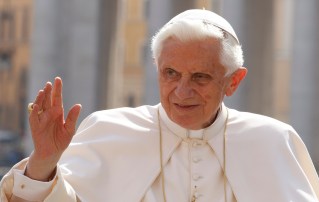
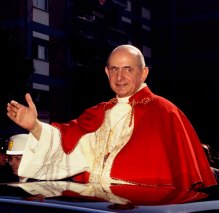
POPE WAVES AS HE ARRIVES FOR GENERAL AUDIENCE AT VATICAN

Diaconate and Diakonia: An Essential Element of the Church

The entire Church is called to be a servant-church, a diaconal church.  Pope Paul VI repeatedly taught that deacons are to be “the animators of the Church’s service,” and St. John Paul II carried it a step further when he referred to the diaconate as “the Church’s service sacramentalized.”  These popes were echoing the teaching and the decisions of the the bishops of the Second Vatican Council when they determined that the Church’s diakonia should be a permanent part of the sacramental life of the Church.  Being a deacon is not simply some activity which a person takes on themselves, at their own initiative; rather, it is believed to be a call from God as discerned through the help of the broader Church.

Pope Benedict wrote in Deus Caritas Est, citing St. Luke:

20. “All who believed were together and had all things in common; and they sold their possessions and goods and distributed them to all, as any had need” (Acts 2:44-5). . . .  As the Church grew, this radical form of material communion could not in fact be preserved. But its essential core remained: within the community of believers there can never be room for a poverty that denies anyone what is needed for a dignified life.

21. A decisive step in the difficult search for ways of putting this fundamental ecclesial principle into practice is illustrated in the choice of the seven, which marked the origin of the diaconal office (cf. Acts 6:5-6). . . .  Nor was this group to carry out a purely mechanical work of distribution: they were to be men “full of the Spirit and of wisdom” (cf. Acts 6:1-6). In other words, the social service which they were meant to provide was absolutely concrete, yet at the same time it was also a spiritual service; theirs was a truly spiritual office which carried out an essential responsibility of the Church, namely a well-ordered love of neighbor. With the formation of this group of seven, “diaconia”—the ministry of charity exercised in a communitarian, orderly way—became part of the fundamental structure of the Church.

It is time now to bring all of this together: in the light of Baton Rouge, Nice, Dallas, “Black Lives Matter,” terrorist acts and wounded communities all around the world: why should we care about an order of ministry within the Church?

THE DIACONATE IN CONTEMPORARY CONTEXT: WHY?

DachauBunkBedsSo, what is the connection?  How can the diaconate be understood against that much larger and violent backdrop?  The most important question of all is perhaps, why do we have deacons in the first place?

  1. We have deacons because the church and the world needed ministers to link the needs of people with the providence, mercy and love of God.  This is why deacons have always been described as being associated with the ministry of the bishop and with having the skills to administer “the goods of the Church” for the good of people.
  2. Deacons have historically not been exclusively associated with parish ministry.  For the bulk of church history, deacons served as the principle assistants to their bishops, often representing them in councils and as legates, in catechesis (consider Deacon Deogratias of Carthage), in homiletics (Deacon Quodvultdeus, also of Carthage) and by extending the reach of their bishops, such as Deacon Lawrence of Rome.  Over time, deacons became subordinate to presbyters as well as bishops, and increasingly involved in what we would recognize as parish ministry.  To this very day, deacons are ordained solely by their bishop, for service to him and under his authority: where the bishop is, so should be his deacon.
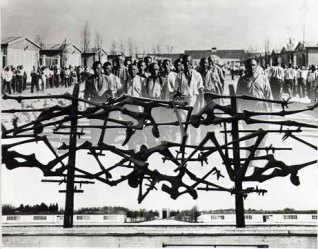
  3. dachau_collIn our time, as I’ve written about extensively, the Second Vatican Council decided overwhelmingly that the diaconate should be renewed as a permanent ministry in the church once again, even to the extent of opening ordination to married as well as celibate men.  The bishops in Council did this largely because of the insights gleaned from the priest-survivors of Dachau Concentration Camp.  Following the war, these survivors wrote of how the Church would have to adapt itself to better meet the needs of the contemporary world if the horrors of the first half of the 20th Century were to be avoided in the future.  Deacons were seen as a critical component of that strategy of ecclesial renewal.  Why?  Because deacons were understood as being grounded in their communities in practical and substantial ways, while priests and bishops had gradually become perceived as being too distant and remote from the people they were there to serve.

    In short, the diaconate was renewed in order to deal more effectively with the horrors of the contemporary world, not simply to function as parish ministers.

    As I frequently challenge myself and other deacons: is the energy I’m expending as a deacon helping to create the conditions in the world in which another “Dachau” could not exist?  Or am I involving myself in things that are superficial, contingent, and relatively inconsequential?
  4. light_christThe diaconate today, fifty years after the Council, has matured greatly.  Those who would talk intelligently about the diaconate need to keep that in mind.  Over the past fifty years, formation standards have evolved to better equip deacons for our myriad responsibilities, for example.  The diaconate has, at least in those dioceses which have had deacons for several generations, become part of the ecclesial imagination.  In some dioceses we have brothers who are deacons, fathers-in-law and sons-in-law who are deacons, fathers and sons who are deacons.  In one archdiocese, an auxiliary bishop is the son of that archdiocese’s long-time director of the diaconate.  As I mentioned above, the diaconate looks and feels different from one diocese to another and while it is tempting to generalize whenever possible, it is particularly dangerous.
  5. Let me briefly address the question of women and the diaconate.  This is a question demanding serious conversation, just as the Holy Father has indicated.  He is not alone, nor is he the first pope to think so.  Pope Paul VI, St. John Paul II, Pope Benedict (both before his ascension to the papacy and after), and now Pope Francis have all been interested in the question.  The 2002 study document of the International Theological Commission (ITC), convened by the authority of then-Cardinal Ratzinger, concluded that it remained for the Church’s “ministry of discernment” to work toward a resolution of the question.  But the main thing at this point is to have the conversation.  And that conversation will need to take place within the broader context of the lived diaconate, the diaconate whose pastoral praxis and theological reflection has deepened over the past fifty years.  Many who opine about women and the diaconate do so from a dated or inadequate understanding of the order.  If this conversation is going to be done, it must be done well.  In short, to understand the possibilities of women in diakonia, one must first understand the diaconate itself.
violenceHere is my point: If we deacons were restored in response to Dachau and similar world shattering violence, translate “Dachau” to Baton Rouge.  “Dachau” to Nice.  “Dachau” to “Black Lives Matter”.  “Dachau” to 9/11.  “Dachau” to every act of senseless terror and random  violence.  What are we doing to confront these tragedies?  What are we doing to work toward a world in which THEY can no longer exist?  This is so much more than who gets to exercise “governance” (a technical canonical term) in the Church, or who gets to proclaim the Gospel in the midst of the community of disciples.  Like the bishops of the Second Vatican Council, we must ask ourselves how we must evolve and adapt to the new violent conditions of our own age.  How can they best be addressed in the interest of the millions of suffering people — here at home and abroad — whose needs we are called to serve?  We deacons must, like our “founders” at Vatican II, look beyond the normal categories of parish and issues of “insider baseball.”
Paul-VII hope that there will be more media programs on the diaconate.  I hope that not only will they be done accurately, but that they will also be done with a sense of the vision and potential of the diaconate.

As Pope Paul VI said of us, we are to be “the animators” of the Church’s service: May we give our lives to change the world.


Deacons and Synod 2015

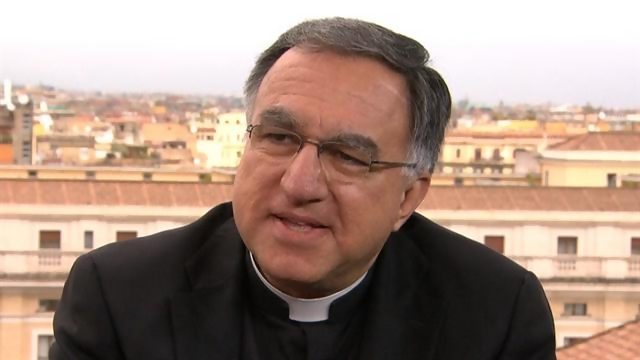
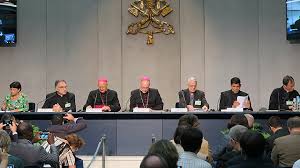
Synod Press ConferenceAt a recent press conference (6 October 2015) held in Rome highlighting some of the points raised thus far in the Synod, Father Thomas Rosica summarized one particular area of special concern for deacons.  As phrased by Father Rosica, some Synodal Fathers were asking, “How can the permanent diaconate come to the aid of so many people who are in need of mercy?  Are there new ways of using the permanent diaconate and those who are permanent deacons to be real ministers and bearers of mercy?”

Here is a link to the full press conference.  Father Rosica’s brief questions on the diaconate begin at about 24:08.

Before going on, let me point out that by focusing on this particular issue I am not ignoring other and far more substantive matters before the Synod!  However, deacons are not often mentioned in a context such as this, so it seems important for those of us interested in the diaconate to stop and take a closer look.

thomas-rosicaFirst: this was a summary given by Father Rosica.  It suggests that the questions may have been present in the interventions by several bishops, but we don’t know any other details.  Therefore, the phrasing of the summary is Rosica’s alone and we want to be cautious not to read too much into it as we would if it were contained in some kind of magisterial document!

DurocherSecond: Although Father Rosica doesn’t allude to the intervention of Canadian Archbishop Paul-Andre Durocher of Gatineau, Quebec (who was also present at the press conference but remained silent on this point), I’m guessing that it was within the context of “how can permanent deacons be real ministers or bearers of mercy?” that the Archbishop may have offered his intervention that there should be a conversation about women deacons.  From what I’ve seen so far, however, there’s no way to confirm that.  So, I do not wish to sidetrack onto that specific question in any case, because I think that Rosica’s questions themselves have foundational importance to how we understand and employ the diaconate in general.

Third: Although the Synod is, of course, focused on the family, notice how the questions on the diaconate refer in a particular way to mercy itself, so these are very broad based questions that suggest important opportunities for the diaconate in general, not simply within the context of the family.

So, to the questions.

new way“How can the permanent diaconate come to the aid of so many people who are in need of mercy?”  My first reaction to this question was to think of all the ways deacons already are coming to the aid of so many people!  In fact, I admit to a bit of defensiveness: What did the bishops (or, perhaps this was Father Rosica’s misperception) think we were already doing?  But then I settled down and thought, “What more COULD we be doing?”  And, of course, “How effectively are we already doing this — or not?”

  1.  Are we truly ministers of mercy?  If yes, how precisely are we doing that, across the spectrum of Word, Sacrament, and Charity?  Am I full of mercy when I preach and teach?  Am I full of mercy when we celebrate baptisms and weddings and all the myriad liturgical and sacramental ministries we’re involved in?  Am I full of mercy when offering a helping hand to the sick, marginalized, and the dying?
  2. After this examination of conscience, are there specific ways — more intentional ways — of conveying God’s mercy to others.  What are the very concrete ways (the “concrete consequences” of the deacon’s ministry referred to by Herbert Vorgrimler) we can be better at this?  After all, if the bishops (or Father Rosica) don’t perceive that we’re already doing this, then that perception is problematic and we need to work to fix it.

The second way Father Rosica phrased the question was interesting, too:

“Are there new ways of using the permanent diaconate and those who are permanent deacons to be real ministers and bearers of mercy?”

Here I sense several significant opportunities:

First: Notice the distinction he makes between the diaconate itself and those of us who are deacons.  This suggests that there is interest in the very nature of the diaconate, the fundamental core of the Order.

Second: What are the possible “new ways” of using the diaconate?  Taking just one example: might there be a re-opening of the question of deacons anointing the sick under certain circumstances, perhaps?  Most of the ways we can be used are already included in our canon and liturgical law, so something “new” would seem to be suggesting a willingness to look at things not previously considered.  I am using Anointing of the Sick only as an example here; I am not promoting it or suggesting that this is what is being suggested at the Synod.  But if the bishops are open to looking at “new ways” of using deacons, what might come up in the discussions?

Pope-Feet-2_2522628bThird: When Father Rosica alludes to deacons becoming “real ministers and bearers of mercy,” the first thing I thought of was what is happening with our priests in this regard.  Remember that the Holy Father has found new ways for priests to extend the hand of God’s mercy through sacramental reconciliation, and that he’s even identifying priests to go around the world to offer reconciliation.  Again not wanting to read too much into Father Rosica’s words here, but what additional responsibilities — what “new ways” — might the bishops find for deacons to take on?  Again, I am not proposing anything, and in particular, I am not suggesting that we start hearing confessions!  However, the questions here are most intriguing, and it will be interesting to see what the bishops might discuss.

If for no other reason then, these questions give us much to pray over and to ponder in the days and weeks ahead.  How can we deepen and extend our existing activities even more to convey God’s mercy to all?

A Voice from Vatican II: “The Switches are Thrown!”

There is so much barbarism and tragedy in the world today.  Why, then, am I blogging again on the Second Vatican Council?  Simple.  Others far more competent and knowledgeable than I are already offering their own insights.  I also believe that the Council, fifty years on, continues to offer us a point of view — a hermeneutic, if you will — through which to confront today’s pastoral challenges.

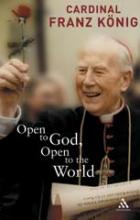
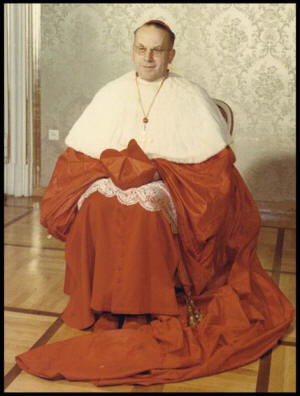
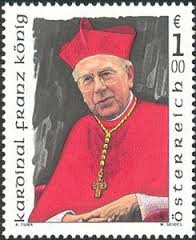
br051205Konig_1With that in mind, I recently came across an interview given fifty years ago by the influential young Cardinal Archbishop of Vienna, Austria, Franz Cardinal Koenig.[1] Before turning to the interview itself, however, it will be helpful to know something about the man himself.

Franz Koenig was born in 1905 into a farming family, the eldest of five children.  At the age of fourteen he entered the seminary for the diocese of Sankt Pölten, Austria.  He studied ancient and modern languages, literature, philosophy and humanities; he drew and painted and wrote poetry and drama.  He continued his education in Rome at the Pontifical Gregorian University, where he obtained a doctorate in philosophy in 1930.  He was ordained a priest in 1933 and earned another doctorate in theology in 1936. Throughout his time in the university he took courses on experimental psychology, biology, mineralogy, physics, chemistry and languages, but he wasn’t finished yet.  He continued post-doctoral studies at the Pontifical Biblical Institute, Rome (old-Persian religion and languages) and then obtained a fellowship for two semesters at the Faculty of Sociology of the Catholic University of Lille, France, where he obtained a diploma. He spoke German, English, Italian, French, Spanish, Russian and Latin, and could understand Syriac, ancient Persian and Hebrew.  His language skills would later prove invaluable on his many missions as a papal representative.

tn_konig7_jpgIn 1937, he returned to his home diocese and took on a variety of pastoral ministries, often involving the youth of the diocese.  Due to the Nazi regime in Austria, Fr. Koenig’s activities in teaching youth in defiance of Nazi law, made him a target of the Gestapo.  After the war, he was sent back to school in preparation for an academic career.  In 1945, when the University of Vienna reopened and he took courses in law, finance and economics, statistics, political science, linguistics, Syriac texts, ancient and modern history, modern philosophy, comparative anatomy, methodology of botany, morphology of plants, and more. He served as Professor of religion at the College of Krems from 1945-1948. In 1947, he also became a lecturer on the Old Testament and on comparative theology at the University of Vienna. Finally, he taught moral theology at the University of Salzburg from 1948 until 1952, when he was ordained a bishop at the age of 47.  Within four years, at the age of 50, he became the Archbishop of Vienna and was one of the first Cardinals named by St. John XXIII in 1958.  When he died in 2004 at the age of 98, he was last remaining Cardinal made by Pope John.  Cardinal Koenig was a close friend of Pope John’s, and his duties as Cardinal involved outreach to non-Christians and to a variety of locales around the world.  He was a strong proponent of outreach to all peoples, once saying that “As chaplain in St Pölten, I learned that I have to go to the people, that they must know me before we can have any meaningful talk,” he said. “So when I came to Vienna, I had no great political strategy or concept. I simply felt that I wanted contact with people of every persuasion. . . .  I wanted a dialogue with all people, and that included the leading political figures.”

KONIG FRANZ (+2004)1In 1964, the Council was in its Third Session.  Cardinal Koenig granted an interview which focused on the work of the Council as it was beginning to see the final directions various issues were going to take.  The Constitution on the Liturgy (Sacrosanctum Concilium) had already been promulgated at the end of the previous session (1963), and work was nearing completion on the landmark Dogmatic Constitution on the Church (Lumen gentium).  Much work remained, but the end was in sight, even if it would take a fourth and final session to complete everything.  And at the beginning of the interview, Koenig offered a wonderful insight about the work of the Council: “The switches are now thrown in the right direction.”  The metaphor is most apt, emphasizing that the impact of the Council itself will only truly be known in the decades following the event of the Council.  The Council was putting the institutional Church on a particular course, and only in the years to come would the results of those “thrown switches” be known.

He continued the image by saying, “We must appreciate the overall influence emanating from these deliberations, the impact resulting from them and we should realize that the gears certainly cannot be thrown into reverse anymore.”  Citing the work going on with dogmatic Constitution Lumen gentium)and the document on the pastoral responsibilities of bishops (the Decree Christus Dominus), Koenig observed that “easily 80% of the council Fathers are fully behind the innovations now proposed, especially in regard to what has been called the collegial principle, which in practice implies a decentralization and internationalization of the Church.”  He was being very conservative in his estimates.  By the time the final voting on these documents took place, Lumen gentium was approved by a vote of 2,151 placet to 5 non placet, and Christus Dominus by a vote of 2,319 placet to 2 non placet.

koenig stampThroughout the interview, Cardinal Koenig keeps to his theme that the Council is only the beginning of reform.  Citing world hunger as one example, he says, “We should face [it] realistically by expressing our concern for it and thereby inaugurate the sort of collective initiatives which eventually lead to tangible results.”

For we who serve fifty years later, I suggest that this long-range view remains essential in our own approach to ministry and the terrible pastoral needs of the world today.  How practical and yet how humble is the attitude expressed by so many of the Council Fathers, as we see in this particular case.  They fully accepted that the problems of the world would be best served, not merely by trying to devise immediate, tactical responses, but rather to place the Church on a proper course and to “inaugurate” strategic initiatives which might only bear fruit years later.

As we serve today, focused on the immediate needs of our people, do we also allow ourselves to be long-range thinkers and dreamers?  How might we “throw switches in the right direction” so that parishioners fifty or one hundred years from now will benefit, long after we are gone?  What will be the long-range implications of what we do today?  Certainly there are matters that cannot be left for the future: barbarism, terror and violence demand immediate attention!  And yet, in addition to thinking tactically, how might we also plan strategically?

???????????????????????????????????????

[1] The full interview may be found at Placid Jordan, OSB, “Interview with Cardinal Koenig,” in Council Daybook: Vatican II: Session 3, September 14 to November 21, 1964 (Washington, DC: National Catholic Welfare Conference, 1965), 181.  All quotations in this column are taken from that interview.

D-Day: A Personal Reflection

D-Day1I wasn’t at D-Day 70 years ago.  I wasn’t at Pearl Harbor 73 years ago.  I wasn’t in Poland 75 years ago.  But like everyone else alive today, my life has been given a context because of these events, the events which transformed the world.

The context is this: In the face of tyranny, good people rise up and take a stand and put their own lives and safety on the line in service of others.  The Polish citizens and their soldiers, most of whom were on foot or on horseback, trying valiantly to defend their homeland on 1 September 1939 against the Nazi juggernaut invading their country.  The sailors, Marines, soldiers and airmen — along with untold numbers of civilians, who found their world exploding literally around them on 7 December 1941 in Hawaii.  And the day we remember today — D-Day — 6 June 1944, men and women from all walks of life who had abandoned their “real lives” in order to support the war effort to overturn the Axis powers, took to the ships, landing craft, and aircraft to mount an Allied response to tyranny.

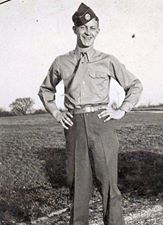
Uncle JoeAll of us have family members who took part.  In our family, two uncles served as paratroopers, and one of them was part of the 101st Airborne “Band of Brothers” who jumped behind the lines that day.  He wrote a letter a few weeks after D-Day to his brother, who had been injured in training, and that letter has become part of our family’s treasured tradition.  He describes in phenomenal detail his experiences of D-Day and the days immediately following.  When I first read that letter as a young boy in the 1950’s I thought it read like a movie and was too fantastic to believe.  It also changed forever how I viewed my uncle, because that letter revealed a young man I hadn’t met before.  When I read that letter today, as a man in my 60’s who was a career Navy officer, I see a young man like so many other young men and women who rolled up their sleeves, year after year, conflict after conflict, put their own lives on hold, and did what needed to be done without counting the cost.

In my own Navy career of 22 years, going from Seaman to Commander, every duty station I was ever assigned, every place we lived, every place I was sent on duty, was because of the events of 70 years ago.  Cyprus, Guam, Okinawa, Hawaii, Midway, Kwajelein Atoll, Singapore, and even the Stateside assignments — the context of our family’s life is found in the sacrifice of those men and women so many years ago.  And we must never forget.

In our own time, we too are called upon to serve without counting the cost.  How are we doing?  Will future generations look back at us and say, “They have given meaning to our lives”?

Well, are we?

D-Day2

Another Phenomenal Woman of Color: Sister Thea Bowman

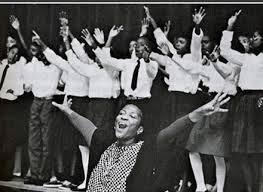
thea3All of us have been touched and blessed by the life of Dr. Maya Angelou.  Her recent passing had all of us of a certain age reflecting on her life and impact on our own lives.  I re-read her wonderful poem “Phenomenal Woman” (read it here), and my mind wandered to the other phenomenal women I’ve known: ALL of the women in our family, for example, every one of them: my wife, mother, sisters, cousins, daughters!  And then, listening to the rhythms of Dr. Angelou reading some of her own poetry, I was reminded of still another phenomenal woman of color: the dynamic, brilliant, multi-talented, and courageous Sister Thea Bowman, who died of cancer at age 52 in 1990.  Born and raised in Mississippi, Thea was a religious sister, singer, actress, teacher, liturgist, dramatist, Ph.D. with a particular expertise on fellow Mississippian William Faulkner, and above all, a passionate evangelist.

thea2I remember first hearing of Sister Thea many years ago, shortly after leaving the seminary.  Many of us seminarians had been helping out in African-American communities as we could during the civil rights movement, and soon word began to spread about this fiery young sister who was appearing on the scene.  Although she had earned her Ph.D. in English at the Catholic University of America, and became known as an expert on Faulkner, she was never a stereotypical academic!  Her principal mission was to enable, empower, awaken and inspire people, and her influence both within and outside of the African-American community is incalculable.

Over the last few days, I’ve mentioned her name to several people and to my amazement they had never heard of Thea.  This must not be allowed to happen!  I’m going to put up two videos here.  First is a biography of Sister Thea produced. shortly after her death.  As you can see, she continued to inspire even after the cancer that was killing her had confined her to a wheelchair.


The second video is truly remarkable.  The quality of the recording is not very good, so let me explain what you will see.  The US Bishops meet in general assembly twice a year.  This video is from one of those meetings, in 1989.  The bishops, as you will hear from the late Bishop John Ricard, had formed a Committee to support Black Catholics, and Sr. Thea was one of the consultants to that committee.  Terminally ill, she was invited to address the bishops, and — well, you will see what happens.  Keep that in mind: from her wheelchair, a dying Thea brings the bishops to their feet.

How many other Theas and Mayas are out there, still finding their voices?

RIP, Dr. Angelou.  RIP, Dr. Bowman.

Pray for us.

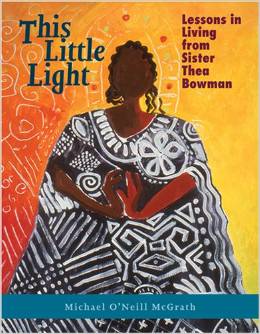
UPDATE: I was just informed that Brother Mickey McGrath has recently published his own work on Sister Thea.  Here’s a link to Amazon.com in case you’re interested.  I haven’t had a chance to enjoy it yet, but can’t wait to do so!

“Lead, Follow, or Get Out of the Way!”

Thomas Paine This famous quote, generally attributed to Thomas Paine, but used (and abused!) by many has inspired leaders for a long time.  “Leadership” and its exercise, especially in the Church, is something that concerns us all in one way or another.  Some years ago, I reflected on ecclesial leadership while working on my doctoral dissertation, which dealt with the theological and canonical issues related to governance and deacons.  Although my degree is in Theology, not Canon Law, there was no way to address this issue without consulting extensively with canonists, and, in particular, the late and great American canonist, Fr. James H. Provost.  Jim became a good friend before his death, and his loss is still being felt by all who knew him.  Provost

I recently came across some notes I made from an article Jim wrote entitled,“Canonical Reflection on Selected Issues in Diocesan Governance” (in The Ministry of Governance, James K. Mallett, ed.).  I offer the following list, taken and adapted from Jim’s article, as a reflection on traits essential to servant-leadership in the Church today.  Jim wrote them specifically for his fellow canon lawyers, but I believe they have relevance for all pastoral ministers.  The categories are Jim’s; the brief commentary is mine.

1)      Be always vigilant for the spiritual purpose.

As we serve the People of God, this vigilance should be at the forefront.  Regardless of the issue we are helping people with, what is the ultimate spiritual purpose behind it?  Without this focus, ministry might become little more than social work.  Obviously, this is not to suggest that social work is a bad thing!  For the minister, however, we go beyond that task.  As canon law itself reminds us, “The salvation of souls is the highest law” (salus animarum suprema lex).  Keeping this principle in mind will help us keep our priorities straight.

2)      Think with the Church.

As Pope Francis has recently reminded us, to “think with the Church” does not simply mean knowing the teachings of the Church, as important as that is, but to have a sense of what all members of the Church are thinking, and what their needs are.  In other words,  the Church — as People of God, Mystical Body of Christ and Temple of the Holy Spirit — is not simply the hierarchy, nor is the “mind of the Church” (mens ecclesiae) reducible to a collection of dogmas and doctrines: it involves active and caring listening to all, attempting to discern the will of God, and then acting accordingly.  In short, when we consider this maxim, Pope Francis would remind us, “Think with the WHOLE Church.”

3)      Serve if you would lead.

Anyone who has ever led others quickly realizes the profound truth that “a good leader is first a good follower.”  However, it is equally true that the best leadership style is a servant-leadership, one that cares for the people serving with the leader.  This is true, no matter what the venue.  After leaving the seminary after eight years, I joined the Navy and wound up serving on active duty for twenty-two years, first as an enlisted linguist, and then — for the bulk of my career — as an officer.  I served for many leaders, and had the privilege of serving in leadership as well: and the BEST leaders were always servant leaders.  Such a leader was always concerned first with the needs of those he or she is leading so that they are then free to carry out the mission, whatever that happens to be.  If this is true even in ways of life outside the Church, how much more profoundly is it true of those who serve in leadership in the Church.  Servant leaders put others first, dream dreams, have visions, and inspire others to greatness in the eyes of God.

4)      Use the power you have.

Power is not a bad word, despite the negative connotations often associated with it.  Power is the first of the divine attributes, and power is imparted to us through the sacraments.  Power is the ability to act, to serve, to provide care: all of this is good.  Often people, even those who serve in ministry, will bemoan the apparent fact that they “don’t have the power to change” something.  Still, all of us, through the grace of sacramental initiation and, for some, ordination, have a measure of “power” which must be used in service of others.  Instead of worrying about what we cannot do, we need to focus on what we can do!

servant-leadership-mountain2-e12788128583935)      Empower the Church.

Speaking of power, it is meant to be shared.  When Christ heals Peter’s mother-in-law, she immediately gets up to serve.  That’s a good lesson for us in ministry: We are called not only to help others, we are called to help them UP.  We are to give them the power they need to serve others and continue that mission.  Power is meant to be used and shared.

6)      Promote and protect rights.

The theology of the Church, as expressed through the law of the Church, focuses not only the responsibilities we have under the law, but on the rights we have: rights that come from God, and rights that are extended through the ministry and authority of the Church.  Jim’s advice here, to focus on rights, puts the correct emphasis on ministries.  The responsibilities we have flow from those rights: the responsibility for parents to be the prime educators of their children in faith, for example, flows first from their RIGHT to do so!  In other words, we are encouraged not only to react to our responsibilities but to act first out of our rights; to be ACTIVE, not merely REACTIVE.

7)      Consult when making decisions.

Fr. Provost was reminding canonists that the law often requires prior consultation in decision-making, but his advice is helpful to all of us.  The Church, from its earliest days, has valued collegiality, collaboration and consultation.  Consider, as just one example, the so-called “Council of Jerusalem” when Paul went up to Jerusalem to meet (confront?) the other leaders of the Church over the issue of Gentile converts.  After talking together, those early leaders wrote a letter to the converts which acknowledged their dependence on the Holy Spirit who then informed their decision.  Although we often hear from some folks that “the Church is not a democracy,” this is simply too simplistic and ignores the evidence of history, which suggests widespread models of collegiality and consultation, and we ignore that to our peril.

8)      Interpret the law as it is meant to be interpreted.

This is a tricky one, but critical!  For those of us who are not lawyers, it might be tempting to “read the black” and assume we know precisely what it means!  Language, however, is symbol, and symbols always “contain” more than appears at first sight.  When serving in ministry, do we make the proper attempts to find out how specific laws are to be interpreted?  Consider point #1 again: How am I to interpret this law in light of the overall spiritual purpose of the situation?  I am not suggesting that we find ways around our laws; merely that they will need to be interpreted as the law itself expects.  For that, consultation may be required  (see #7)!

9)      Be generous.

One principle of the interpretation of Church law involves the very “generosity” of the law.  The law exists for the spiritual good of people, and that involves being as generous as possible with the benefits of the Church.  For example, do we seek out ways to provide the sacraments to people?  We saw this recently when Pope Francis baptized the infants in the Sistine Chapel, including a child of a couple not yet married in the eyes of the Church.  The situation of the parents, while of concern to us of course, need not cause us to be stingy with the benefits of baptism for the child as well as her parents.  All of us in ministry can think of countless other examples: we need to think with our arms open.

10)   Be consistent.

Every pastoral situation is unique, as we all know full well.  And yet, justice obliges us to be consistent in our interpretation and application of law, while still appreciating the unique demands of each situation.  I think the caution here also involves the dangers of parochialism or favoritism for some people, and a narrow interpretation for those we may not know — or like! — as well!  This gives us a needed balance of pastoral approach.  It also conveys a sense of positive predictability: we are trying to be even-handed with all because all are equal in the sight of God.

11)   Be timely.servantLeadershipLogo

Is this one ever important!  Remember, again, that Jim was writing this to fellow canon lawyers, reminding them that “justice delayed is justice denied.”  That applies across the whole spectrum of pastoral ministry.  Are we as responsive as we should be to the questions, requests, concerns that come our way, or do we procrastinate or even ignore certain things?  The people we serve have a right to a timely response, whatever their need is.  How do we feel when it seems someone is ignoring or discounting us and our concerns?

12)   Be forthright.

Many of us struggle with this one.  As ministers, we don’t want to hurt others.  Sometimes, however, we are the bearers of bad news or difficult decisions.  Jim’s reminder is that, despite the difficulties which we may encounter in doing so, we need to be honest and direct with those we serve.  This does not mean that we are insensitive or nasty about things; it simply means that we all have to be honest with each other.

I, for one, continue to struggle with these principles.  Still, they are a good “checklist” for servant-leadership, and can serve as a fine reflective tool when we’re on retreat, for example!  Perhaps it is better to say that they can form part of a ministerial examination of conscience as we grow in service to others.  There are times when each and every one of us is asked to “lead.”  At other times we are all called to “follow”, and still other times when we just need to “get out of the way”!

Francis washing feet