 Today in Rome the Vatican’s Commission for Religious Relations with Jews released a new document exploring unresolved theological questions at the heart of Christian-Jewish dialogue. According to Vatican Radio,
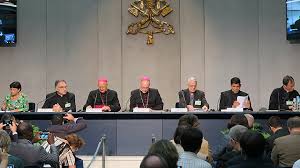
The new document, entitled “The Gifts and Calling of God are Irrevocable”, marks the 50th anniversary of the ground-breaking declaration ‘Nostra Aetate’. It was presented at a press conference in the Vatican on Thursday, by Cardinal Kurt Koch, Fr Norbert Hofmann of the Vatican Commission, together with two Jewish representatives, Rabbi David Rosen, International Director of Interreligious Affairs for the American Jewish Committee, and Dr Ed Kessler, founding director of the Cambridge Woolf Institute.
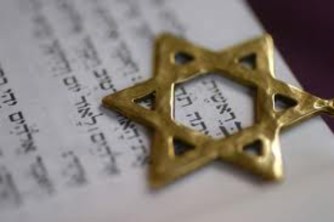 It has been a distinct privilege for me over the years to serve as a Hebrew linguist in a variety of contexts, and five years ago I was asked by the Center for Catholic-Jewish Studies to give a very brief reflection on “The Significance of Nostra Aetate” on the occasion of the 45th anniversary of its promulgation by the Second Vatican Council. So what I am about to write should not be read in any way as a criticism of the great efforts that have been made over the past fifty years to celebrate the relationship of Jews and Catholics! And, as the new document released today underscores, so much more remains to be done in this regard, and I fully embrace that effort.
But. . . .
Nostra Aetate is about much more than the relationship of Catholics and Jews. In today’s world, we need to pick up the other threads of that marvelous document, including what it has to say about Islam.
I love the scripture that is the title of the new document: “The Gifts and the Calling of God are Irrevocable” is from St. Paul’s letter to the Romans 11:29. Indeed, God has given many gifts and many calls, and Nostra Aetate focuses on those which have been given to those outside of Christianity.
 Let’s take a closer look at the document itself. Much has been written about the genesis of the document, so there is no need to rehearse all of that here. Suffice it to say that Nostra Aetate, in the final analysis, is not the work of one person, as influential as so many individuals were in its inception and development: John XXIII himself, Jules Isaac, Augustin Bea, to name just a few.
Rather, the document, after years of often heated debates, is the result of the collective work of the Catholic bishops of the world gathered together in solemn Council. The people of those conciliar days, people of all faiths and of no faith at all, had lived through the horrors, violence, death and destruction of the first half of the 20th Century. The scope of that violence had so expanded that old dividing lines began to disappear. A bomb, after all, doesn’t discriminate when it explodes between ages, religions, military status, or wealth. Following the lead of St. Pope John XXIII, the Council itself soon embraced the reality that its work was indeed for “all people of good will” and not simply for Catholics.
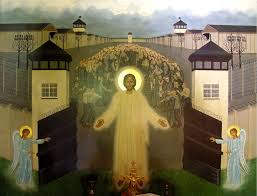 The reason that Pope John called the Council in the first place was so that all the bishops from around the world could together tackle the very real life and death issues that were affecting all people, not just Catholics. This was not some simple superficial ceremonial event; it was, in fact, an attempt to make faith in God something transformative so that the world would never again find itself in the midst of the tragedies of the first half of the 20th century. It is in this light, then, that the significance of Nostra Aetate must be seen.
It is a brief document of only five numbered paragraphs; only one of them, paragraph four, specifically addresses Judaism. The other paragraphs, therefore, must be seen in their application to ALL “non-Christian religions.” Paragraph #1 sets the stage:
1. In our time, when day by day humankind is being drawn closer together, and the ties between different peoples are becoming stronger, the Church examines more closely her relationship to non-Christian religions. In her task of promoting unity and love among all people, indeed among nations, she considers above all in this declaration what people have in common and what draws them to fellowship.
What are these shared elements among all people?
One is the community of all peoples, one their origin, for God made the whole human race to live over the face of the earth. One also is their final goal, God. His providence, His manifestations of goodness, His saving design extend to all, until that time when the elect will be united in the Holy City, the city ablaze with the glory of God, where the nations will walk in His light.
People expect from the various religions answers to the unsolved riddles of the human condition, which today, even as in former times, deeply stir the human heart: What is a human being? What is the meaning, the aim of our life? What is moral good, what is sin? Whence suffering and what purpose does it serve? Which is the road to true happiness? What are death, judgment and retribution after death? What, finally, is that ultimate inexpressible mystery which encompasses our existence: whence do we come, and where are we going?
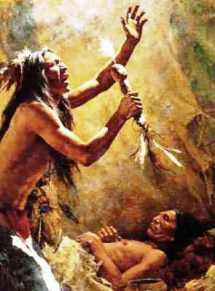 So far, then, the Council is focused on all people. Now, in paragraph #2 the bishops turn to people who have found “a certain perception of that hidden power which hovers over the course of things and over the events of human history; at times some indeed have come to the recognition of a Supreme Being, or even of a Father. This perception and recognition penetrates their lives with a profound religious sense.” These comments apply to a wide variety of religious expression, from various Eastern forms to Native American and on and on. Then they turn specifically to certain Eastern religions:
In Hinduism, people contemplate the divine mystery and express it through an inexhaustible abundance of myths and through searching philosophical inquiry. They seek freedom from the anguish of our human condition either through ascetical practices or profound meditation or a flight to God with love and trust.
Buddhism, in its various forms, realizes the radical insufficiency of this changeable world; it teaches a way by which people, in a devout and confident spirit, may be able either to acquire the state of perfect liberation, or attain, by their own efforts or through higher help, supreme illumination.
Likewise, other religions found everywhere try to counter the restlessness of the human heart, each in its own manner, by proposing “ways,” comprising teachings, rules of life, and sacred rites.
And here comes the money quote, the teaching that encapsulates the entire document, in my opinion:
“The Catholic Church rejects nothing that is true and holy in these religions.”
She regards with sincere reverence those ways of conduct and of life, those precepts and teachings which, though differing in many aspects from the ones she holds and sets forth, nonetheless often reflect a ray of that Truth which enlightens all people.
 Paragraph #3 specifically addresses Islam:
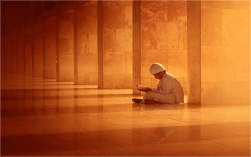
3. The Church regards with esteem also the Moslems. They adore the one God, living and subsisting in Himself; merciful and all-powerful, the Creator of heaven and earth, who has spoken to men; they take pains to submit wholeheartedly to even His inscrutable decrees, just as Abraham, with whom the faith of Islam takes pleasure in linking itself, submitted to God. Though they do not acknowledge Jesus as God, they revere Him as a prophet. They also honor Mary, His virgin Mother; at times they even call on her with devotion. In addition, they await the day of judgment when God will render their deserts to all those who have been raised up from the dead. Finally, they value the moral life and worship God especially through prayer, almsgiving and fasting.
 And in language made even more poignant over the last generation, the bishops write:
Since in the course of centuries not a few quarrels and hostilities have arisen between Christians and Moslems, this sacred synod urges all to forget the past and to work sincerely for mutual understanding and to preserve as well as to promote together for the benefit of all mankind social justice and moral welfare, as well as peace and freedom.
Paragraph #4, as I mentioned above, treats Judaism. I leave that paragraph aside for this posting NOT because I do not firmly believe in its profound significance but because I am trying in this instance to offer the broader context of Nostra Aetate, especially vis-a-vis Islam. So we now turn to the concluding paragraph of the document, paragraph #5:
5. We cannot truly call on God, the Father of all, if we refuse to treat in a brotherly way any person, created as he is in the image of God. Humanity’s relation to God the Father and the relationship of people to their brothers and sisters are so linked together that Scripture says: “He who does not love does not know God” (1 John 4:8).
Therefore, the bishops conclude with these words. Please notice well that these words apply UNIVERSALLY and are not restricted to our relationship to Judaism alone. Indeed these words apply to ALL OTHER RELIGIONS given the scope of this documents. Do they inform us today in our dealings with the followers of Islam?
No foundation therefore remains for any theory or practice that leads to discrimination between man and man or people and people, so far as their human dignity and the rights flowing from it are concerned.
The Church reproves, as foreign to the mind of Christ, any discrimination against anyone or harassment of them because of their race, color, condition of life, or religion. On the contrary, following in the footsteps of the holy Apostles Peter and Paul, this sacred synod ardently implores the Christian faithful to “maintain good fellowship among the nations” (1 Peter 2:12), and, if possible, to live for their part in peace with all men,(14) so that they may truly be sons of the Father who is in heaven.(15)
It is in this light, then, that we find Nostra Aetate so profound. The statement that “the Catholic Church rejects nothing of what is true and holy” could sound rather obvious to some readers today, but for those bishops, this was a realization formed out of the real agonies endured by so many within their own lifetimes. They came to recognize that truth and holiness are not the province of any one church or faith, or form of government or economic system, and that it is only in recognizing this fundamental truth that healing and peace may be found. In a world still reeling from successive wars and atrocities, the bishops found a greater appreciation of our shared scriptures, especially St. Paul’s famous insight that “God does not take back the gifts he bestowed or the choice he made” (NA 4; Rom 11:28-29).
Nearly all of the bishops who promulgated the document have now passed into eternal life, but we remain. They brought their own life experiences, and the experiences of their people, into the Council aula, with the hope of transforming the world into a place where all could live in peace and justice. That mission has not changed for us. We too must bring our own experiences to bear on the life of the world that still suffers from poverty, war, discrimination, injustice, violence and death. In what ways, concretely, can we search together for Truth and Holiness? In what ways, concretely, can we work together – as sisters and brothers in a shared heritage – to end all hatred and persecution? Just as the bishops then together hammered out a document, a mission, to lay before the world, we “in our own time” (NOSTRA AETATE) must do the same — not only with Islam as a religion but even those fringe elements who hate us and would destroy us.
St. Pope John XXIII is said to have remarked about Communism: “Communism is the enemy of the Church, but the Church has no enemies.” That insight — that the Church has no enemies — can enlighten us no less today, especially during this Extraordinary Jubilee of Mercy.


 The Extraordinary Jubilee of Mercy, proclaimed by Pope Francis today in Rome, actually began fifty years ago with the solemn closing of the Second Vatican Council on 8 December 1965. When dealing with the Catholic Church it is always good to step back and take a long view on what is going on, and today’s events in Rome are no exception. Let’s connect some dots.
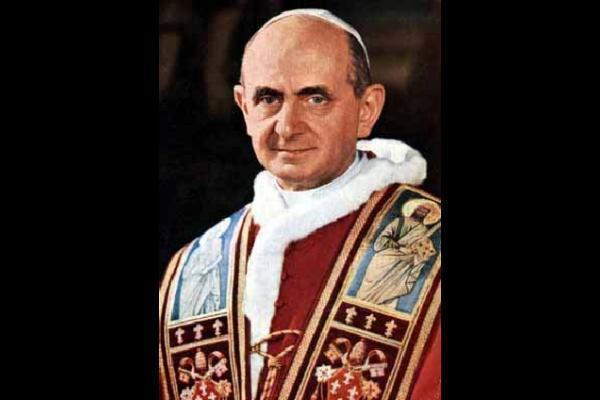
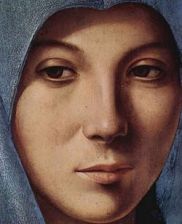 The Church’s teaching about Mary was originally crafted as a separate document by the curia before the Council began. However, the world’s bishops rejected this arrangement, rightly including Mary at the heart and climax of its dogmatic Constitution on the Church, Lumen gentium. Mary, our sister and our mother, the first disciple of the Christ, is held up to all as the model of Christian discipleship. Fifty years ago, therefore, standing on the same spot where Pope Francis stood earlier this morning, Pope Paul VI ended his homily with the following observation:
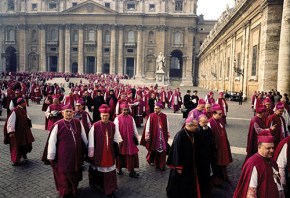 Vatican II is a gift that keeps on giving. The great historian of the Church, Hubert Jedin, once observed that it takes at least a century to implement the teachings and decisions of a general Council. If he is correct, and I believe he is, we have only now just reached the fifty yard line as we say in American football. For all the progress made, much more remains to be done. Let’s take a closer look at those closing ceremonies to the Council, because there are some significant elements there that point the way to what happened earlier today.
 Another point we must stress is this: all this rich teaching is channeled in one direction, the service of mankind, of every condition, in every weakness and need. The Church has, so to say, declared herself the servant of humanity, at the very time when her teaching role and her pastoral government have, by reason of the council’s solemnity, assumed greater splendor and vigor: the idea of service has been central.
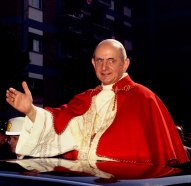 Pope Paul digs deeper, using the image of a bell:
 Finally, at the end of the Mass closing the Council, a remarkable thing happened. Most people today are unaware that it even took place, and that is a real tragedy, for it sheds a light on the whole proceedings, and points the way to our contemporary Jubilee. A series of messages from the Council Fathers was read to the world. The bishops of the Council prepared these messages because they wanted the world to realize that the Council had not been simply an exercise of ecclesiastical navel-gazing; rather, the work of the Council was focused outward, to the very real needs of the people and the world. In the introduction to the messages, the bishops write:
 Today, here in Rome and in all the dioceses of the world, as we pass through the Holy Door, we also want to remember another door, which fifty years ago the Fathers of the Second Vatican Council opened to the world. This anniversary cannot be remembered only for the legacy of the Council’s documents, which testify to a great advance in faith. Before all else the Council was an encounter. A genuine encounter between the Church and the men and women of our time. An encounter marked by the power of the Spirit, who impelled the Church to emerge from the shoals which for years had kept her self-enclosed so as to set out once again, with enthusiasm, on her missionary journey. . . Wherever there are people, the Church is called to reach out to them and to bring the joy of the Gospel, ,and the mercy and forgiveness of God. After these decades, we again take up this missionary drive with the same power and enthusiasm. The Jubilee challenges us to this openness, and demands that we not neglect the spirit which emerged from Vatican II, the spirit of the Samaritan, as Blessed Paul VI expressed it at the conclusion of the Council. May our passing through the Holy Door today commit us to making our own the mercy of the Good Samaritan.








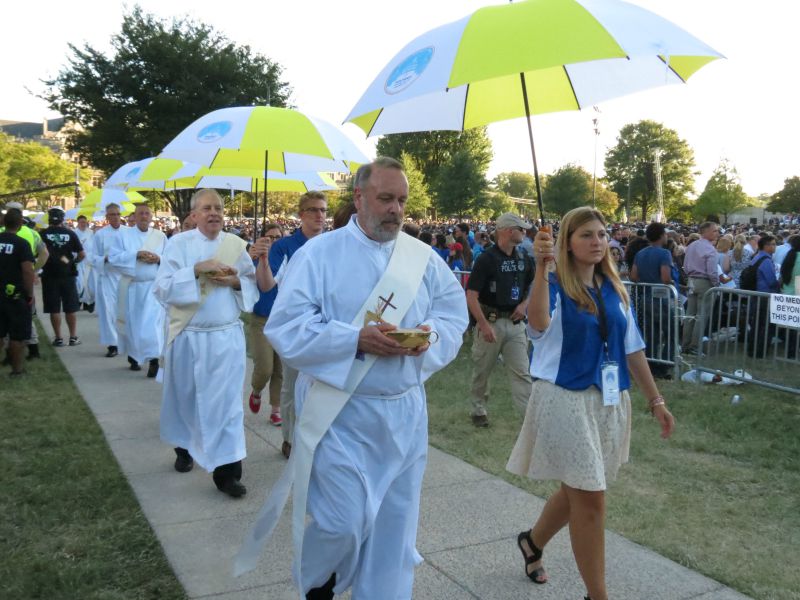






 Deacons Today: Servants in a Servant Church