[Posted here with permission. It will be published in the next issue of OSV’s The Deacon.]
This essay is, in many ways, a kind of lament. Many of us have written extensively on the disappointing and even disheartening lack of deacons in attendance at the first General Assembly of the Synod either as participants or as theological or canonical consultants. As hurtful as it is, we must certainly continue in our wonderful and grace-filled ministry to those most in need around us. To grieve over missed opportunities does not relieve us of those obligations.
My mentor at the Catholic University of America, Father Joseph A. Komonchak, has written and spoken often of the gap between the glorious words we sometimes use to describe the Church, and the reality of the Church as many people experience it. He wrote, “If there is a single question that has haunted me for the forty years that I have now been teaching ecclesiology, it concerns the relationship between the glorious things that are said in the Bible and in the tradition about the Church – ‘Gloriosa dicta sunt de te, civitas Dei!’ (Ps 86:3) – and the concrete community of limited and sinful men and women who gather as the Church at any time or place all around the world.” He described how people’s eyes “seemed to glaze over when someone spoke of the ‘Mystical Body of Christ’ or ‘Mother Church’ or ‘Bride.’ Theologians might have found it interesting to explore such notions, but what could they have to do with the people in the pew?” In this essay, then, we will “mind the gap” between those “gloriosa dicta” about the diaconate along with the frequent “de profundis” (Ps 130:1) sometimes experienced by the Church’s deacons.
Ah, the gloriosa dicta!
Throughout the patristic literature we find repeated references to the deacon serving “in the very ministry of Christ,” that the relationship of the deacon and bishop should be like the relationship between God the Father and God the Son, and that the deacon should be the eyes and ears, heart of soul of the bishop, that deacon and bishop should be like “one soul in two bodies.”
In our own time, we have the language of Vatican II, which includes the statement that diaconal duties are “ad vitam Ecclesiae summopere necessaria” – supremely necessary to the life of the Church. The Council continues by describing the diaconate itself as “a proper and permanent grade of the hierarchy.”
Moving beyond the Council, popes and theologians continued to say glorious things about the diaconate. Pope Paul VI referred to the diaconate as the “driving force” for the Church’s service, and Pope St. John Paul II repeated that description before adding that the diaconate is “the Church’s service sacramentalized.” Church documents and the work of contemporary theologians built on that language, using terms like “the deacon is an icon of Christ the Servant”, while James Barnett’s classic work on the diaconate refers to us as a “full and equal order.” Another early text even makes the claim that, “A parish, which is a local incarnation of Church and of Jesus, is not sacramentally whole if it is without either priest or deacon.”
Such marvelous and glorious and humbling words! A lexicon of service to inspire and drive the diakonia of the Church!
But then, de profundis….
But is this how deacons experience things in their daily exercise of ministry? Is this how the lived reality reflects these glorious words? Is this how our parishioners and fellow ministers, lay and ordained, see us? If it is, praise God! If it isn’t, what can we do, as the English say, to “mind the gap” between theory and practice? Deacons are happy and fulfilled in their various ministries, while at the same time, there are stories of presbyters, religious, and laity who do not seem to “get” the diaconate and even, in some cases, are antagonistic toward it. Deacons report instances where pastors “don’t want” the bishop to assign a deacon to the parish, and still other cases where deacons are accused of perpetuating clericalism in the Church. Still others have been told that “the diaconate isn’t a true vocation.” In short, the gap between the gloriosa dicta of theory and the de profundis of praxis is, in many cases, wide and deep. And so we come to the question: how might we close the gap?
Enter the Synod on Synodality.
What an opportunity for representatives of all God’s People to gather and discern together the future of the Church! But when the time came to assemble for the 16th Ordinary Assembly of the Synod of Bishops, where were the deacons?
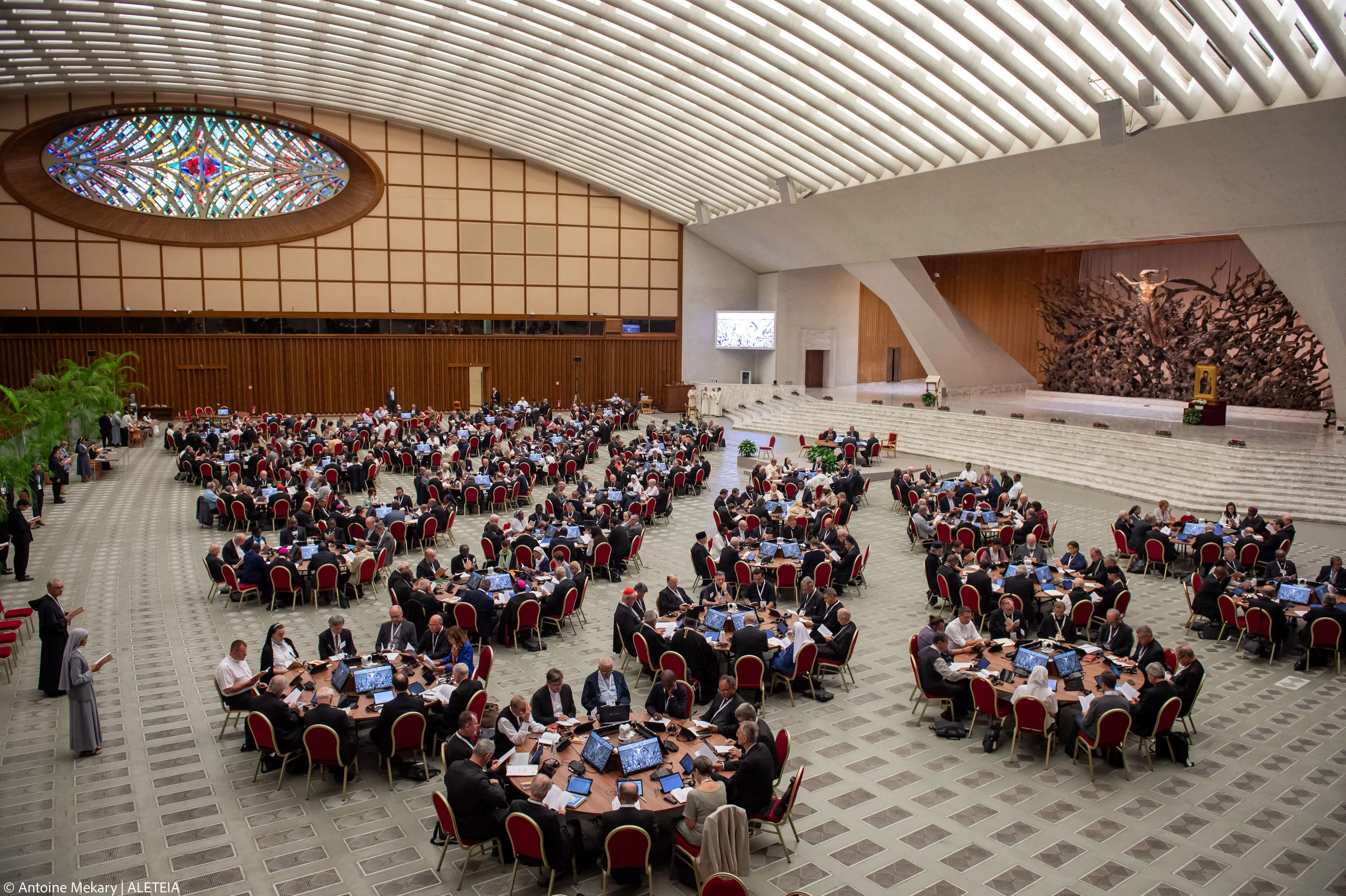
Certainly, the Synod Secretariat faced a massive challenge: ensuring participants and consultants representing the universal Church in all its richness of laity, religious, and clergy. Delegates were chosen by episcopal conferences, from the Eastern Catholic Churches, selected leaders from the Roman Curia, and 120 delegates personally selected by Pope Francis. In total, 363 people were voting members, including 54 women. In addition to the voting members, 75 additional participants acted as facilitators, experts, or spiritual assistants. Wonderful!
And one deacon. (Actually, two: one was from Syria about to be ordained to the presbyterate.)
There were other lacunae. Many observers noted the lack of parish priests, the poor, and even the lack of substantive influence of the assembled theological consultants when contrasted with the influence of the periti at the Second Vatican Council. But nowhere was the inequity more glaring than that of the diaconate. Imagine a group of men calling a meeting to talk about women, but with no women present. Imagine a meeting about the priesthood, with no priests participating. And imagine a meeting about the diaconate with no deacons. In a choir, each singer has their own voice, and yet each one must listen to the others to form beautiful harmony. If the Church were a choir, the same applies: everyone would have a voice, while listening to all the other voices. Deacons have been told, in glorious terms, that they are part of the choir. But, in terms of the Synod, they have no voice. In a choir, is it better to talk about a tenor or to hear one? In the church, is it better to talk about deacons, or to hear them?
Someone seems to be listening, at least about the lack of parish priests at the Synod. The Synod Secretariat has announced recently an extraordinary 5-day gathering of some 300 priests convening in late April. According to the Secretariat, this is to respond to the desire of the Synod participants to “develop ways for a more active involvement of deacons, priests, and bishops in the synodal process during the coming year. A synodal Church cannot do without their voices, their experiences, and their contribution.” The announced gathering is therefore good news. But once again the question recurs: Where is the gathering of the deacons?
Once again, there is the gap between glorious words and actual practice. When you tell someone that they are valued and that “their voices, their experiences, and their contribution” are vital, and then do nothing to open the door to those voices, why should the nice words be believed? To be excluded again, after the gap is pointed out, feels hurtful and dismissive, conveying clearly that deacons have no voice worth hearing, no experience worth sharing, and no insights to give or to receive. It sends the clear message that deacons are unnecessary, with nothing to contribute. The gap between “gloriosa dicta” and “de profundis” remains.
In conclusion, what may be done? Some will rightly say that none of this impedes our responsibility to care humbly for others and that we do not need a seat at the Synodal tables. I fully affirm the first part of that claim. But serving does not mean we should not also have a share in the Synodal process. As I have suggested elsewhere, perhaps one course of action might be to have conversations within our own parishes and dioceses and pass those insights along to our bishops. Perhaps theologians and canonists might direct the results of their research on the diaconate to the Synod Secretariat for their use. No matter what we do, however, we must do everything we can to bridge the gap between words and actions. As heralds of the Gospel, we can do no less.
Initial Reflections on Deacons and Priests in the Summary Reportof the
First Session of the XVI Ordinary General Assembly of the Synod of Bishops
For the nurturing and constant growth of the People of God, Christ the Lord instituted in His Church a variety of ministries, which work for the good of the whole body (Lumen Gentium, 18).
Introduction: Memories
The old man was tired. We had been conducting a series of interviews over several weeks, and today’s interview had drained him as he recalled people and events from decades earlier. But the last two questions had re-energized him as he shifted in his chair and leaned forward to respond. “Bishop,” I had asked, “two more questions. First, for many years, you used to talk about the Second Vatican Council all the time. In recent years, however, you rarely talk about it. Why not? Second, are there issues that you think the Council Fathers overlooked or did not emphasize as much as they should have?”
The bishop was the bishop emeritus of a Midwestern diocese. He had attended all four sessions of Vatican II as a young newly ordained auxiliary bishop. He had agreed to these interviews as an essential contribution to the oral history of the Council. His responses to these questions were particularly poignant.
“Well, Bill, I’ll tell you. Your two questions go together. The answer is one word: the priesthood.” He explained that, after the Council, he had enthusiastically embraced the implementation of the Council. He created a Diocesan Pastoral Council, restructured and expanded his diocesan staff, and personally spread the news of the Council throughout the diocese. However, not many years after the Council, the dwindling number of priests became a torrent, and the number of seminarians plummeted. As the years passed, the bishop began to wonder if something they had done at the Council – or not done – was responsible. It dawned on him that while the Council had done some wonderful things, perhaps they had missed something.
On the one hand, they had called all people to perfection in holiness, obliged the laity to greater participation and co-responsibility for the Church, advanced their own understanding of the nature of episcopal ministry, addressed reforms in religious life, and even revitalized a diaconate permanently exercised. But the world’s bishops had not addressed the priesthood in any substantive way. The bishop said that the very group who would be responsible for the ongoing pastoral implementation of so many of the Council’s decisions were not consulted in advance, were not represented in the conciliar debates, and were not properly formed and informed to actualize the vision and realize the potential of the Council. The bishops had assumed the overall stability of the nature and ministry of the priesthood. Until his death, the bishop agonized over this lacuna and its effects.
The 16th Ordinary General Assembly of the Synod of Bishops
This memory came to mind while reading the Synthesis Report of the 16th Ordinary General Assembly of the Synod of Bishops. This essay will focus on Section 11 of the Report, titled “Deacons and Priests in a Synodal Church.” Before beginning, however, I want to be clear: I could not be more excited about Pope Francis and his call to recognize, affirm, and expand the synodal character of the Church. For the pilgrim church described by Vatican II to continue on its way to the Kingdom, a “synodal path” is essential. However, if the Synod were a choir, I believe some voices would be missing.
By all accounts from those who were there, the 2023 General Assembly was a positive and exhausting experience. The Synod Secretariat at the Holy See faced a Herculean challenge: identifying participants and supporting players representing the universal Church in all its rich tapestry of laity, religious, and clergy. Delegates were chosen by episcopal conferences, from the Eastern Catholic Churches, selected leaders from the Roman Curia, and 120 delegates personally selected by Pope Francis. In total, 363 people were voting members, including 54 women. In addition to the voting members, 75 additional participants acted as facilitators, experts, or spiritual assistants. From a planning perspective alone, the Synod office did a yeoman job of pulling together an impressively diverse team of participants.
At the same time, many observers have noted significant lacunae in the participant list. There were, for example, only two deacons in the assembly, one a deacon from Belgium and another from Syria who is about to be ordained a presbyter. Others point to a serious lack of parish priests in the Assembly. Still others highlighted the absence of the poor, and other commentators have noted the lack of substantial influence of the theological experts attending the Assembly when contrasted with the significant impact of theological and canonical periti at Vatican II. All of these areas, and more, are worthy of additional analysis and study. This essay’s focus on Section 11 should not be understood as suggesting these are the only or even the most notable areas for investigation. The purpose of synodality is to journey together, listen, share, and discern together. It seems that if one finds oneself talking about someone else rather than with someone else, then a structural weakness in the process has been found. Consider a well-known example.
Priest anointing
Some years ago, the USCCB worked on a draft document on the role of women in the Church. It went through many drafts, listening sessions, and more drafts. Finally, after years of effort, the bishops scrapped the project. The bishops realized that the document was talking about women and the Church as if they were two distinct things: women on the one hand and the Church on the other. If a group of men called a meeting to talk about women, and no women were part of those conversations, we would immediately see the weakness of the approach.
Similarly, we might point to discussions about deacons and the diaconate, in which deacons had no voice, or discussions about priests and priesthood, in which parish priests had no voice. As mentioned above, two deacons were present at the General Assembly. Yes, there were priests present, but how many were serving as parish priests? The concern is not only that deacons and priests should have the opportunity to be heard, but even more importantly, they are obliged to listen first-hand to the voices around them. Like a choir, the singers must listen to each other. The hope is that as we continue down a synodal path, ways may be found to continue to add voices to the choir. Which is better: to talk about a tenor or to hear one?
The old bishop comes to mind. He came to believe that he had erred by not realizing how the reforms and initiatives of Vatican II would affect the priesthood. The priesthood would remain, he thought, relatively unchanged while everything else around the priest was changing. Only after the Council did he and other bishops realize that their priests were largely unprepared to be the kind of pastoral leaders responsible for implementing the Council’s visions. We might share that concern in the ongoing synodal process. The ministers who will assist in creating and serving in a synodal Church must participate in the formal process so that their voices and experiences can be heard and that they can learn directly from the experiences of others. They have both a right to be heard and an obligation to listen, a responsibility to respond in humility, regarding others as better than themselves, looking not at their own interests, but to the interests of others (Philippians 2:3-4).
Section 11 of the Synthesis Report
Section 11 is composed of three sections: Convergences (4), Issues to Address (2), and Proposals (6).
Convergences
The four “convergences” address the nature and exercise of ordained ministry, an overall positive statement of the diversity and quality of service currently offered by the clergy, a critical concern over clericalism, and finally, how formation leads to an awareness of one’s limitations as well as one’s strengths can help overcome clericalism.
The first point of convergence describes deacons and priests as follows: “The priests are the main cooperators of the Bishop and form a single presbyterate with him; deacons, ordained for the ministry, serve the People of God in the diakonia of the Word, of the liturgy, but above all of charity.”
In general, this sentence is unsurprising. Still, I would observe that the history of the diaconate (especially the patristic record) consistently highlights the unique bond between deacons and their bishop. It is so unique that when a deacon is ordained, only the bishop lays hands on the ordinand, unlike the ordination of presbyters and bishops in which all attending priests lay hands on the new priests and all attending bishops lay hands on the new bishops. The contrast is striking and significant: the deacon has a unique and special relationship with his bishop. Of course, presbyters have their unique priestly fraternity with the bishop, but the omission of the deacon’s relationship with the bishop is unfortunate.
Deacon and Jail Ministry
Second, the description of the deacon’s ministry speaks of the three-fold munus of the Word, of the Liturgy, “but above all of charity.” While it is true that charity is characteristic of the deacon and diaconal ministry, it is the “above all” that raises a concern. Pastoral experience and theological analysis since the renewal of the diaconate nearly sixty years ago have developed an understanding that the three munera are to be balanced and integrated. It has been the position of the United States Conference of Catholic Bishops that the three functions are inherently interrelated and that no one who is not competent across all three areas is to be ordained. Some theologians have described the relationship of the functions as perichoretic and not simply discrete functions unto themselves. It is commonplace for deacons and their formators to speak of the “three-legged stool” metaphor: if the three legs are unbalanced, the deacon will fall.
The Report also highlights a concern that deacons value and exercise their liturgical and sacramental role at the expense or neglect of charitable service. That, of course, is a reasonable concern. On the other hand, it seems that the very sacramental identity of the deacon is to be found in a balanced exercise of the three-fold munus. One might say it differently: Just as it would be wrong for a deacon to exercise his liturgical function exclusively with no charitable ministry, it would be equally wrong for a deacon to work only in charitable efforts and not take that work into the pulpit or the sanctuary. Over the years of the renewed diaconate, many writers have correctly stressed the balanced exercise of the Word, the Liturgy, and Charity.
The second point of convergence speaks of the diverse forms of pastoral ministry currently exercised by priests and deacons. It is a fine summary, and its description of a synodal approach to ordained ministry is particularly apt. It opens the discussion to the next point of convergence: the dangers of clericalism.
In this third area, clericalism is described as “an obstacle to ministry and mission” and “a deformation of the priesthood.” While the paragraph speaks in general terms of clericalism, I would suggest that all comments focused on priestly formation and attitude toward power over service should be targeted explicitly at all who serve: bishops, presbyters, deacons, religious, and laity.
The fourth and final point of convergence emphasizes “a path of realistic self-knowledge” at all formation levels for ordained ministry. Again, the term associated with Vatican II, co-responsibility, describes the desired approach to ministry, marked by a “style of co-responsibility.” Human formation should help candidates for ordination (deacons and priests) be aware of their human limits as well as their abilities. Notably, the use of language is inclusive of all the ordained and is not restricted to priestly formation. Also significant is the appreciation of the candidate’s family of origin and the community of faith’s role in this process, which has fostered the vocation to ordained ministry.
Issues to Address
Following these four points of convergence, two specific issues are raised. The first is related to the specific formation of deacons and priests for a synodal Church, and the second concerns priestly celibacy for the priests of the Latin Church.
In the United States, the USCCB has issued and revised a series of formation standards for both deacons and priests over several decades. While there are significant similarities in the content of formation (especially in the intellectual dimension), the context of formation for deacons is quite distinct from that of priests. The program for deacon formation is a diocesan responsibility, augmented as possible or necessary by partnerships with Catholic institutes of higher learning. Rather than going away “to the seminary,” deacon formation is conducted in diocesan venues, usually on evenings and weekends, since most deacon candidates are raising families and working in secular careers and professions.
In that regard, then, deacon formation is already “linked to the daily life of the communities.” This is not to suggest that an ongoing review of the overall deacon formation process is unnecessary so as “to avoid the risks of formalism and ideology which lead to authoritarian attitudes.” Both seminary and diocesan formation processes will benefit from the Synod’s call for extensive and creative re-evaluation.
The second issue, concerning priestly celibacy, is straightforward and is a topic that has been long discussed. Does the overall value of celibacy “necessarily translate into a disciplinary obligation in the Latin Church”? While further reflection may be appropriate, it would seem to be an opportune time to move into implementing a program ad experimentum in various locations in which married candidates for presbyteral ordination are admitted to formation and possible ordination to the presbyterate.
Proposals
Six proposals conclude the section. Three of them focus on the diaconate. I will summarize them before commenting on them in globo.
The first proposal recommends an evaluation “of the implementation of the diaconal ministry after the Second Vatican Council,” citing the uneven implementation of the diaconate. Several concerns are mentioned. First, some regions have not introduced it at all. Others fear the diaconate might be misunderstood as an attempted “remedy” for the shortage of priests. Still others were concerned that “sometimes their ministeriality is expressed in the liturgy rather than in service to the poor and needy.” The essential point is sound: implementing a renewed diaconate has been uneven.
Second, the Synod identifies a need “to understand the diaconate first and foremost in itself, and not only as a stage of access to the priesthood.” It points out the linguistic distinction sometimes made between so-called “permanent” and “transitional” deacons as a sign of the failure to describe the diaconate on its own terms. Third, the “uncertainties surrounding the theology of the diaconal ministry” reveal a need for “a more in-depth reflection,” which “will also shed light on the question of women’s access to the diaconate.”
All three proposals have merit and should be pursued enthusiastically, systematically, and comprehensively. However, the language of the proposals suggests that such an evaluation has not been undertaken already in various places. Documents from the Holy See (published in 1998) and from the various episcopal conferences have long cited these areas of concern. The Holy See issued Basic Norms for the Formation of Permanent Deacons jointly with the Directory for the Ministry and Life of Permanent Deacons, which offered significant theological and canonical guidance on the renewal of the diaconate.Almost from the beginning of the 1968 renewal of the diaconate in the United States, the Conference of Bishops has conducted regular assessments on these and related issues.
For example, a significant series of studies by the USCCB in 1995 resulted in the Conference renaming the bishops’ committee responsible for the renewed diaconate to remove the word “Permanent,” changing the Secretariat (and Committee) of the Permanent Diaconate to the Secretariat (and Committee) of the Diaconate in recognition of the theological point that there is one diaconate. Sacramentally, no ordination is “transitional”: once ordained a deacon, one remains a deacon. As I have written elsewhere, we do not refer to a presbyter who later becomes a bishop as a “transitional” priest; he remains a priest. A deacon remains a deacon even if one is later is ordained presbyter or bishop. One practice related to this matter that needs serious review is the continued use of the “apprentice model of the diaconate” of ordaining seminarians to the diaconate before ordination to the presbyterate. This practice continues distorting the possibilities of the diaconate being exercised in a synodal church.
Finally, the USCCB and other episcopal conferences have issued national Directories on deacons’ formation, ministry, and life. In addition to these magisterial efforts, theologians worldwide have studied, taught, and written extensively on these issues.
I enumerate these sources to counter the possible implication of the Synod’s words that the evaluation it is calling for would be something new. Significant pastoral and theological work has been undertaken for decades, and this foundational work could serve well the contemporary synodal call for a “more in-depth evaluation.” Any such new evaluation will have a strong foundation on which to build.
The fourth and fifth proposals implement the previous discussion about the nature and content of clergy formation, including the development of “processes and structures that allow regular verification of the ways in which priests and deacons who carry out roles of responsibility exercise the ministry.” The key would be to have ways for the local community’s involvement in these structures. While these are welcome proposals, one might suggest the feedback and assessment process be expanded to include the episcopate, presbyterate, and diaconate. The final proposal is also straightforward and should be readily implemented, providing an “opportunity to include priests who have left the ministry in a pastoral service that enhances their training and experience.”
Conclusion
Would the presence of additional deacons and priests at the General Assembly have had an impact on any of these and related questions? We cannot know, but one would certainly hope it would have contributed something of value to the process. As synodal strategies are developed and enhanced throughout the Church, deacons and priests will be expected to assist and support the process in concert with everyone else. It is essential that the hearts, hands, and voices of deacons and parish priests be part of the chorus of the faithful now engaged in the discernment of a future synodal Church. If we find ourselves talking about other people rather than talking together with them, we have reached a perilous point. All of us are called to pray, listen, discern, and lend our hearts and hands to build a synodal Church.
The news about the institutional dimension of the Catholic Church has been persistent and devastating. Crimes, cover-ups, accusations, bizarre and power-hungry behavior on the part of so many in positions of authority: it’s all been too much for so many. For people around the world, the Church has lost all credibility and moral authority. Why should anyone care what we have to say about anything? As Paulist Father Frank DeSiano observed in a recent column, we still have a mission “to evangelize in difficult times.” But who will listen?
People are done with words. Words have too often proven to be false. Words have too often proven to be hollow. Words have too often proven to be shadowy caverns of deceit.
It’s past time for action. Our collective examination of conscience must include thorough investigation, honest analysis, and concrete plans of action and reform. Pope Francis reminds us that all of our institutions, from parishes through the papacy, need to be reformed constantly so that our mission of spreading the “Joy of the Gospel” may be effective in our own day. Never has this call for radical reform been more obvious. Where to start?
Certainly, all of this must be done, and done immediately. We can’t go on like this.
We must get back to basics.
1. “Master, to whom shall we go?”
Last weekend’s scriptures focus on the fundamental relationship of the Christian with the Lord God. Joshua challenges the people to “decide today” which God they will follow, and a forlorn Jesus asks his own followers if they too will walk away from him, joining those who found his teaching on the bread of life “too hard to accept”. Peter, speaking for the rest of us, responds, “Master to whom shall we go? You have the words of everlasting life!”
Today, we must concentrate on that fundamental relationship. The Profession of Faith states it unequivocally. “Credo” refers to the giving of one’s heart. “I give my heart to God, the Father Almighty. . . I give my heart to Jesus Christ, His only Son, our Lord. . . I give my heart to the Holy Spirit, the Lord and Giver of life. . . .” Everything else builds on that; without it nothing else matters.
“Decide today!”
2. Build From the Bottom: The View of One Who Serves
We claim to follow Christ – and Christ emptied himself for others, challenging us to do the same. If our Lord came “not to be served but to serve” how can we do otherwise? St. Paul reminds the Philippians that they should “in humility regard others as better than yourselves.” (Philippians 2:3) In Jewish theology, “humility” is the opposite of “pride”: the truly humble person would never exert abusive power over another. The Christian looks up from washing the feet of others into the eyes of Christ on the cross gazing back.
The reforms we need right now start from that perspective of humility, compassion, and service, and the Church must be one which is in a constant state of reform, renewal and conversion. The world’s bishops assembled at the Second Vatican Council taught:
Christ summons the Church to continual reformation as she sojourns here on earth. The Church is always in need of this, in so far as she is an institution of human beings here on earth. Thus if, in various times and circumstances, there have been deficiencies in moral conduct or in church discipline, or even in the way that church teaching has been formulated — to be carefully distinguished from the deposit of faith itself — these can and should be set right at the opportune moment.
— Vatican II, Unitatis Redintegratio, #6
Now is the “opportune moment.” More than that: this is the essential moment.
“Decide today!”
3. Religion: Binding Ourselves to God
The word “religion” refers to binding ourselves to God. And the letter of James read this weekend should inspire us all in our reform: “Religion that is pure and undefiled before God and the Father is this: to care for orphans and widows in their affliction and to keep oneself unstained by the world.” Our religion should be known first and foremost for how we care for those most in need, not by our vestments, our grand churches, our rituals or the brilliance of our teaching. When people think of Christianity, may they come to think first of the thousands upon thousands of selfless people – laity, religious, and clergy – who pour their lives out in service at home and around the world. I have a dream that someday when a person googles images of “the Catholic Church” the first pictures shown will not be of St. Peter’s and the Vatican, but of advocates working humbly, tirelessly and fearlessly to meet the needs of others: teachers, medical professionals, volunteers, and yes, spouses and parents giving their all for each other and their children.
Christianity should be about the way we love God and others, about being a “sign and instrument” of intimate communion with God and with the whole human race (Lumen gentium 1). Clergy exist only to support, encourage, and serve the rest in doing that. As Bishop Augustine of Hippo preached so long ago, “For you I am a bishop, with you, after all, I am a Christian. The first is the name of an office undertaken, the second a name of grace; that one means danger, this one salvation.”
================================
This is a “crisis” point for our Church: a turning point. Who are we as the People of God, the Mystical Body of Christ, the Temple of the Holy Spirit? The choices we make now are as critical as those made by those holy women and men before us who faced their own challenges to reform the Church to respond the needs of their time.
What are you and I prepared to do about all of this? This isn’t about bishops, cardinals or even the Pope: we the Church are a communion of disciples, and our response must involve all of us.
As I write this, reports are coming in from Baton Rouge about yet another attack with multiple casualties. The world is reeling from the endless chain of violence and death of recent months. On Friday, the PBS series Religion and Ethics Newsweekly ran a program on the Order of Deacons in the Catholic Church. Given the state of the world, one might think this an odd or even irrelevant topic. Upon reflection, however, I believe that there are some important dots to connect. It is precisely because of the current state of violent death, destruction and havoc that the diaconate — properly understood — might offer a glimmer of hope. After all, it was precisely because of the “abyss of violence, destruction and death unlike anything previously known” (John Paul II, referring to World Word II) that the Order of Deacons was renewed in the first place; we’re here to help do something about it. So we shall review the PBS story against that critical backdrop.
THE PBS PROGRAM: Religion & Ethics Newsweekly
First, watch the program or read the transcript for yourself; you may find both of them here. The diaconate is not often covered in the media, so this could have been a wonderful opportunity to spread the word about a remarkable ministry. Unfortunately, despite very obvious good intentions, the program was full of errors ranging from simple errors of fact to more serious, even egregious, errors of history and theology. Furthermore, a wonderful opportunity was missed to connect the “concrete consequences” which the diaconate might offer a hurting world.
The Mistakes
Why focus on some of the errors made in the program? First, simply to get them identified and out of the way. Second and more important, it is crucial to dispel such errors because they can distort the meaning of the diaconate and distract the audience from its proper potential.
“He’s a married layman.” This simple error of fact is made twice at the very beginning of the report. Of course this is simply not true. Deacons are clergy and not laymen. For those of us who live and teach about the diaconate, this is usually the first red flag that the rest of the discussion is not going to go well. Why is this distinction important? Back to that in a moment.
“Celebrating Mass is a function reserved only for priests who are considered heirs to the original apostles.” In Catholic theology, of course, the “heirs” or “successors” of the apostles are bishops, not priests.
“[The deacon] did have to step in recently to speak the words of consecration at communion – for Catholics the most sacred part of the Mass. That’s because his pastor is on leave, and the priest filling in doesn’t speak English.” This is terribly wrong on several levels. First, the deacon can be seen and heard praying part of the Eucharistic Prayer, which is absolutely reserved to priests alone. The priest in question should have just said the prayer in his native language, whatever it is. For years, Catholics of the Latin Rite celebrated Mass in Latin: no one stood next to the priest to translate the Latin for us. Not only did the deacon not “have to step in” to do such a thing, church law expressly forbids it. Canon 907 states: “In the eucharistic celebration deacons and lay persons are not permitted to offer prayers, especially the eucharistic prayer, or to perform actions which are proper to the celebrating priest.” My guess is that every deacon who saw that part of the segment is still cringing! (The other cringe-worthy tidbit was seeing the deacon improperly vested, wearing his stole on the outside of his dalmatic. How cringe-worthy ? Think wearing underclothing over your pants).
“In the Middle Ages the role of deacons began to fade as the power of priests and bishops grew. In the 1960s, the Second Vatican Council restored the role of deacons – but only for men.” The evolving role of deacons throughout history is far more complicated than that, and overlooks the fact that the diaconate never completely disappeared, but became primarily a stepping stone to the priesthood. I fully acknowledge that the history of the diaconate in all of its complexity goes far beyond what can be covered in such a brief program, but still: the broad brush strokes of the history could have been recognized and acknowledged. This is also when the program shifts to the question of the possibility of ordaining women as deacons. I will deal with that question below.
“Until recently, the wives of deacons were required to take the same classes over four years as their husbands did to prepare for the diaconate.” Here the reporter falls victim to a common danger when discussing the diaconate: extrapolation. There are nearly 200 Catholic dioceses in the United States, and the procedures and processes of formation vary greatly from place to place. National standards established by the US Bishops do not mandate such a requirement, although wives are definitely encouraged to participate to the extent possible so that the couple grows together throughout the formation process. Even the “until recently” is confusing: perhaps in that particular diocese something has changed, but not in all. Not every wife of every deacon candidate is required to write papers or attend classes. Like many things in the renewed diaconate, it varies by location and bishop. But even more important — and completely left out of the piece — is the question of vocation. Preparing for ordination is far more than taking classes, writing papers, and giving practice homilies. At the heart of formation is the crucible of discerning God’s will: is God calling a person to ordained ministry? Becoming a deacon is not simply “signing up”, taking a few courses, and putting on the vestments. This is a life-altering process which at the moment is only engaged in by men. Whether that changes in the future remains to be seen. And, if it does, and women enter formation, they too will then go through that crucible of formation — as well as the papers, the courses and the homilies.
“After increasing for several decades, the number of men entering the permanent diaconate has begun to decline, despite a growing need.” It is worth noting that the diaconate is the only vocation that is growing in the United States—outpacing the priesthood, sisters and religious life. In my own research on the diaconate, I would question again the extrapolation going on: perhaps in some areas or in some dioceses, the number of deacons is going down, but that is simply not the case throughout the country and the rest of the world. The diaconate has been growing steadily for decades and continues to do so. The diaconate worldwide has the potential to be one of the great success stories of the Second Vatican Council.
Now, on the PLUS side:
One exceptionally brief section of the program was a bright spot, and captured the characteristic identity of the deacon. Several deacons were shown installing a laundry room in a home for women emerging from crisis. The reporter describes this group as “a ministry that responds to crises. . . .” One of the deacons involved points out that “besides doing liturgical functions, we’re also called to serve the poor and serve the people of God.” There it is: the role of the deacon is to respond to crises, to serve those most in need. The identity of the deacon is expressed in many ways, but most characteristic is this focus on the needs of others: while we are called to exercise our ministries of Word, Sacrament, and Charity in a balanced way, all of it finds its most significant expression in the servant-leadership of the community in service. If the program had focused on these dimensions — on the very heart of the diaconate itself — it might have avoided the problematic areas which they got largely wrong.
Diaconate and Diakonia: An Essential Elementof the Church
The entire Church is called to be a servant-church, a diaconal church. Pope Paul VI repeatedly taught that deacons are to be “the animators of the Church’s service,” and St. John Paul II carried it a step further when he referred to the diaconate as “the Church’s service sacramentalized.” These popes were echoing the teaching and the decisions of the the bishops of the Second Vatican Council when they determined that the Church’s diakonia should be a permanent part of the sacramental life of the Church. Being a deacon is not simply some activity which a person takes on themselves, at their own initiative; rather, it is believed to be a call from God as discerned through the help of the broader Church.
Pope Benedict wrote in Deus Caritas Est, citing St. Luke:
20. “All who believed were together and had all things in common; and they sold their possessions and goods and distributed them to all, as any had need” (Acts 2:44-5). . . . As the Church grew, this radical form of material communion could not in fact be preserved. But its essential core remained: within the community of believers there can never be room for a poverty that denies anyone what is needed for a dignified life.
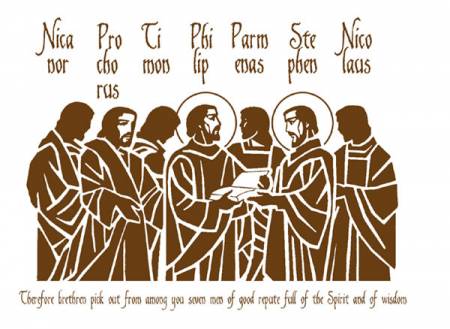
21. A decisive step in the difficult search for ways of putting this fundamental ecclesial principle into practice is illustrated in the choice of the seven, which marked the origin of the diaconal office (cf. Acts 6:5-6). . . . Nor was this group to carry out a purely mechanical work of distribution: they were to be men “full of the Spirit and of wisdom” (cf. Acts 6:1-6). In other words, the social service which they were meant to provide was absolutely concrete, yet at the same time it was also a spiritual service; theirs was a truly spiritual office which carried out an essential responsibility of the Church, namely a well-ordered love of neighbor. With the formation of this group of seven, “diaconia”—the ministry of charity exercised in a communitarian, orderly way—became part of the fundamental structure of the Church.
It is time now to bring all of this together: in the light of Baton Rouge, Nice, Dallas, “Black Lives Matter,” terrorist acts and wounded communities all around the world: why should we care about an order of ministry within the Church?
THE DIACONATE IN CONTEMPORARY CONTEXT: WHY?
So, what is the connection? How can the diaconate be understood against that much larger and violent backdrop? The most important question of all is perhaps, why do we have deacons in the first place?
We have deacons because the church and the world needed ministers to link the needs of people with the providence, mercy and love of God. This is why deacons have always been described as being associated with the ministry of the bishop and with having the skills to administer “the goods of the Church” for the good of people.
Deacons have historically not been exclusively associated with parish ministry. For the bulk of church history, deacons served as the principle assistants to their bishops, often representing them in councils and as legates, in catechesis (consider Deacon Deogratias of Carthage), in homiletics (Deacon Quodvultdeus, also of Carthage) and by extending the reach of their bishops, such as Deacon Lawrence of Rome. Over time, deacons became subordinate to presbyters as well as bishops, and increasingly involved in what we would recognize as parish ministry. To this very day, deacons are ordained solely by their bishop, for service to him and under his authority: where the bishop is, so should be his deacon.
In our time, as I’ve written about extensively, the Second Vatican Council decided overwhelmingly that the diaconate should be renewed as a permanent ministry in the church once again, even to the extent of opening ordination to married as well as celibate men. The bishops in Council did this largely because of the insights gleaned from the priest-survivors of Dachau Concentration Camp. Following the war, these survivors wrote of how the Church would have to adapt itself to better meet the needs of the contemporary world if the horrors of the first half of the 20th Century were to be avoided in the future. Deacons were seen as a critical component of that strategy of ecclesial renewal. Why? Because deacons were understood as being grounded in their communities in practical and substantial ways, while priests and bishops had gradually become perceived as being too distant and remote from the people they were there to serve.
In short, the diaconate was renewed in order to deal more effectively with the horrors of the contemporary world, not simply to function as parish ministers.
As I frequently challenge myself and other deacons: is the energy I’m expending as a deacon helping to create the conditions in the world in which another “Dachau” could not exist? Or am I involving myself in things that are superficial, contingent, and relatively inconsequential?
The diaconate today, fifty years after the Council, has matured greatly. Those who would talk intelligently about the diaconate need to keep that in mind. Over the past fifty years, formation standards have evolved to better equip deacons for our myriad responsibilities, for example. The diaconate has, at least in those dioceses which have had deacons for several generations, become part of the ecclesial imagination. In some dioceses we have brothers who are deacons, fathers-in-law and sons-in-law who are deacons, fathers and sons who are deacons. In one archdiocese, an auxiliary bishop is the son of that archdiocese’s long-time director of the diaconate. As I mentioned above, the diaconate looks and feels different from one diocese to another and while it is tempting to generalize whenever possible, it is particularly dangerous.
Let me briefly address the question of women and the diaconate. This is a question demanding serious conversation, just as the Holy Father has indicated. He is not alone, nor is he the first pope to think so. Pope Paul VI, St. John Paul II, Pope Benedict (both before his ascension to the papacy and after), and now Pope Francis have all been interested in the question. The 2002 study document of the International Theological Commission (ITC), convened by the authority of then-Cardinal Ratzinger, concluded that it remained for the Church’s “ministry of discernment” to work toward a resolution of the question. But the main thing at this point is to have the conversation. And that conversation will need to take place within the broader context of the lived diaconate, the diaconate whose pastoral praxis and theological reflection has deepened over the past fifty years. Many who opine about women and the diaconate do so from a dated or inadequate understanding of the order. If this conversation is going to be done, it must be done well. In short, to understand the possibilities of women in diakonia, one must first understand the diaconate itself.
Here is my point: If we deacons were restored in response to Dachau and similar world shattering violence, translate “Dachau” to Baton Rouge. “Dachau” to Nice. “Dachau” to “Black Lives Matter”. “Dachau” to 9/11. “Dachau” to every act of senseless terror and random violence. What are we doing to confront these tragedies? What are we doing to work toward a world in which THEY can no longer exist? This is so much more than who gets to exercise “governance” (a technical canonical term) in the Church, or who gets to proclaim the Gospel in the midst of the community of disciples. Like the bishops of the Second Vatican Council, we must ask ourselves how we must evolve and adapt to the new violent conditions of our own age. How can they best be addressed in the interest of the millions of suffering people — here at home and abroad — whose needs we are called to serve? We deacons must, like our “founders” at Vatican II, look beyond the normal categories of parish and issues of “insider baseball.”
I hope that there will be more media programs on the diaconate. I hope that not only will they be done accurately, but that they will also be done with a sense of the vision and potential of the diaconate.
As Pope Paul VI said of us, we are to be “the animators” of the Church’s service: May we give our lives to change the world.
This famous quote, generally attributed to Thomas Paine, but used (and abused!) by many has inspired leaders for a long time. “Leadership” and its exercise, especially in the Church, is something that concerns us all in one way or another. Some years ago, I reflected on ecclesial leadership while working on my doctoral dissertation, which dealt with the theological and canonical issues related to governance and deacons. Although my degree is in Theology, not Canon Law, there was no way to address this issue without consulting extensively with canonists, and, in particular, the late and great American canonist, Fr. James H. Provost. Jim became a good friend before his death, and his loss is still being felt by all who knew him.
I recently came across some notes I made from an article Jim wrote entitled,“Canonical Reflection on Selected Issues in Diocesan Governance” (in The Ministry of Governance, James K. Mallett, ed.). I offer the following list, taken and adapted from Jim’s article, as a reflection on traits essential to servant-leadership in the Church today. Jim wrote them specifically for his fellow canon lawyers, but I believe they have relevance for all pastoral ministers. The categories are Jim’s; the brief commentary is mine.
1) Be always vigilant for the spiritual purpose.
As we serve the People of God, this vigilance should be at the forefront. Regardless of the issue we are helping people with, what is the ultimate spiritual purpose behind it? Without this focus, ministry might become little more than social work. Obviously, this is not to suggest that social work is a bad thing! For the minister, however, we go beyond that task. As canon law itself reminds us, “The salvation of souls is the highest law” (salus animarum suprema lex). Keeping this principle in mind will help us keep our priorities straight.
2) Think with the Church.
As Pope Francis has recently reminded us, to “think with the Church” does not simply mean knowing the teachings of the Church, as important as that is, but to have a sense of what all members of the Church are thinking, and what their needs are. In other words, the Church — as People of God, Mystical Body of Christ and Temple of the Holy Spirit — is not simply the hierarchy, nor is the “mind of the Church” (mens ecclesiae) reducible to a collection of dogmas and doctrines: it involves active and caring listening to all, attempting to discern the will of God, and then acting accordingly. In short, when we consider this maxim, Pope Francis would remind us, “Think with the WHOLE Church.”
3) Serve if you would lead.
Anyone who has ever led others quickly realizes the profound truth that “a good leader is first a good follower.” However, it is equally true that the best leadership style is a servant-leadership, one that cares for the people serving with the leader. This is true, no matter what the venue. After leaving the seminary after eight years, I joined the Navy and wound up serving on active duty for twenty-two years, first as an enlisted linguist, and then — for the bulk of my career — as an officer. I served for many leaders, and had the privilege of serving in leadership as well: and the BEST leaders were always servant leaders. Such a leader was always concerned first with the needs of those he or she is leading so that they are then free to carry out the mission, whatever that happens to be. If this is true even in ways of life outside the Church, how much more profoundly is it true of those who serve in leadership in the Church. Servant leaders put others first, dream dreams, have visions, and inspire others to greatness in the eyes of God.
4) Use the power you have.
Power is not a bad word, despite the negative connotations often associated with it. Power is the first of the divine attributes, and power is imparted to us through the sacraments. Power is the ability to act, to serve, to provide care: all of this is good. Often people, even those who serve in ministry, will bemoan the apparent fact that they “don’t have the power to change” something. Still, all of us, through the grace of sacramental initiation and, for some, ordination, have a measure of “power” which must be used in service of others. Instead of worrying about what we cannot do, we need to focus on what we can do!
5) Empower the Church.
Speaking of power, it is meant to be shared. When Christ heals Peter’s mother-in-law, she immediately gets up to serve. That’s a good lesson for us in ministry: We are called not only to help others, we are called to help them UP. We are to give them the power they need to serve others and continue that mission. Power is meant to be used and shared.
6) Promote and protect rights.
The theology of the Church, as expressed through the law of the Church, focuses not only the responsibilities we have under the law, but on the rights we have: rights that come from God, and rights that are extended through the ministry and authority of the Church. Jim’s advice here, to focus on rights, puts the correct emphasis on ministries. The responsibilities we have flow from those rights: the responsibility for parents to be the prime educators of their children in faith, for example, flows first from their RIGHT to do so! In other words, we are encouraged not only to react to our responsibilities but to act first out of our rights; to be ACTIVE, not merely REACTIVE.
7) Consult when making decisions.
Fr. Provost was reminding canonists that the law often requires prior consultation in decision-making, but his advice is helpful to all of us. The Church, from its earliest days, has valued collegiality, collaboration and consultation. Consider, as just one example, the so-called “Council of Jerusalem” when Paul went up to Jerusalem to meet (confront?) the other leaders of the Church over the issue of Gentile converts. After talking together, those early leaders wrote a letter to the converts which acknowledged their dependence on the Holy Spirit who then informed their decision. Although we often hear from some folks that “the Church is not a democracy,” this is simply too simplistic and ignores the evidence of history, which suggests widespread models of collegiality and consultation, and we ignore that to our peril.
8) Interpret the law as it is meant to be interpreted.
This is a tricky one, but critical! For those of us who are not lawyers, it might be tempting to “read the black” and assume we know precisely what it means! Language, however, is symbol, and symbols always “contain” more than appears at first sight. When serving in ministry, do we make the proper attempts to find out how specific laws are to be interpreted? Consider point #1 again: How am I to interpret this law in light of the overall spiritual purpose of the situation? I am not suggesting that we find ways around our laws; merely that they will need to be interpreted as the law itself expects. For that, consultation may be required (see #7)!
9) Be generous.
One principle of the interpretation of Church law involves the very “generosity” of the law. The law exists for the spiritual good of people, and that involves being as generous as possible with the benefits of the Church. For example, do we seek out ways to provide the sacraments to people? We saw this recently when Pope Francis baptized the infants in the Sistine Chapel, including a child of a couple not yet married in the eyes of the Church. The situation of the parents, while of concern to us of course, need not cause us to be stingy with the benefits of baptism for the child as well as her parents. All of us in ministry can think of countless other examples: we need to think with our arms open.
10) Be consistent.
Every pastoral situation is unique, as we all know full well. And yet, justice obliges us to be consistent in our interpretation and application of law, while still appreciating the unique demands of each situation. I think the caution here also involves the dangers of parochialism or favoritism for some people, and a narrow interpretation for those we may not know — or like! — as well! This gives us a needed balance of pastoral approach. It also conveys a sense of positive predictability: we are trying to be even-handed with all because all are equal in the sight of God.
11) Be timely.
Is this one ever important! Remember, again, that Jim was writing this to fellow canon lawyers, reminding them that “justice delayed is justice denied.” That applies across the whole spectrum of pastoral ministry. Are we as responsive as we should be to the questions, requests, concerns that come our way, or do we procrastinate or even ignore certain things? The people we serve have a right to a timely response, whatever their need is. How do we feel when it seems someone is ignoring or discounting us and our concerns?
12) Be forthright.
Many of us struggle with this one. As ministers, we don’t want to hurt others. Sometimes, however, we are the bearers of bad news or difficult decisions. Jim’s reminder is that, despite the difficulties which we may encounter in doing so, we need to be honest and direct with those we serve. This does not mean that we are insensitive or nasty about things; it simply means that we all have to be honest with each other.
I, for one, continue to struggle with these principles. Still, they are a good “checklist” for servant-leadership, and can serve as a fine reflective tool when we’re on retreat, for example! Perhaps it is better to say that they can form part of a ministerial examination of conscience as we grow in service to others. There are times when each and every one of us is asked to “lead.” At other times we are all called to “follow”, and still other times when we just need to “get out of the way”!
“Call me Ishmael. . . . Whenever it is a damp, drizzly November in my soul. . . I account it high time to get to sea as soon as I can; I quietly take to the ship." -- Herman Melville






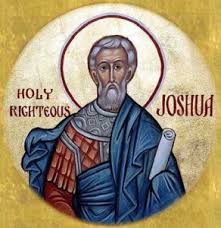 Last weekend’s scriptures focus on the fundamental relationship of the Christian with the Lord God. Joshua challenges the people to “decide today” which God they will follow, and a forlorn Jesus asks his own followers if they too will walk away from him, joining those who found his teaching on the bread of life “too hard to accept”. Peter, speaking for the rest of us, responds, “Master to whom shall we go? You have the words of everlasting life!”
 We claim to follow Christ – and Christ emptied himself for others, challenging us to do the same. If our Lord came “not to be served but to serve” how can we do otherwise? St. Paul reminds the Philippians that they should “in humility regard others as better than yourselves.” (Philippians 2:3) In Jewish theology, “humility” is the opposite of “pride”: the truly humble person would never exert abusive power over another. The Christian looks up from washing the feet of others into the eyes of Christ on the cross gazing back.
 The word “religion” refers to binding ourselves to God. And the letter of James read this weekend should inspire us all in our reform: “
 As I write this, reports are coming in from Baton Rouge about yet another attack with multiple casualties. The world is reeling from the endless chain of violence and death of recent months. On Friday, the PBS series Religion and Ethics Newsweekly ran a program on the Order of Deacons in the Catholic Church. Given the state of the world, one might think this an odd or even irrelevant topic. Upon reflection, however, I believe that there are some important dots to connect. It is precisely because of the current state of violent death, destruction and havoc that the diaconate — properly understood — might offer a glimmer of hope. After all, it was precisely because of the “abyss of violence, destruction and death unlike anything previously known” (John Paul II, referring to World Word II) that the Order of Deacons was renewed in the first place; we’re here to help do something about it. So we shall review the PBS story against that critical backdrop.
 THE PBS PROGRAM: Religion & Ethics Newsweekly
 “In the Middle Ages the role of deacons began to fade as the power of priests and bishops grew. In the 1960s, the Second Vatican Council restored the role of deacons – but only for men.” The evolving role of deacons throughout history is far more complicated than that, and overlooks the fact that the diaconate never completely disappeared, but became primarily a stepping stone to the priesthood. I fully acknowledge that the history of the diaconate in all of its complexity goes far beyond what can be covered in such a brief program, but still: the broad brush strokes of the history could have been recognized and acknowledged. This is also when the program shifts to the question of the possibility of ordaining women as deacons. I will deal with that question below.
 Now, on the PLUS side:
 So, what is the connection? How can the diaconate be understood against that much larger and violent backdrop? The most important question of all is perhaps, why do we have deacons in the first place?
 In our time, as I’ve written about extensively, the Second Vatican Council decided overwhelmingly that the diaconate should be renewed as a permanent ministry in the church once again, even to the extent of opening ordination to married as well as celibate men. The bishops in Council did this largely because of the insights gleaned from the priest-survivors of Dachau Concentration Camp. Following the war, these survivors wrote of how the Church would have to adapt itself to better meet the needs of the contemporary world if the horrors of the first half of the 20th Century were to be avoided in the future. Deacons were seen as a critical component of that strategy of ecclesial renewal. Why? Because deacons were understood as being grounded in their communities in practical and substantial ways, while priests and bishops had gradually become perceived as being too distant and remote from the people they were there to serve.
 The diaconate today, fifty years after the Council, has matured greatly. Those who would talk intelligently about the diaconate need to keep that in mind. Over the past fifty years, formation standards have evolved to better equip deacons for our myriad responsibilities, for example. The diaconate has, at least in those dioceses which have had deacons for several generations, become part of the ecclesial imagination. In some dioceses we have brothers who are deacons, fathers-in-law and sons-in-law who are deacons, fathers and sons who are deacons. In one archdiocese, an auxiliary bishop is the son of that archdiocese’s long-time director of the diaconate. As I mentioned above, the diaconate looks and feels different from one diocese to another and while it is tempting to generalize whenever possible, it is particularly dangerous.
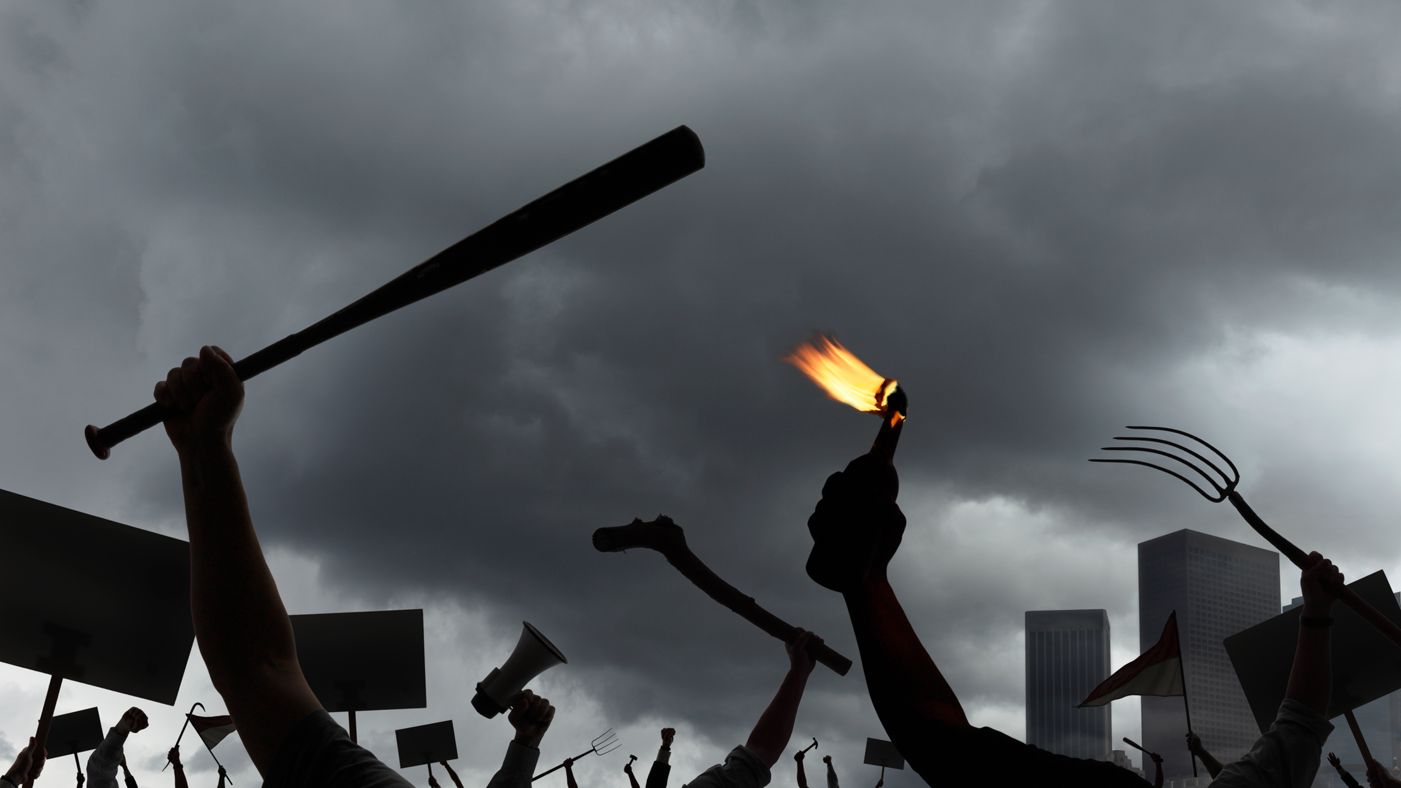 Here is my point: If we deacons were restored in response to Dachau and similar world shattering violence, translate “Dachau” to Baton Rouge. “Dachau” to Nice. “Dachau” to “Black Lives Matter”. “Dachau” to 9/11. “Dachau” to every act of senseless terror and random violence. What are we doing to confront these tragedies? What are we doing to work toward a world in which THEY can no longer exist? This is so much more than who gets to exercise “governance” (a technical canonical term) in the Church, or who gets to proclaim the Gospel in the midst of the community of disciples.
  I hope that there will be more media programs on the diaconate. I hope that not only will they be done accurately, but that they will also be done with a sense of the vision and potential of the diaconate.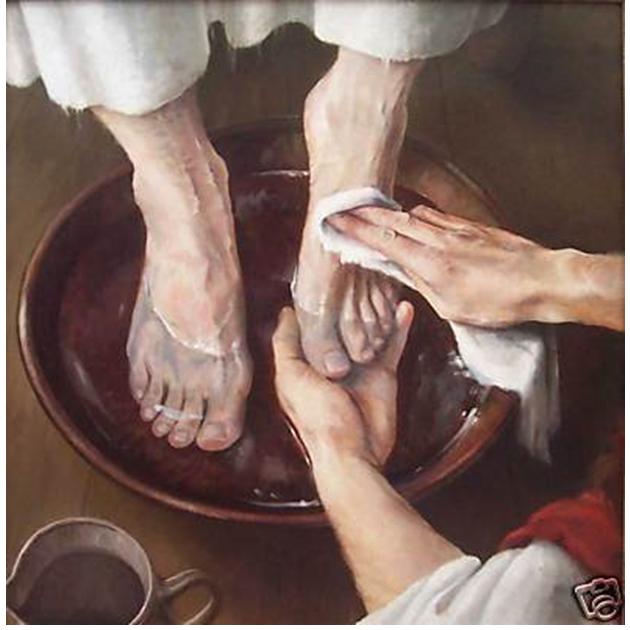


 Deacons Today: Servants in a Servant Church