This will be the third and final essay in a series on “Deacons and the Synod.” The first essay focused on the apparent lack of deacon participants in the upcoming October General Assembly of the Synod on Synodality and related issues. In the second essay, I suggested that there might be productive ways for deacons to participate in this October’s synodal process going on in Rome without being there in person. In my opinion, it is vital for deacons to be a voice in the synodal process given the nature and sacramental significance of the diaconate itself. From the earliest days of Christianity, deacons were to be the “eyes and ears, heart and soul” of the bishop” (see, for just one example, the mid-3rd Century Syrian Didascalia Apostolorum, “Let let the deacon be the hearing of the bishop, and his mouth and his heart and his soul; for when you are both of one mind, through your agreement there will be peace in the Church”). We are ordained by the bishop to participate in his own pastoral ministry. This occurs not only by serving the specific needs of others but also by making those needs known to the bishop. None of us, bishops, deacons, presbyters, religious, and lay people, serve in a vacuum. In this case, our bishops cannot serve needs they do not know about. How can we bishops and deacons be “both of one mind” if we do not share what burdens our hearts in the care of others?
And so we arrive at this third and final essay. Deacons exist, deacons are ordained, for others. They need to be part of the synodal process not for themselves but for the entire People of God. St. Paul VI referred to deacons as “the animators of the Church’s diakonia,” and St. John Paul II further explained that deacons “are the Church’s service sacramentalized.” Through their ordination, deacons take on a servant-leadership role in the Church. In this essay, therefore, we consider ways in which deacons might lead the entire community of faith in developing a synodal Church. To paraphrase Pope Paul and Pope John Paul: deacons can be understood as “the animators of the Church’s synodality,” and that deacons “are the Church’s synodality sacramentalized.”
I suggest deacons find ways to identify areas of need and concern as their pastoral experience and prayerful reflection indicate and to communicate these experiences and reflections, through appropriate channels, to their bishops. However, they should not stop there. It is not sufficient for deacons to be in a kind of “closed loop” with their bishops. How can deacons help lead others in a synodal path, especially all of those people who will not be present in Rome in October? I offer again the five suggestions I offered previously, slightly expanded. These and similar suggestions can serve as a foundation not only for the Church’s deacons but for the wider community of faith as well. As I wrote before, this list is not exhaustive. Feel free to add to it!
Follow the progress of the Assembly through the media. Don’t trust unofficial sources. Follow the releases from the Holy See. As someone who studies and teaches Ecclesiology, I have spent considerable time checking out a variety of sources, generally online, to see what our parishioners and others may be encountering. I have found it disturbing, aggravating, and infuriating to see what nonsense is spewed by so many “commentators.” Sometimes, there is simply a presentation of factual errors and myths. Still, those errors and myths are now “out there” for anyone to see and hear. People in good faith are therefore misled without even realizing it, and they then make judgments about what they’re hearing from our pulpits and classrooms. “Father must be wrong in his homily because Dr. So-in-So on YouTube said the opposite.” And these are the more benign consequences!
Far more disturbing are those “experts” who are bad-mouthing Pope Francis, his pontificate, and most of the world’s bishops. Can a pope be criticized? Of course. But there is a difference between legitimate concerns over certain aspects of a papacy and crossing the line into schism. Some commentators, for example, refuse to refer to Pope Francis by his papal title and use only his birth name. Again, on one level, that is not the end of the world; but more often than not, it is a way to minimize or even question the ecclesial legitimacy of Pope Francis.
We deacons need to view such “experts” with great caution. Not only our parishioners are vulnerable to such poisonous commentary, thinking it to be accurate, but so too can clergy. In this essay, I don’t want to deviate from the subject at hand and name some names of these “commentators.” Perhaps that can be the subject of a later essay. For now, I simply advise great caution in finding accurate resources on the papacy and on the synodal process itself. Do not trust any sources that might lead others into serious error and even schism. Just as a reminder, c. 751 defines schism as “the refusal of submission to the Supreme Pontiff or of communion with the members of the Church subject to him.” Lack of submission and communion is the foundation of schism.
Therefore, I recommend using only the best resources moving forward, starting with the official documents related to the Synod itself. These may be resources offered by the Holy See, the various episcopal Conferences (such as our own USCCB), or official statements of our own diocesan bishops.
Study the Instrumentum Laboris. Here’s a link to it. How do you respond to these issues and questions yourself? I will develop this item shortly. Imagine that you were there “in the room where it happened” at the Synod Assembly. The Instrumentum Laboris outlines the various topics to be discussed during the Assembly. There is no reason why each and every one of us can’t have these discussions ourselves, and lots of reasons why we should! More later.
Deacon Directors or other leaders in the diaconal community: Consider having weekly sessions (perhaps via ZOOM) for the deacon community to discuss the highlights of the past week. Not much to add to this suggestion. Every diocese has different options available to it that might facilitate such discussions. The diaconate community might decide to hold these discussions, not simply among themselves, but also with other members of the parish or deanery. Just as the bishops have invited other participants into their Synod (It is called the “Synod of Bishops,” after all), having people other than deacons joining in our local meetings can be productive and necessary.
Perhaps pastors and deacons might do something similar for the entire parish and deanery. Bishops may initiate a diocesan process as well for their dioceses.
in opening the Synod, Pope Francis spoke of the three-fold focus of communion, participation, and mission. He pointed out that “the words ‘communion’ and ‘mission’ can risk remaining somewhat abstract, unless we cultivate an ecclesial praxis that expresses the concreteness of synodality at every step of our journey and activity, encouraging real involvement on the part of each and all. Here is where deacons can be particularly helpful. As the Assembly progresses, deacons and others can discuss the practical realities of implementing the issues being discussed. I have subtitled this third essay “Concrete Consequences.” I take that verbiage from the late German theologian Herbert Vorgrimler who once wrote that deacons are to develop and demonstrate the “concrete consequences” of the Eucharist on the lives of our communities. This is where we can make our most unique contributions, where we take theory and aspiration and make it tangible.
WORKSHEETS FOR THE SYNODAL ASSEMBLY
The Instrumentum Laboris contains fifteen worksheets that will guide the Assembly’s discussions. The same worksheets could guide local and regional processes. While this is not the place to review each worksheet in detail, I offer some comments on their general organization.
Notice there are three groups of five worksheets. Group B1 concerns communion, Group B2 addresses co-responsibility, and Group B3 involves participation, governance, and authority. All of these themes flow directly and intentionally from the work of the Second Vatican Council. As Pope Francis and the Synod coordinators have stressed, the upcoming Assembly is not a general council of the Church; it is not Vatican III! Pope Francis recently observed that the work of Vatican II remains incomplete, and the themes for the Synod Assembly reflect a two-fold concern. First, that the work of the Council itself remains a work in progress, and second, that the Synod should be understood against the background of the Council, and building on a Conciliar foundation.
Finally, once these discussions are held, the results should be offered to our diocesan bishops for his own reflection, use, and decision-making. This is one way for us deacons in particular to offer our service as his “eyes, ears, voice, heart, and soul,” the traditional roles of the deacon.
Conclusion
Each and every one of us is called to be part of a synodal Church. Several hundred people have been invited to participate in a remarkable gathering in October. The vast majority of us will not be there in person. That does not mean we do not have a responsibility to participate in our own ways. Instead of feeling “left out” we should embrace our baptismal inclusion in the People of God, and for deacons, our vocational call to animate the Church’s diakonia — and synodality.
My recent essay on the apparent lack of deacons at the upcoming Assembly of the Synod on Synodality caused some interesting responses. First, I was informed by an authoritative source that “deacons” would indeed be a part of the Assembly, just none from North America. However, in the succeeding days, it seems that only one deacon (from Europe) has been identified as a participant. This was discovered only because he came forward and identified himself. The official list of participants identified other clergy as presbyters or bishops; the deacon was simply listed without any indication that he was a deacon. It should also be mentioned that well over half of the world’s 50,000 deacons live and minister in North America. Not to include some kind of deacon participation from all the continental synodal regions, including participation from North America, is a missed opportunity.
Active participation by the world’s deacons would be a two-fold benefit. First, the Assembly could consider the various questions of the Instrumentum Laboris through the lens of ministers whose very raison d’etre is to be the “eyes, ears, heart, and soul” of the bishop, identifying the needs of the church and the world, and providing servant leadership to meet those needs. Their experience could be invaluable. Second, and perhaps even more important, deacons would be able to listen and learn, through the Assembly process, from the wisdom and insights of the rest of the participants. As I noted in the previous essay, every other conceivable group is included in the “guest list”: lay women and men, women and men religious, bishops, presbyters, youth, and scholars. These fortunate people will share and learn, reflect, and discern together the “joys, hopes, griefs and anxieties of the people of this age” (Gaudium et Spes, #1).
Other respondents to my essay, both clergy and laity, reacted variously. Some simply agreed that not having deacons at the Assembly was a serious shortcoming that should be corrected. Others just rolled their eyes, shrugged their shoulders, and pointed out that this exclusion is nothing new, that deacons are often overlooked at every level of Church life: parish, deanery, diocese, and universally. Still others wrote that such an absence was really a good thing. That, as deacons, we are called to remain with the marginalized and the poor who were also not invited to the Assembly. Other deacons agreed that it was a good thing we are not there, so we can simply continue to focus on the immediate and practical needs of the people we serve. A French deacon wrote an article for La Croix International, in his own cri de coeur (“Priests Should Stop Pushing Deacons to One Side”) published on 20 July, which reminds us that experiences of diaconal marginalization are not focused on any particular region of the world.
This brief essay attempts two things. First, to sketch why I believe it is a most unfortunate oversight and a lost opportunity not to have the intentional participation of deacons at the Assembly. Second, since we are not in a position to change this situation, I want to offer a few suggestions on how deacons might still participate, even unofficially, in the Assembly and the subsequent steps in the synodal process.
Why should deacons be at the assembly? Why not?
Let’s first consider why deacons should not be at the Assembly. They should not be there from a sense of clericalism or entitlement: “We’re ordained so we should be represented.” No one has a right to be at the Assembly on such terms. The argument for participation is not based on clericalism, power, or ego.
So why should they be there? Deacons should be there because Pope Francis said so. He has emphasized that the current synodal path is “an exercise in mutual listening. I want to emphasize this. It is an exercise of mutual listening, conducted at all levels of the Church and involving the entire People of God.” Though unnamed, the diaconate is certainly part of “the entire People of God”! Deacons should be at the Assembly precisely because the pope wants “all levels of the Church” involved. Yet most lists related to the Synod are silent on the diaconate. Not so about any other group in the Church: but deacons are not mentioned. Why would this be?
There seem to be several possible explanations, none of them good. First, the order of deacons might be misperceived as a minor form of the priesthood and therefore included within the presbyterate. Ecclesiology has long since demonstrated that deacons “are not ordained unto the priesthood,” and do not participate in the ministerial priesthood. Unfortunately, too many people still see the diaconate merely as an “apprentice model” of the priesthood. It most certainly is not. Second, and equally problematic would be the opposite misunderstanding that deacons are simply some kind of “super-laity” and therefore need not be numbered among the clergy. Many deacons still encounter this mistaken notion, even among priests. Third, it could be that, even after more than fifty years since the diaconate’s renewal, it has simply not captured the ecclesial imagination; simply put, deacons don’t easily fit into many people’s categories of ordained ministry.
Church teaching has no such ambiguity. The Second Vatican Council refers to the sacramental grace of Holy Orders as applied to the diaconate: “For strengthened by sacramental grace, in communion with the bishop and his group of priests they serve in a diaconate of liturgy, of word, and of charity to the people of God” [Lumen gentium #29]. The same text refers to the functions of the diaconate as “supremely necessary” in the life of the Church. In the 1998 Directory for the Ministry and Life of Permanent Deacons [DMLPD], the Congregation for Clergy stated, “The origin of the diaconate is the consecration and mission of Christ, in which the deacon is called to share. Through the imposition of hands and the prayer of consecration, he is constituted a sacred minister and a member of the hierarchy. This condition determines his theological and juridical status in the Church” [DMLPD, #1]. In a particularly striking passage, the Congregation taught:
In every case it is important, however, that deacons fully exercise their ministry, in preaching, in the liturgy and in charity to the extent that circumstances permit. They should not be relegated to marginal duties, be made merely to act as substitutes, nor discharge duties normally entrusted to non-ordained members of the faithful. Only in this way will the true identity of permanent deacons as ministers of Christ become apparent and the impression avoided that deacons are simply lay people particularly involved in the life of the Church.
In short, the diaconate is not an optional, “nice-to-have” volunteer organization. As St. John Paul II taught frequently, “The diaconate is not a job; it is a vocation.”
A Unique Vocation
The tradition of the Church has always maintained that deacons have a unique character, related to but distinct from the presbyterate. And the most ancient sources emphasize the relationship that should exist between the deacon and the bishop, with the deacon serving as the bishop’s “eyes, ears, heart, and soul.” This is demonstrated during the deacon’s ordination when, from time immemorial, only the bishop lays hands on the ordinand. In the ordinations of presbyters, all priests present lay hands on the new priests; for new bishops, all bishops present lay hands on their new brothers. Not so with the deacon. The deacon is focused uniquely on the bishop.
The deacon is ordained to participate in his own way in the three-fold ministry of the bishop: Word, Sacrament, and Charity. The entire Church is called to be a servant church, a diaconal church. Pope Paul VI repeatedly taught that deacons are to be “the animators of the Church’s service,” and St. John Paul II carried it a step further when he referred to the diaconate as “the Church’s service sacramentalized.” He would later recall:
A particularly felt need in the decision to re-establish the permanent diaconate was and is that of the greater and more direct presence of ministers of the Church in the various environments of the family, work, school, etc., as well as in the established pastoral structures.
John Paul II General Audience, “Deacons Serve the Kingdom of God,” 6 October 1993
Deacons are called to feed the hungry, but also to address the cause of that hunger. Deacons are advocates for those who are voiceless; defenders of those who are powerless. As Father Joseph Komonchak once said, “Vatican II didn’t renew the diaconate because of a shortage of priests, but because of a shortage of deacons.” He was right then, and the need persists today. Certainly, there is a shortage of deacons at the Assembly!
Therefore, deacons should be active participants throughout the whole synodal process for two critical reasons, alluded to above. First, since deacons have a “greater and more direct presence” in the lives of the faithful they serve at home, in schools, the workplace, and in their professions, they can bring this pastoral experience and the needs of the people to the Assembly table. Second, deacons should be present to listen, share in the process of discernment, and learn from the other participants. The “agenda” of the deacon’s service is determined by the needs of others.
Deacons: How to Participate From Home
Since deacons are not currently on the guest list for the Assembly as of this writing (with one exception), how can we still contribute to the process? Consider the following suggestions, and feel free to add to the list!.
Follow the progress of the Assembly through the media. Don’t trust unofficial sources. Follow the releases from the Holy See.
Deacon Directors or other leaders in the diaconal community: Consider having weekly sessions (perhaps via ZOOM) for the deacon community to discuss the highlights of the past week.
Perhaps pastors and deacons might do something similar for the parish.
in opening the Synod, Pope Francis spoke of the three-fold focus of communion, participation, and mission. He pointed out that “the words ‘communion’ and ‘mission’ can risk remaining somewhat abstract, unless we cultivate an ecclesial praxis that expresses the concreteness of synodality at every step of our journey and activity, encouraging real involvement on the part of each and all. Here is where deacons can be particularly helpful. As the Assembly progresses, deacons can discuss the practical realities of implementing the issues being discussed.
In short, even though we won’t be in the Assembly itself, we can still be active in our response to it. In doing so, we should attend to the three potential risks identified by Pope Francis: formalism, intellectualism, and complacency. His words speak for themselves.
The first is formalism. The Synod could be reduced to an extraordinary event, but only externally; that would be like admiring the magnificent facade of a church without ever actually stepping inside. . . . If we want to speak of a synodal Church, we cannot remain satisfied with appearances alone; we need content, means and structures that can facilitate dialogue and interaction within the People of God, especially between priests and laity. Why do I insist on this? Because sometimes there can be a certain elitism in the presbyteral order that detaches it from the laity; the priest ultimately becomes more a “landlord” than a pastor of a whole community as it moves forward. This will require changing certain overly vertical, distorted and partial visions of the Church, the priestly ministry, the role of the laity, ecclesial responsibilities, roles of governance and so forth.
Can we deacons help in developing the “content, means, and structures” Pope Francis mentions? What would this mean in your parish or other ministries? What about the elitism he mentions? He specifically refers to the priesthood; are we able to help in addressing that? And, we should also address similar elitism that may be present in our own order.
A second risk is intellectualism. Reality turns into abstraction and we, with our reflections, end up going in the opposite direction. This would turn the Synod into a kind of study group, offering learned but abstract approaches to the problems of the Church and the evils in our world. The usual people saying the usual things, without great depth or spiritual insight, and ending up along familiar and unfruitful ideological and partisan divides, far removed from the reality of the holy People of God and the concrete life of communities around the world.
Here is where deacons can offer special help. Given our lifestyles, we live, work, and minister in the midst of the laity in a way other clergy may not be able to. While we can still fall into the trap of intellectualism, it is more than likely that we will get called out on it by our friends, families, and neighbors. We need concrete approaches to today’s problems, and we are in a good position to do that.
Finally, the temptation of complacency, the attitude that says: “We have always done it this way” (Evangelii Gaudium, 33) and it is better not to change. That expression – “We have always done it that way” – is poison for the life of the Church. Those who think this way, perhaps without even realizing it, make the mistake of not taking seriously the times in which we are living. The danger, in the end, is to apply old solutions to new problems.
Let’s face it: it’s easy to fall into this trap of complacency. Our secular experience already tells us this can be deadly. We need to guard against it within the Church as well. Deacons are uniquely positioned to be a guardrail against all these risks.
Conclusion
I believe that the best way for deacons to proceed at this point is to become, if we are not already, active supporters of every aspect of the synodal process. This is a critical moment in the life of the Church, and the call to animate the Church’s diakonia remains, wherever we are.
Pray, serve, study, create, exhort, hope, and love. Repeat!
In 258 AD, the Roman emperor Valerian ordered the execution of all Christian clergy in Rome. Pope Sixtus II had been arrested and was being led to his death when his Archdeacon Lawrence approached him with these words. Several days later, Lawrence too would be martyred, following in his bishop’s footsteps. The legend of Lawrence of Rome has inspired Christians, especially deacons, ever since. And his words echo through the ages.
“Father, where are you going without your deacon?” These words came to mind recently when the list of participants was published for this October’s Synod on Synodality. As a student and teacher of Ecclesiology, I was excited to see the expanded “guest list”. Every conceivable category of persons is going to participate in the Synod. Lay women and men, religious women and men, young students, bishops, presbyters, theologians, canonists — almost everyone gets a seat at the table. It is a glorious tapestry of the Church! Except that one strand of color will be missing from that tapestry.
“Father, where are you going without your deacon?” Among all the participants in this part of the synodal process, there seemed to be not a single solitary deacon. I was later able to verify that one or possibly two deacons would be there, although not from North America. To many people, this dearth of deacons may not seem an important issue. However, the diaconate is an ordained ministry that is uniquely synodal in its nature and focus. Ordained “in the person of Christ the Servant” to model the kenotic nature of the Church, deacons are (in the words of St. John Paul II) “apostles of the New Evangelization.” Deacons proclaim, invite, mediate, and pour themselves out to meet the needs of others, with a unique relationship to the bishop and his ministry. In 1967, when St. Paul VI implemented the Second Vatican Council’s decision to renew a diaconate permanently exercised, there were no so-called “permanent” deacons in the Church. Today, there are more than 50,000 such deacons, with about 40% of those deacons here in the United States.
This is more than a question of numbers, however. It is the fact that, given what the Church believes and teaches about the very nature of the diaconate, one of the three orders of ordained ministry in the Church, deacons could and should contribute to the synodal process, including the October Assembly. So, on at least two levels, the current absence of deacons in the process is crushing. First, our absence suggests that deacons have nothing to contribute, or conversely, nothing to learn from the process of the Synod. Second, who is there to share our story, our insights, and our vision?
“Father, where are you going without your deacon?”
I am pleased to announce the publication of my latest book by Paulist Press, Courageous Humility: Reflections on the Church, Diakonia, and Deacons. It is available directly from Paulist, or from Amazon, or wherever you buy your books.
This is a book about the Church. The early chapters reflect on the nature and structures of the Church, and the remaining chapters build on this foundation to focus on the nature and ministry of the renewed diaconate. Here is the table of contents:
CONTENTS
Foreword by Gerald F. Kicanas, Bishop Emeritus of Tucson
Preface
Chapter One–A Humble Church as Icon of the Humble Trinity
Chapter Two–Ecclesial 12-Step Program: Humility in the Rule of St. Benedict
Chapter Three–Renewing Structures for a Humble and Diaconal Church: In Tribute to John Quinn
Chapter Four–Strengthened by Sacramental Grace: The Sacramentality of the Diaconate
Chapter Five–The Code of Canon Law, a Servant Church, and Diaconate–A Proposal in Honor of James Provost
Chapter Six–Ordaining Deacons in a Humble Church: Proposed Revisions to the Rite of Ordination
Chapter Seven–Recurring Questions on the Diaconate
Chapter Eight–Concluding Reflections: Tapping the Potential of the Diaconate
Every day, it seems, we hear of some new travesty committed by the human members of the Church. Less dramatic, of course, are the constant reminders we all have of our human nature, weakened by sin. As we prepare for our solemn celebration of Christmas, of Emmanuel (“God-with-us,”), now is a perfect time to express our constant need for God’s mercy and forgiveness. We do this as individuals and as Church. We are a humble and humbled Church, and like our ancient ancestors in the faith, we acknowledge our sinfulness publicly. The tradition of the Latin Rite includes a penitential rite as part of the introductory rites of every Mass.
For the record, I fully embrace the teachings of the Second Vatican Council; all of them. As Pope Francis said recently, the teachings of the Council are the magisterium of the Church. Significant among those teachings are the principles of liturgical reform established in Sacrosanctum Concilium. In the subsequent liturgical reforms based on these conciliar principles, the former “prayers at the foot of the altar” were removed, except for an abridged form of the Confiteor. This became part of an expanded penitential rite, consisting of several forms available to the priest, with the simplified Confiteor being simply one of those options. Thus, the Confiteor may be prayed in some locations and not others, or at certain times of the year and not others. What I am about to suggest may surprise some people. Nevertheless, as I have reflected on the current state of the Church, it seems appropriate to restore the Confiteor as a mandatory part of every celebration of the Mass of St. Paul VI. To be clear, what I am suggesting is a modest revision to the Mass of St. Paul VI. I am most certainly not proposing a wholesale return to the pre-Conciliar Missale Romanum.
What follows is an excerpt from my forthcoming book from Paulist Press (paulistpress.com), Courageous Humility: Reflections on the Church, Diakonia, and Deacons.
A Humble Church Confesses
There is a longstanding liturgical tradition that offers, I believe, a rich opportunity to express personal and communal acknowledgment of our sinfulness and need for God’s mercy and forgiveness. For many centuries, before the post-conciliar liturgical changes, the Mass of the Roman Rite included preparatory prayers known as the “Prayers at the Foot of the Altar.” They involved the priest and the altar servers; the servers represented the people and spoke on their behalf. Often, the priest and servers were the only people present at the Mass. Even on Sundays, with greater numbers of the laity present, they were silent; it was still the servers who spoke the prayers on their behalf. With the priest and servers praying antiphonally (in Latin, of course), the prayers consisted of two major groups of prayers: first, Psalm (42) 43 (Introibo ad altare Dei), and second, the Confiteor. Today, in the reformed liturgy, we still have the option of praying a shortened form of the Confiteor as part of the Penitential Rite at Mass; however, the former practice was much more expressive.
At the end of Psalm (42) 43, the priest bowed with a “profound bow” and began the Confiteor. It is a fuller, richer form of the prayer than we use today:
I confess to Almighty God, to blessed Mary ever Virgin, to blessed Michael the Archangel, to blessed John the Baptist, to the holy Apostles Peter and Paul, to all the Saints, and to you, my brothers [et vobis, fratres], that I have sinned exceedingly, in thought, word and deed: through my fault, through my fault, through my most grievous fault. Therefore I beseech blessed Mary ever Virgin, blessed Michael the Archangel, blessed John the Baptist, the holy Apostles Peter and Paul, all the Saints, and you, brothers [et vos, fratres], to pray to the Lord our God for me.
The “brothers” to whom the priest is speaking are the servers (or, at a Solemn High Mass, the Deacon and Subdeacon). When he refers to them (twice), the priest—still bowing—rotates to each server in turn. As soon as the priest finished the Confiteor, the servers immediately prayed, “May Almighty God have mercy upon you, forgive you your sins, and bring you to life everlasting.” The priest then stood upright, and the servers took their turn, bowed profoundly, and prayed the same Confiteor, only this time referring to the priest (et tibi, Pater and et te, Pater) rotating toward him as he had toward them. When the prayer was complete, the priest offered the same prayer that the servers had prayed for him: “May Almighty God have mercy upon you, forgive you your sins, and bring you to life everlasting.”
I have provided this detailed description to apply it, with some modification, to our Mass today. Of course, today, we celebrate the Ordinary Form of the Mass in the vernacular; there is no need to change that. Similarly, in the past, the priest and servers were facing ad orientem. Today the Ordinary Form is usually celebrated versus populum, and this would continue. My suggestion works most powerfully if bishops, presbyters, deacons, and other ministers face the people and vice versa. Finally, the servers will no longer speak for the assembly; the assembly will speak for themselves.
Here’s my suggestion. The Mass begins as customary. The presider then invites the assembly to penitence, as we do now. However, after the invitation, the clergy (any and all bishops, presbyters, and deacons) would bow profoundly toward the altar (representing Christ) and the people (also a sign of Christ’s presence), praying the full, older version of the Confiteor. When the clergy have finished, and while they are still bowing, the whole assembly would pray over them: “May Almighty God have mercy upon you, forgive you your sins, and bring you to life everlasting.” (For anyone concerned about laypersons and deacons offering this prayer, I would simply point out that it was the young altar servers who offered it for centuries!) Then the clergy would stand upright while the assembly bows profoundly and prays the full, older Confiteor in turn, with the priest praying for God’s mercy when they are finished. In today’s world, such an act of mutual confession and plea for God’s mercy would be a powerful and much-needed form of reconciliation.
Conclusion
I am posting this on a day when a new report has been released that details still more dissatisfaction with organized religion in the United States and a dramatic increase in those who refer to themselves as “nones.” The question people of faith must answer is, “Why do people no longer find religious faith necessary in their lives?” Certain commentators like to blame cultural influences. While this may be accurate to some degree, I believe it is wrong to absolve organized religion from all blame. As church, we no longer capture the imagination of people. St. Augustine wrote of the “attractiveness” of the church and its message; that attractiveness has been lost for many people. “Church” is identified as corrupt, criminal, irrelevant, and hypocritical.
What I am suggesting is not a panacea. However, restoring a profound and solemn expression of our sinfulness and need for constant conversion may go a long way in restoring some measure of confidence in a humble Church. Let’s bring back the Confiteor.
Six weeks ago Pope Francis issued an Apostolic Letter called “Traditionis Custodes” (“Guardians of the Tradition”). When I heard the news and read the Letter, my first thought was, “thank God.” In this essay I want to explain why, and suggest several points for moving forward.
The Letter had little impact on the majority of Catholics, Catholics who celebrate Mass at their local parish, help out as they can, enroll their children in religious education classes, celebrate the sacraments with great joy, and, in short, participate in the life of their parish in peace. However, the Letter exploded like a bomb in the circles of those who refer to themselves as “traditional” or “traditionalist” Catholics. We must be cautious with these terms. All Catholics are “traditional”: we hold that God’s revelation flows from Christ through the double streams of Sacred Scripture and Sacred Tradition. A “traditionalist” has been described as “an advocate of maintaining tradition, especially so as to resist change.” This certainly seems an appropriate characterization of some of these groups. Liturgically, they express this traditionalist identity through the use of the 1962 Missale Romanum and largely reject the principles of liturgical reform mandated made by the Second Vatican Council in its first document, Sacrosanctum Concilium [SC] (the Constitution on the Sacred Liturgy), promulgated in December, 1963. With this new Letter and its restrictions on the use of the older form of the Mass, traditionalists are convinced even more that the Catholic Church is headed in the wrong direction.
Historically, liturgical reform began long before Vatican II. But with the affirmation of the reform movement by the Council, and the principles of reform clearly articulated in SC, the pace of liturgical change accelerated. St. Paul VI wasted no time. A month after the promulgation of SC , he instituted the Consilium ad exsequendam Constitutionem de Sacra Liturgia [Council for the Implementation of the Constitution on the Sacred Liturgy]. Building on the specific principles contained in SC, the Consilium developed the reforms to the Mass, and Pope Paul promulgated the novus ordo Missae (the “new order of the Mass”) in the Roman Missal of 1970. At the end of this essay we will look in detail at his own view of the Roman Missal that bears his name.
PERSONAL TESTIMONY
Before going any further, I want to offer some personal testimony from those days. I loved the pre-Conciliar Latin Mass. It was the Mass of my youth. I was born in 1950, and this was the Mass we celebrated every Sunday. When I entered Catholic grade school, it was the Mass we celebrated every day before class. I began serving the Mass in 1957 as a seven year-old third grader. In our parish, we had three Masses on every weekday, and six on Sunday, one of which was a Solemn High Mass. I continued to serve at the parish until I left home in 1963 at age 13 to enter the high school seminary. Obviously, I continued to serve in the seminary, and by age 15 I was Master of Ceremonies for Holy Week when I went home for Easter break. I had also been studying the piano and organ since second grade and by seventh grade, I was one of the three regular organists for our parish, covering all of those Sunday and weekday Masses, along with funerals and weddings. I continued to do this when I would come home for the summers. To say that I was heavily engaged in the liturgical life of the parish would be an understatement. I loved the pre-Conciliar Latin Mass. At the same time, I was enthusiastic about the possibilities of the changes set in motion by the Council.
When I started the seminary, in September, 1963, the Second Vatican Council was entering its second session and, by the time we went home for Christmas vacation that December, Sacrosanctum Concilium had been promulgated by an overwhelming vote by the world’s bishops of 2,147 placet to 4 non placet. By the end of that school year, we were beginning to feel the effects of the changes to come. We were following events in Rome closely. Some of the priests on our faculty had friends and classmates studying and working in Rome, and they would share their own insights about the Council and the discussions taking place among the bishops. The Council was as real to us as if we were actually there. One poignant memory remains with me. During that school year of 1963-64, one of our religion teachers in the seminary was an elderly priest. One day we were talking about the liturgical changes being debated in Rome. Father began to talk about his time as a parish priest, and how special it was to celebrate the Mass for his people. “You know, gentlemen, I am so excited about the possibilities being discussed. For years, I have dreamed of turning around to face my people and say — in English! — ‘The Lord be with you.’ How many times I have turned toward them and said ‘Dominus vobiscum’ to a church of people who had no idea what was going on at the altar.” He continued, “I know that I will never live to see that day, gentlemen, but if — God willing — you become priests, you’ll be able to do just that!” Fortunately, he was wrong. Before the end of that school year, we had received permission from the bishops to implement ad experimentum some of the liturgical changes. There was Father, turning to us with tears in his eyes, greeting us with “The Lord be with you!” I remained in the seminary throughout high school and college (1963-1971), living through the final years of the Council and the first years of its implementation. It was a blessed time.
CURRENT SITUATION
Not everyone accepted the liturgical changes, of course. Various individuals, notably Archbishop Marcel Lefebvre, formed groups to celebrate the “old Mass” rather than the “new Mass.” Every pope from Paul VI to Francis has attempted to resolve the disputes with these groups. The goal, of course, is communio. One of the four traditional marks of the Church is the claim that we are “One.” This mark is founded in the priestly prayer of Christ as the Last Supper, when Jesus prayed to His Father “that they may all be one, as you, Father, are in me and I am in you, may they also be in us” (John 17: 21). Over the decades since the Council, the popes have all showed good faith in working with these groups in a quest to strengthen or in some cases restore that unity.
While I knew some of this history, my research interests revolved around other issues. Since ordination as a deacon for the Archdiocese of Washington, DC, I have served in wide variety of pastoral, diocesan, and national assignments, from Washington, DC, to Iowa, Illinois, and California. In more than three decades of diaconal ministry, I have encountered very few parishioners who characterized themselves as “traditionalist” or who preferred to worship according to the 1962 Missale. So I decided, after the Pope’s letter, that I should look more closely into these matters. My reason was simple: I wanted to see if there was some way to help alleviate the pain these folks were experiencing. I had heard of several popular personalities who had extensive influence on Twitter and YouTube, so off I went.
I began exchanging tweets with one of these personalities, a Texas “influencer” who promptly “blocked” me on Twitter when I suggested some of his claims about the Church were inaccurate. Over on his YouTube channel, one of this man’s “co-hosts” repeatedly mocked “the Novus Ordo Church.” In another video, this same duo condemned, mocked, and dismissed the language they associated with the Council, terms like “pastoral,” “People of God,” and “social justice.” The co-host complained (and, as usual, mocked) Vatican II’s call for a reformed liturgy which involved “the full, conscious, and active participation” of the laity at the Mass. He gleefully reported, to the great amusement of his host, that as a sign of dissent against this teaching, he would pull out his rosary at the “novus ordo” Masses he occasionally and reluctantly attended. Interesting idea: the rosary as dissent! Then I was struck by another fact. While the host repeatedly complained about the constant liturgical “novelties” and “abuses” of the novus ordo, implying widespread experience with the “new Mass,” he remarked casually to his co-host that in all the years since his conversion to Catholicism (he had been a priest in the Episcopal church) he had only attended nine or ten novus ordo Masses!
These commentators are not alone. I spent considerable time looking at other sites to see other reactions to the pope’s Letter. Again, there were hyperbolic, breathless headlines, mostly directed in vitriolic terms against the Holy Father. Not having spent much time in this “traditionalist” world, I was stunned. These people, while claiming an identity of “faithful Catholics,” presented themselves as anything but! To offer any support of Pope Francis was ridiculed as ultramontanism. Furthermore, their mocking dismissal of Vatican II was disturbing. They seemed to lump together all of the world’s bishops who were the Council Fathers of Vatican II, characterizing them as some kind of liberal, hippy, cabal that was out to destroy the Church. Others adopted an attitude that people don’t need to pay attention to Vatican II because it was a “lesser” Council which will go down in history as a minor kerfluffle. Certainly, they say, it was not of the stature of the magnificent Councils of Trent or Nicaea. For the record, all of the twenty-one general Councils of the Church hold the same magisterial status. As I heard and read these comments, I realized that none of these people seemed to have any real substantive knowledge about what the Council was all about: why it was called in the first place, what its goals were, and the vision behind the decisions the world’s bishops made.
Consider again the final vote on Sacrosanctum Concilium. 2,147 bishops approved the text; only 4 disapproved. Look at those numbers. They are incredible. To hear some of our “traditionalist” sisters and brothers, it may seem that there was a huge rift among the bishops about the principles of liturgical reform being promulgated in Sacrosanctum Concilium. There was vigorous debate, of course! However, when the final version was presented for their vote, the bishops were nearly unanimous in their approval.
Fast forward to the present. Pope Francis explained in the Letter that he wrote it after consulting with the bishops of the world and their concerns over the continued usage by some Catholics of the 1962 Missale Romanum. These concerns revolve around the unity and communio of the Church. This was the hope of Pope Benedict when he promulgated Summorum Pontificum. Benedict created a novelty by initiating a practice never before done within a single ritual church. His hope was that by creating two “forms” (the “ordinary” which is the Mass of Paul VI, and the “extraordinary” which is the 1962 Roman Missal) the forms would mutually enrich each other, and those feeling disenfranchised by the liturgical changes following the Council might be reconciled. Unfortunately, despite his good intentions, Benedict’s attempt was a failure. For all their public protestations to the contrary, the “traditionalists” who are “influencers” on social media communicate a radical disunity with the Church and her magisterium. Many of the people I encountered on Twitter and YouTube have come into the Catholic Church from other religious traditions, and it makes one wonder what attracted some of them to the Catholic Church in the first place if they have so many problems with the magisterium of the Church! Nonetheless, I am not judging their motivation, their spirituality, or their love for the Church, and I believe they are attempting to operate in good faith.
Where might we go from here? Consider the following four points.
1) As other commentators have pointed out, this issue is not about Latin. It’s never been about Latin. It is about the Church. It is about ecclesiology. The ancient maxim, dating back as far as the 5th Century St. Prosper of Aquitaine, is lex orandi, lex credendi. How we are praying reflects how we are believing. This goes far beyond the language in which the liturgy is celebrated. If the issue was simply about the use of Latin, that need could be met readily simply by using the Latin editio typica of the current Roman Missal. But this is not about the Latin alone.
What kind of Church is reflected in in the 1962 Missale? And what kind of Church is reflected in the current Missal? As is well known, Vatican II described the Church in scriptural and sacramental terms. The world’s bishops also chose to speak of the Church as a pilgrim and moved away from the previous model of perfectas societas. They also stressed the Trinitarian identity of the entire church in all of its members as the People of God, Mystical Body of Christ, and the Temple of the Holy Spirit. I am not saying that the pre-Conciliar Church did not see itself as sacramental or did not appreciate its Trinitarian foundation. What I am saying is that Vatican II’s vision of Church, as discernible through a study of the historical development of the various drafts of the key conciliar documents, chose to stress aspects of this identity with new focus and emphasis. This can be seen, for example, in many of the changes made to the Mass following the Council. One particular example is that the 1962 Missale refers to the assembly of the faithful at Mass rarely, and these were directions to the priest-celebrant such as to turn toward the people to determine if there were communicants. While much ink has been spilled in the intervening years about what “active participation” by the laity should mean, we must always keep in mind that “active participation” is not to be considered in isolation: Sacrosanctum Concilium almost always links it with “full,” and “conscious.” Consider this passage:
Mother Church earnestly desires that all the faithful should be led to that fully conscious, and active participation in liturgical celebrations which is demanded by the very nature of the liturgy. Such participation by the Christian people as “a chosen race, a royal priesthood, a holy nation, a redeemed people, is their right and duty by reason of their baptism. In the restoration and promotion of the sacred liturgy, this full and active participation by all the people is the aim to be considered before all else; for it is the primary and indispensable source from which the faithful are to derive the true Christian spirit; and therefore pastors of souls must zealously strive to achieve it, by means of the necessary instruction, in all their pastoral work.
Sacrosanctum Concilium, #14
This ecclesiological foundation is behind all of the teaching and action of every Pope since St. Paul VI promulgated the novus ordo missae. The conversation that we should be having is less about Latin or even about which edition of the Mass we should be using. Rather, it must be about the kind of Church we are called to be. One traditionalist commentator is fond of referring dismissively to the post-Conciliar Church as “the Church of Nice,” a Church which doesn’t want to offend anyone, especially those not part of the Catholic Church. It is important to understand that the attitude of the Church’s bishops is born of a desire to respond to Christ’s prayer for unity. One of the goals of the Council and the post-Conciliar papal magisterium has been to work for Christian unity. This does not mean watering down our teachings, but finding areas of common faith and seeking pathways toward ultimate reunion. The Church, according to Vatican II, is to serve “as a leaven and as a kind of soul for human society as it is to be renewed in Christ and transformed into God’s family” (Gaudium et spes, #40).
Reception of Vatican II is, therefore, central to this current issue regarding the Mass. The Council articulated a vision for the future of the Church, and suggested directions for ongoing reform. Vatican II, as all prior twenty general Councils of the Church, articulates magisterial teaching. One does not have the option to say, “I will respect the magisterial authority of THIS Council but not THAT one.” This is a fundamental point being raised by every pope from St. Paul VI to Francis.
2) The normative Roman Missal is not the1962 Missale Romanum. There is discussion among traditionalists that this Missale “was never abrogated” when the 1970 Missal appeared. The traditionalist-vilified novus ordo Missae is the norm, what Benedict XVI termed the “ordinary” form of the Mass. It seems wise to me that the characterization of ordinary and extraordinary forms has been discarded. Given the intimate sacramental relationship between the Eucharist (the Mass) and the Church, such a distinction is not helpful. Remember lex orandi, lex credendi. So, for example, we do not speak of an “ordinary” form of the Church and an “extraordinary” form of the Church. As I said above, the fundamental issue here is not language of the Mass, or the associated rubrics. This is about the Church. The ritual and sui iuris Churches that make up the Catholic Church have one ritual expression of the Eucharist within each Church. The diversity of the Church found in the communion of Catholic Churches is matched by the unity within each Church.
Unfortunately, to read or watch certain certain traditionalist commentators, one would think the situation was reversed: that it was the “new Mass” which is — or should be — the extraordinary form, retaining the 1962 Missale as the ordinary form. In other words, the desire seems to be for a different kind of Church, not simply a different form of the Mass.
3) It was precisely the 1962 Missale that the overwhelming majority of the world’s bishops wanted reformed! This point cannot be overstressed. When the bishops directed a reform of the Mass, the Mass they had in mind was the 1962 Missale. According to the bishops, this Mass needed reform. Again, reading or watching traditionalist commentators, they seem to feel that the unreformed 1962 Missale is perfect as it is and in no need of reform; some would go so far as to say that it cannot be reformed anyway, due to the language of St. Pius V’s Quo Primum, which said no one could ever change the Mass. The simple fact is that, despite the language of Quo Primum, the Mass of Pius V was changed regularly over the centuries , including a new editio typica during the reign of St. John XXIII.
4) Much of the recent agita over Traditionis Custodes has attempted to pit Pope Francis against his immediate predecessor, Pope Benedict. Rather, Pope Francis has as his object the identical positions taken by every Pope from Paul VI onward. It was, in fact, Pope Benedict who tried a novel approach in his well-intentioned but ultimately unsuccessful attempt to heal the breach between those who favor the unreformed 1962 Missale and Catholics who celebrate the reformed Mass of Paul VI. Furthermore, Benedict’s decision to remove diocesan bishops from any role in the use of the “old Mass” in their own dioceses has proven unfortunate and harmful. Pope Francis has now corrected that approach, returning the responsibility of the diocesan bishop as the chief liturgist of his diocese. However, as stressed above, it is critical to remember that both popes share a common vision of Christian unity, following the prayer of Christ. Instead of trying to pit one pope against another, it is far better to find their commonality.
CONCLUSION
On Wednesday, 19 November 1969, St. Pope Paul VI addressed the imminent implementation of the new Roman Missal during his general audience. He anticipated several questions. What follows are direct citations from the address. I include these rather lengthy quotes because of their ongoing applicability.
Question #1: How could such a change be made? Answer: It is due to the will expressed by the Ecumenical Council held not long ago. The Council decreed:
“The rite of the Mass is to be revised in such a way that the intrinsic nature and purpose of its several parts, as also the connection between them, can be more clearly manifested, and that devout and active participation by the faithful can be more easily accomplished. For this purpose the rites are to be simplified, while due care is taken to preserve their substance. Elements which, with the passage of time, came to be duplicated, or were added with but little advantage, are now to be discarded. Where opportunity allows or necessity demands, other elements which have suffered injury through accidents of history are now to be restored to the earlier norm of the Holy Fathers.”
Sacrosanctum Concilium, #50
Pope Paul continues, “The reform which is about to be brought into being is therefore a response to an authoritative mandate from the Church. It is an act of obedience. It is an act of coherence of the Church with herself. It is a step forward for her authentic tradition. . . . It is not an arbitrary act. It is not a transitory or optional experiment. It is not some dilettante’s improvisation. It is a law.”
The pope underscores the unity of the Church, now to be found in its liturgical reform: “This reform puts an end to uncertainties, to discussions, to arbitrary abuses. It calls us back to that uniformity of rites and feeling proper to the Catholic Church, the heir and continuation of that first Christian community, which was all “one single heart and a single soul” (Acts 4:32).
Question #2: What exactly are the changes?
You will see for yourselves that they consist of many new directions for celebrating the rites. . . . But keep this clearly in mind: Nothing has been changed of the substance of our traditional Mass. Perhaps some may allow themselves to be carried away by the impression made by some particular ceremony or additional rubric, and thus think that they conceal some alteration or diminution of truths which were acquired by the Catholic faith for ever, and are sanctioned by it. They might come to believe that the equation between the law of prayer, lex orandi and the law of faith, lex credendi, is compromised as a result.
It is not so. Absolutely not. . . . The Mass of the new rite is and remains the same Mass we have always had. If anything, its sameness has been brought out more clearly in some respects.
The unity of the Lord’s Supper, of the Sacrifice on the cross of the re-presentation and the renewal of both in the Mass, is inviolably affirmed and celebrated in the new rite just as they were in the old. The Mass is and remains the memorial of Christ’s Last Supper. At that Supper the Lord changed the bread and wine into His Body and His Blood, and instituted the Sacrifice of the New Testament. He willed that the Sacrifice should be identically renewed by the power of His Priesthood, conferred on the Apostles. Only the manner of offering is different, namely, an unbloody and sacramental manner; and it is offered in perennial memory of Himself, until His final return (cf. De la Taille, Mysterium Fidei, Elucd. IX).
In the new rite you will find the relationship between the Liturgy of the Word and the Liturgy of the Eucharist, strictly so called, brought out more clearly, as if the latter were the practical response to the former (cf. Bonyer). You will find how much the assembly of the faithful is called upon to participate in the celebration of the Eucharistic sacrifice, and how in the Mass they are and fully feel themselves “the Church.” You will also see other marvelous features of our Mass. But do not think that these things are aimed at altering its genuine and traditional essence.
Rather try to see how the Church desires to give greater efficacy to her liturgical message through this new and more expansive liturgical language; how she wishes to bring home the message to each of her faithful, and to the whole body of the People of God, in a more direct and pastoral way.
Question #3: What will be the results of this innovation? The results expected, or rather desired, are that the faithful will participate in the liturgical mystery with more understanding, in a more practical, a more enjoyable and a more sanctifying way. That is, they will hear the Word of God, which lives and echoes down the centuries and in our individual souls; and they will likewise share in the mystical reality of Christ’s sacramental and propitiatory sacrifice.
The pope concluded, “So do not let us talk about ‘the new Mass.’ Let us rather speak of the ‘new epoch’ in the Church’s life.”
I hope that all of us can take the long view of two centuries of liturgical reform, and see liturgical reform within the even larger revitalization of the Church herself. This is why my first reaction to Traditionis Custodes was to thank God. At Vatican II, the world’s bishops gathered in solemn Council introduced the idea of liturgical reform in just such a way, as part of larger project of ecclesial reform. It is time for all of us — in faithfulness to Scripture, Tradition, and the Magisterium — to set aside fear, the rhetoric of mockery, distortion, and condescension, and recommit ourselves to this vision of the Council:
“This sacred Council has several aims in view: it desires to impart an ever increasing vigor to the Christian life of the faithful; to adapt more suitably to the needs of our own times those institutions which are subject to change; to foster whatever can promote union among all who believe in Christ; to strengthen whatever can help to call the whole of mankind into the household of the Church. The Council therefore sees particularly cogent reasons for undertaking the reform and promotion of the liturgy.
I was speaking recently with a fellow Catholic who is against mandates concerning vaccinations or masks during this time of COVID-19. The language was interesting. “It’s all about my personal freedom. As Catholics, we have free will and as Americans we have individual rights. I should be able to make my own decisions without anyone else (especially the government) taking that freedom away. It’s my body; it’s my choice.”
It may be hard to believe, but I was speechless. The person I was speaking with is staunchly anti-abortion and anti-choice. He is part of a group that wants to deny Holy Communion to Catholic politicians who are pro-choice regarding abortion. But the very pro-choice position he abhors when discussing abortion is now the exact same argument he is using to justify his anti-vax, anti-mask mandate stance. So, he is anti-choice in one case, pro-choice in another.
How is this in any way coherent? It isn’t.
People who are anti-abortion make the case that “my body, my choice” is an insufficient claim for two reasons. First, they hold that there is more than one body involved: the unborn child as well as the mother. Second, even the claim of “my body, my choice” — disregarding for the moment the presence of the unborn child — is simply not true or absolute. Our experience tells us this readily. We accept without question and without distress that there are certain things that we may not do to our bodies; there are limits to the choices we can make. For example, if we saw a person about to harm themselves in some way, we would do whatever we could to stop them. Some personal choices are even subject to society’s laws: a person may “choose” to murder another person, but no one would say that this would be moral or legal. We readily accept limits on personal freedom. It is not an absolute right. Think of all the other restrictions we accept on our personal freedom: obtaining a driver’s license, for example, or the travel restrictions we endure to ensure the safety of all. Just because our personal freedom suggests we do something (or not do something), thinking adults realize that personal freedom is not an absolute.
How might this fact — that all rights have limits and commensurate responsibilities — affect the abortion debate? How might this fact — that all rights have limits and commensurate responsibilities — affect the vaccination debate?
Do I have a right to refuse to take the vaccine? The answer is not an absolute yes or no, but maybe. Does society have a right to regulate my behavior despite my personal freedom? “My body, my choice” is again insufficient. My personal freedom extends only as far as the personal freedom of others. At some point, the moral choice is to surrender a measure of personal freedom for the common good of all. Consider how we veterans are often greeted: “Thank you for your service!” It is acknowledged that, as a class of people, military personnel put their own personal freedom aside to a degree in order to benefit their comrades and the country. Taking the vaccination, even under a mandate, is less about one’s personal good than it is about the good of others. For people of faith, we need only look to St. Paul, who reminded the Philippians: “Do nothing from selfish ambition or conceit, but in humility regard others as better than yourselves. Let each of you look not to your own interests, but to the interests of others.” (Philippians 2:3-4).
The bottom line is that “my body, my choice” is an inadequate and flawed argument no matter who makes it.
“Rightful liberty is unobstructed action according to our will within limits drawn around by the equal rights of others.”
Pope Francis has responded affirmatively to the recommendations made through the Synod of Bishops that women be admitted to the ministries of Lector and Acolyte. In an Apostolic Letter issued motu proprio titled “Spiritus Domini” [The Spirit of the Lord], published yesterday, 10 January 2021, the pope modified the Code of Canon Law (c. 230.1). Now, all qualified persons may be admitted to those ministries. To put this decision into perspective, several points need to be understood.
Prior to 1972, ministries were seen as the province of the ordained, and “the ordained” in the Latin Church consisted of seven ranks of ordained ministers. This was known as the cursus honorum, the “course of honors” by which a man “rose through the ranks” to the Order of Presbyters. A man became a cleric through a rite known as “first tonsure.” This liturgical rite was not itself an ordination, but it opened the door to subsequent ordinations; it made a man capax — capable — of receiving ordination. The orders themselves were divided into four minor orders and three major orders. The minor orders were porter, lector, exorcist, and acolyte; the major orders were subdeacon, deacon, and presbyter [priest]. This system was in place for many centuries. It is important to recognize that the minor and major orders were, in fact, ordinations.
In 1972, St. Pope Paul VI responded to the recommendations of the bishops of Vatican II (1962-1965) that the sacrament of Holy Orders be streamlined to better meet the needs of the Church. The fact is, the various orders, except for the priesthood, had become little more than liturgical rituals celebrated in the seminaries before a man was eventually ordained a priest. No parish, for example, had the ordained ministry of a porter! Pope Paul, after considerable consultation with the world’s bishops, issued motu proprio the documentMinisteria quaedam in 1972. This was tied with an additional document, Ad pascendum, which addressed some aspects of the newly-renewed order of deacons, which Paul implemented in 1967. Ministeria quaedam did a number of things.
Tonsure and Subdeacon were suppressed. A man now became a cleric upon ordination as Deacon.
The minor orders were also eliminated. At the same time, Pope Paul recognized the practical need for lectors and acolytes in parish life. However, rather than continuing as ordained ministries, he established these two ministries as rightfully lay ministries. So, they were no longer to be conferred through ordination but through installation by the bishop as lay ministries. It is significant to note that that these two installed ministries were open to men alone. This is what Pope Francis has now addressed.
Pope Paul further required that those in formation for ordination (to the diaconate and to the presbyterate) were to be installed in the ministries (not ordained) prior to ordination as Deacons. This was practical: these lay ministries offer valuable ministerial experience, and that is why the pope established this norm.
There are several things we need to keep in mind about the action taken by Pope Francis.
First, being installed a lector or acolyte is much more than just “reading at Mass” or “being an altar server.” We already have men and women who do that on a regular basis in our parishes. Being installed by the bishop into these ministries carries additional responsibilities, as outlined in Pope Paul’s Ministeria quaedam. Installed lectors and acolytes are diocesan ministers; one is not installed simply to serve in one parish.
Second, there is an expectation of leadership by these installed ministers. They are to assist in training other ministers of the Word and the Altar. They are to be knowledgeable of all aspects of their ministries and of the sacramental life of the Church. In fact, Pope Paul wrote that the responsibilities formerly assigned to Subdeacons could be assigned to these installed Lectors and Acolytes. [Ed. note: My fingers got away from me in the original post and said that the functions of the Subdeacon could NOT be assigned to installed Lectors and Acolytes; sorry for any confusion.]
Third, why have these lay ministries been experienced largely as liturgical steps required only for those on the road to ordination? The answers are complex, but many bishops did not see an immediate need to install lectors and acolytes formally because pastoral needs were being largely met by the ad hoc lectors and altar servers already serving in most parishes, and which involved both men and women. Many bishops were also reluctant to install lectors and acolytes formally because they could not admit women as well as men. Now, they can.
This is a good move, and one that should be applauded, not feared. It is consistent with what Pope Paul VI began, at the request of the world’s bishops, back in 1972.
Today, my daughter sent me a link to a video from an unlikely source: Arnold Schwarzenegger. She said the thing that struck her immediately was the Governor’s use of the phrase, “a servant’s heart.” I think she is absolutely right. I am passing along his video, not as a political act, or to condemn or criticize anyone. But as a career Naval officer, I watched with horror and growing anger the events of last Wednesday — the feast of the Epiphany of all days! — as our US Capitol was attacked and sacked. Like all military officers, I swore an oath that never expires, to “protect and defend the Constitution of the United States from all enemies, foreign and domestic.” And here was the secular temple of that Constitution being ransacked, with innocent staffers, visitors, members of Congress and even the sitting Vice President, assaulted and terrorized for several hours by fellow Americans. How can begin to move forward — together — as Americans?
As we all consider our next steps, the Epiphany reminds us that, whatever our perceived grievances, THIS is not the way to address them. This is not how a People, under God, treat each other. For Christians especially, who believe that God took on human nature in Christ out of love for us, what we saw was the antithesis of God’s will for humanity. At a Catholic Mass, the deacon adds a little water into the wine which will be consecrated and offered to God, and says, “Through the mystery of this water and wine, may we come to share in the divinity of Christ who humbled himself to share in our humanity.” What happened on Wednesday was the farthest thing from sharing “in the divinity of Christ.”
Instead we need to heed the words of St. Paul in his letter to the Philippians: “Do nothing from selfish ambition or conceit, but in humility regard others as better than yourselves. Let each of you look not to your own interests, but to the interests of others. Let the same mind be in you that was in Christ Jesus. . . .” (Philippians 2:3-5). Imagine if each and every one of us took these verses to heart and acted on them! Not in conceit and pride, but putting the interests of others ahead of our own. These are not only religious truths: they apply to many forms of servant-leadership. In my years of Navy service I served with many such women and men. As a deacon I continue to serve with many such women and men, who constantly put themselves and their own needs last. That is the heart of the servant, the heart “that was in Christ Jesus,” the heart that should be in each of us.
The Governor is correct: what is needed now is a servant’s heart. Think what you will of the rest of the video. Don’t fixate on the cheesiness of using Conan’s sword as a prop. Rather, listen to his insight about a servant’s heart. On that, he is right on point.
The themes of Advent come to us every year and find us in a different place. Just think back to last year’s Advent when most of us had never heard of COVID-19. This year, Advent and its themes resound in new ways. Not only is the world different this year, we ourselves are different. This fact is true every year, of course, but for most of us never in such a dramatic way.
Advent focuses our attention on the humility of God. We don’t often think of God as humble, but consider it closely. Think of what our God has done. We sing during Advent “O Come, O Come, Emmanuel!” Our God is not only with us, our God has emptied himself into our human nature.
St. Paul reminds us to imitate Christ and to “do nothing out of selfishness or out of vainglory; rather, humbly regard others as more important than yourselves, each looking out not for his own interests, but [also] everyone for those of others. Have among yourselves the same attitude that is also yours in Christ Jesus, who, though he was in the form of God, did not regard equality with God as something to be grasped. Rather, he emptied himself, taking the form of a slave, coming in human likeness; and found human in appearance, he humbled himself, becoming obedient to death, even death on a cross” (Phil 2:3-8).
Humility (from the Latin humus, “earth”) means being “grounded,” knowing who we are, with no illusions of grandeur at one end or a false, groveling humility at the other. Humility means being in relationship with “the other”; as St. Paul said to the Philippians, we are to see others as more important than ourselves and tend to others’ needs before our own. This, too, is a participation in the humility of God. God is always about pouring forth: God brings life; sustains and provides; heals, restores, and saves — all so we can share that life with God forever. The Son of God tells us often that he came not to be served but to serve: again, this reflects the humility of God.
What does that mean to us deacons during this year’s Advent? First, the Son of God teaches us that humility means not clinging to things, things that might even be ours by right. Therefore, for us who are baptized into the life of the Trinity and ordained into the servanthood of Christ, we must be similarly kenotic: no honor, glory, reputation, status.
But why did Christ pour himself out like that? To what end?And why should we?
Christ emptied himself so as to use that humanness to connect with us, to have human hands to touch us and heal us, human eyes to see us, even a human heart to burn with love for us. He uses that emptiness to elevate us, to fill us with his own mercy and compassion. He shows us how we, even in our own human weakness, can lift up others and bless them. Those who have strength give that strength to those who are weak. Those who have resources can raise others out of poverty. In short, whatever skills, strengths and gifts we may have, through the grace of God, are to be used for the good of others. Gifts received are gifts to be re-gifted to others.
The first week of Advent calls us to be on watch, to be alert to the actions of God. We watch for God’s presence in our lives and in the lives of our people. Our God is coming to us and does so not with trumpet blasts and military parades welcoming the conquering hero; we must be alert to God’s coming in a manger, in the powerless form of an infant. Around us are people who are themselves struggling due to depression, illness or loneliness. What can we pour out for them?
The second week of Advent calls us to prepare the way of the Lord, and the first reading from Isaiah begins, “Comfort, give comfort to my people, says your God. Speak tenderly to Jerusalem.” Only when this is done do we “make straight in the wasteland a highway for our God!” by filling in the valleys and bringing low the mountains. We are to give away, to pour out comfort to our sisters and brothers. The approaching holy days were challenging to many people even before the current pandemic and other crises that we face today. What will best give comfort to God’s people? What do we “have” that can be given for the comfort of others?
The third week of Advent focuses on John the Baptizer. Everything John did, even before his birth, pointed the way to Christ. His life and ministry was all about the One who would come after him. What a sublime act of humility: to constantly point away from oneself to highlight the Word of God! We are to do no less. John humbly surrendered his own ambition, family, even his very life to make sure Christ was proclaimed to the people.
Finally, the fourth week of Advent offers us the chance to encounter the humble young woman of Nazareth, Mary, as she receives the news about God’s plan. The great mystery of the Annunciation is that she could have said no! Salvation history hinged on that wonderful, humble fiat. Mary holds nothing back and pours everything she is into accepting that divine Will. Through her humility, the humble Christ comes to us.
Throughout Advent 2020, may we consider the humility of God. The disciple of Christ seeks to follow the Lord’s path, and this demands no less a kenosis on our part as deacons. In his reflections on Advent, Dietrich Bonhoeffer wrote in “God is in the Manger: Reflections on Advent and Christmas” (Westminster John Knox Press, $16): “Who among us will celebrate Christmas correctly? Whoever finally lays down all power, all honor, all reputation, all vanity, all arrogance, all individualism beside the manger; whoever remains lowly and lets God alone be high; whoever looks at the child in the manger and sees the glory of God precisely in his lowliness. … In total reality, he comes in the form of the beggar, of the dissolute human child in ragged clothes, asking for help. He confronts you in every person that you meet. As long as there are people, Christ will walk the earth as your neighbor, as the one through whom God calls you, speaks to you, makes demands on you.”
What would our Church look like if every member, from the newest neophyte to the pope, from bishop to novice, from cardinal to deacon, from curial prefect to parish staff volunteer, laid down “all power, honor, reputation, vanity, arrogance, individualism”? What if each and every member of the Church lived out St. Paul’s admonition to live “in humility, treating others as better than yourself”?
“Call me Ishmael. . . . Whenever it is a damp, drizzly November in my soul. . . I account it high time to get to sea as soon as I can; I quietly take to the ship." -- Herman Melville




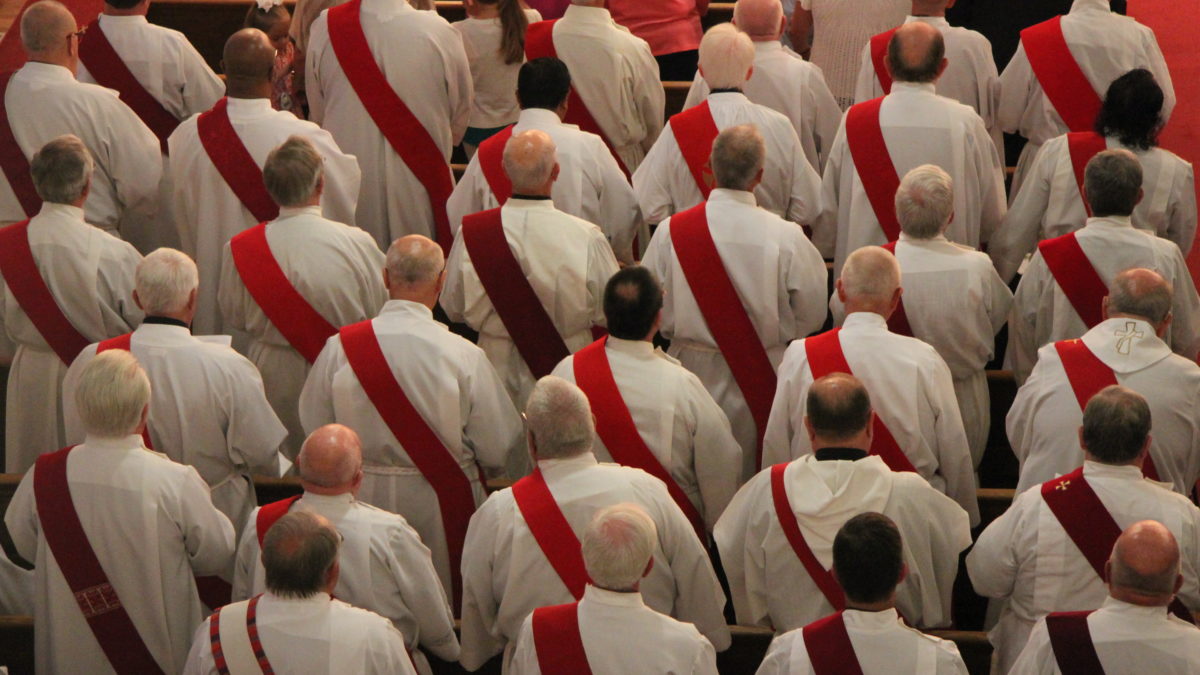
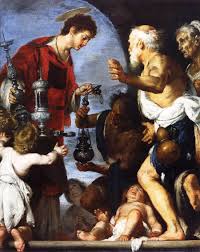

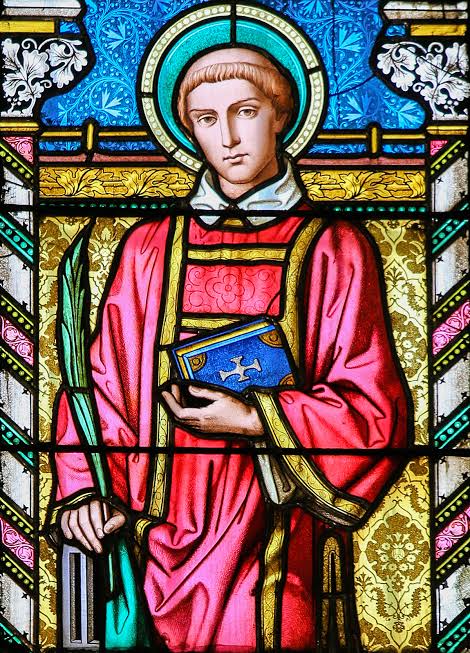

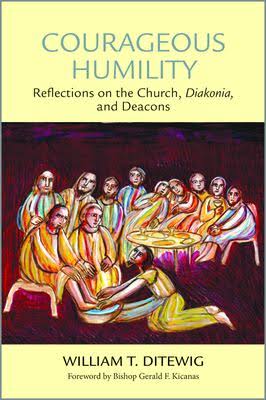
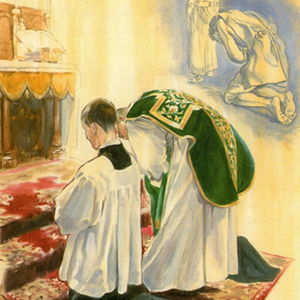




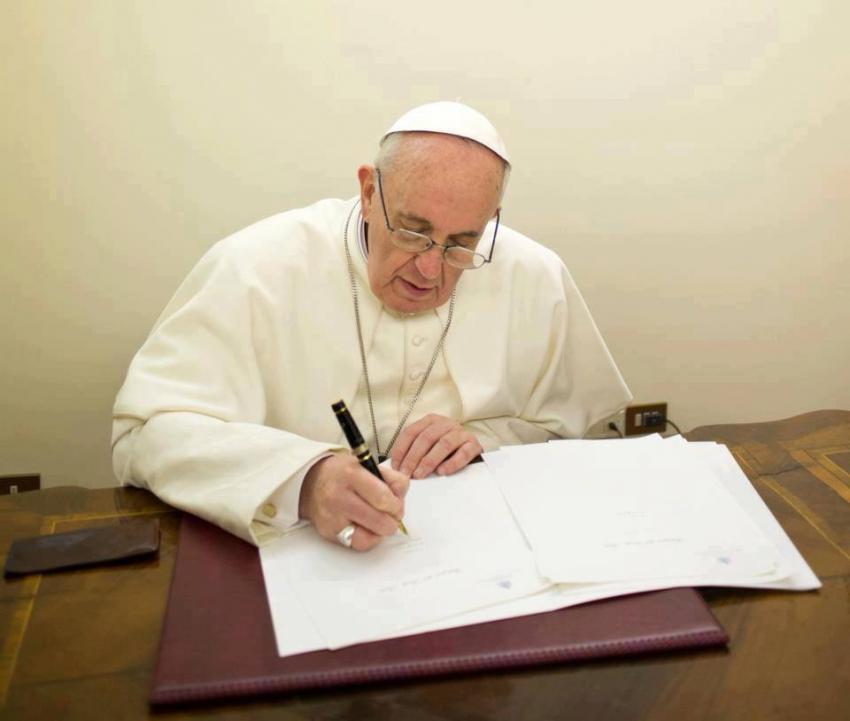


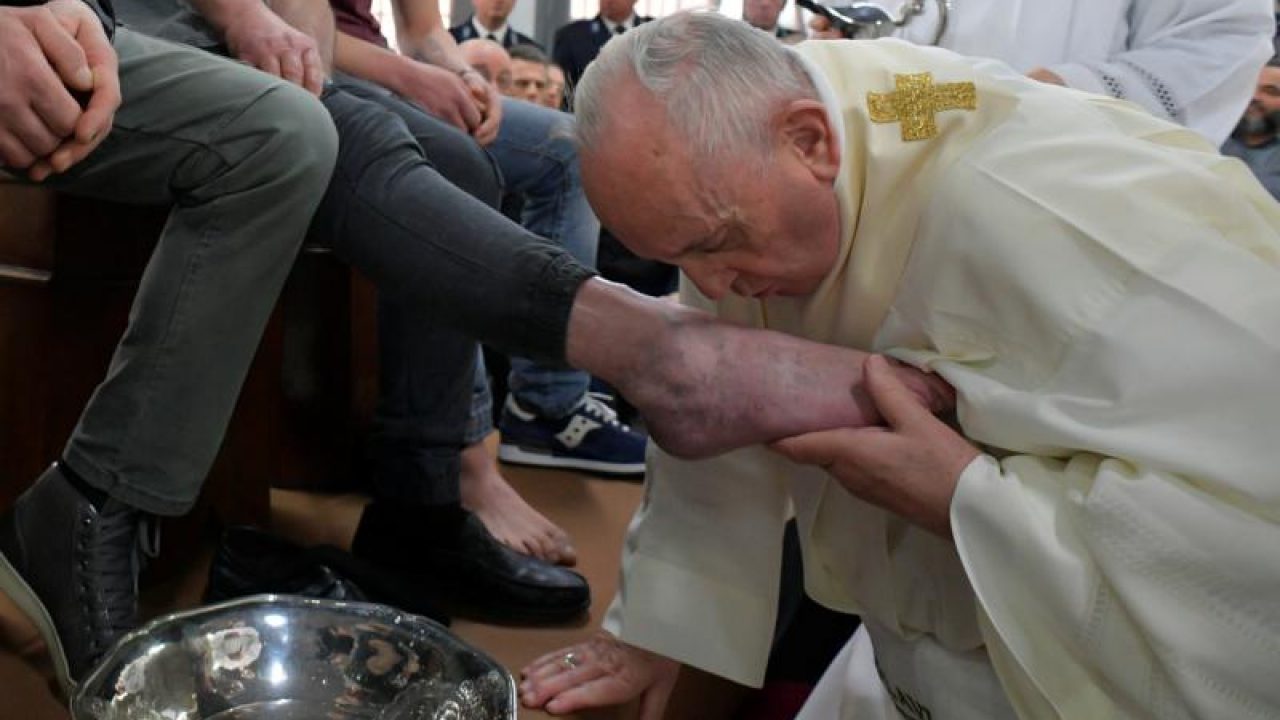 Instead we need to heed the words of St. Paul in his letter to the Philippians: “Do nothing from selfish ambition or conceit, but in humility regard others as better than yourselves. Let each of you look not to your own interests, but to the interests of others. Let the same mind be in you that was in Christ Jesus. . . .” (Philippians 2:3-5). Imagine if each and every one of us took these verses to heart and acted on them! Not in conceit and pride, but putting the interests of others ahead of our own. These are not only religious truths: they apply to many forms of servant-leadership. In my years of Navy service I served with many such women and men. As a deacon I continue to serve with many such women and men, who constantly put themselves and their own needs last. That is the heart of the servant, the heart “that was in Christ Jesus,” the heart that should be in each of us.


 Deacons Today: Servants in a Servant Church