When Catholic Blogs aren’t, well, Catholic: UPDATE

Francis ad orientem

Pope Francis “ad orientem”

File this in the “something to think about” category.

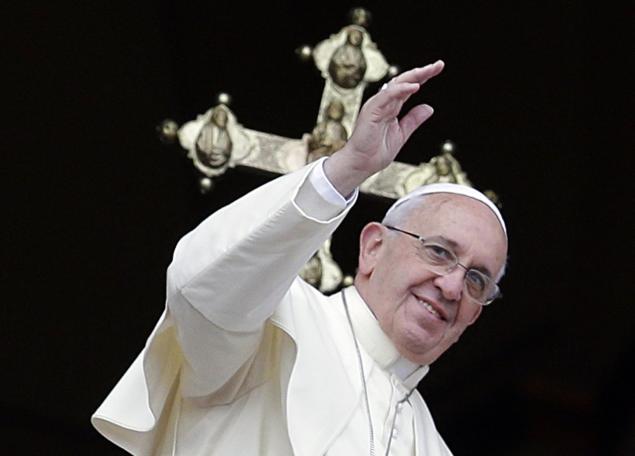
When Pope Francis recently announced his picks for the red hat, he did so during a Mass in the Sistine Chapel in which he faced the East: ad orientem.  The headline of a popular putatively Catholic blog read, “For the record: Francis Turns Toward God — 2”.  The reason for the number “2” is that it was the second time the Pope had celebrated ad orientem, and the blog had similarly reported that first celebration as “Francis turns toward God.”  On another blog, a priest-commenter reported that ad orientem actually meant “toward Christ”!  In both cases, the whole context was that this was a significant theological development on the part of the Pope, a pope who apparently was signalling his doctrinal or liturgical orthodoxy by choosing to celebrate ad orientem. Who could possibly object to such reverence?  Obviously, to be a good Catholic, we must celebrate this way, right?  Who wouldn’t want to “turn toward God” or to “face Christ”?  Real Catholics are the ones who face the East (ad orientem) because that’s where God is, right?

Unfortunately for folks who might be taken in by that line of reasoning, this is NOT what the Catholic Church actually teaches.

467_Ad_Orientem_preview

Ad Orientem

versus populum 2

Versus Populum

Catholic teaching and practice, from the very beginning, reflected great diversity and practice on all of this.  In some ancient churches, there was an East-West orientation, and the priest and people would together face the East, where the sun would rise, analogous to God spreading light upon a darkened world.  However, there is also significant architectural evidence that this was not a universal practice, with the architecture of other churches facilitating a versus populum (toward the people) orientation.  Eventually, the ad orientem orientation became prevalent, but the option to celebrate versus populum remained a permissible option.  The point here is that traditional Catholic theology never made the claim that God was only accessible via one orientation or another.  Traditional understanding was that priest and people were together in praying to God during the Eucharist.  This was true whether facing East or facing the people.  The concerns of some Catholic conservatives today seem to rest on the idea that facing the people somehow makes the Mass a kind of “performance” by the priest, and that versus populum  is one small step from a Broadway production focused on people and not on God.

Let’s review.

1) Traditional Catholic theology emphasizes that God is everywhere.

2) The Church prefers, in accordance with the General Instruction on the Roman Missal, that the Mass be celebrated versus populum whenever possible, but ad orientem is certainly permitted, especially if the architecture of the sanctuary makes that preferable.  Vatican II also teaches that “the full, conscious and active participation” of all the faithful at Mass is to be the number one priority when considering liturgical reform (cf. Sacrosanctum Concilium, the Council’s Constitution on the Liturgy).
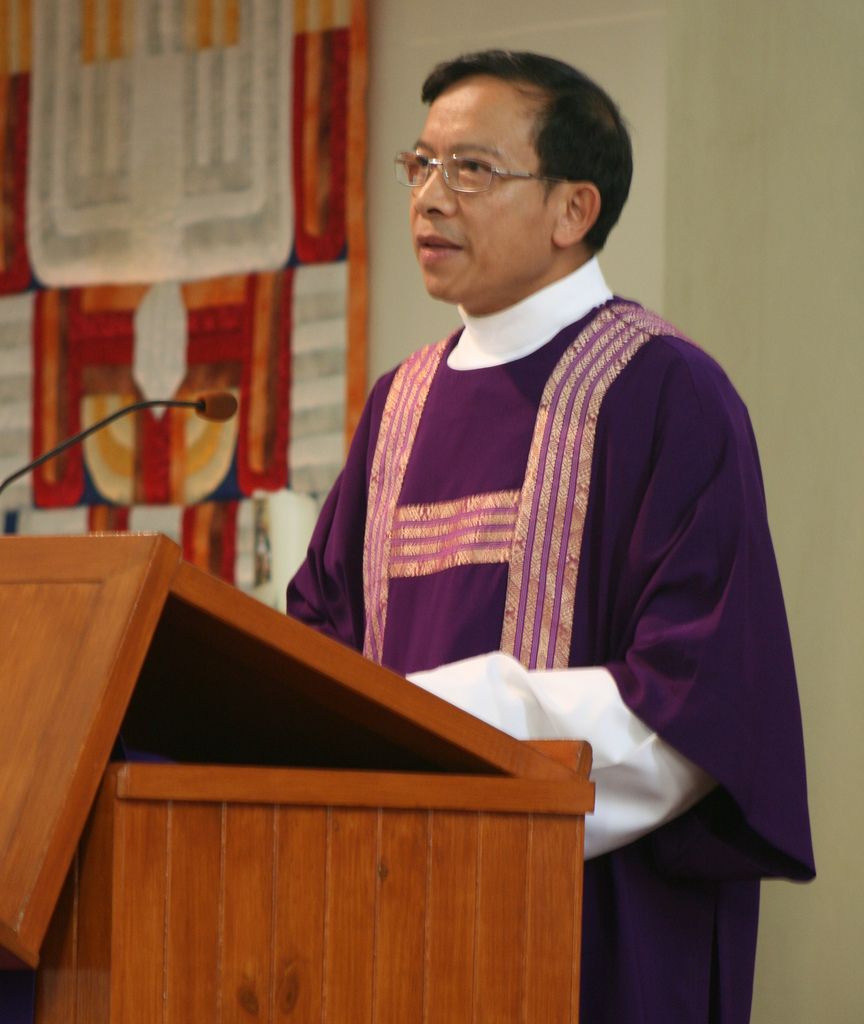
deacon proclaiming Gospel

Christ present in many ways during Mass: the Proclamation of the Word, for example.

3) This same document, which as a Constitution of a general council of the Church is among the highest magisterial teaching documents of the Church, also addresses how Christ is present in the Mass:

To accomplish so great a work, Christ is always present in His Church, especially in her liturgical
celebrations. He is present in the sacrifice of the Mass, not only in the person of His minister, “the
same now offering, through the ministry of priests, who formerly offered himself on the cross”,
but especially under the eucharistic species. By His power He is present in the sacraments, so that
when a man baptizes it is really Christ Himself who baptizes. He is present in His word, since it
is He Himself who speaks when the holy scriptures are read in the Church. He is present, lastly,
when the Church prays and sings, for He promised: “Where two or three are gathered together in
my name, there am I in the midst of them” (Matt. 18:20) .

Back to these blog headlines and comments.  First, the language of the headline permits the inference by those who wish to make it, that the Pope — until now — has been oriented AWAY from God, but has now seen the error of his ways; I’m sure the writer would vehemently deny such a claim, but the language permits such an inference, whatever the original intent of the writer.  Second, the language suggests that God exists in a certain direction and not in another (specifically, versus populum).  The state of the Pope’s personal spirituality is beyond the scope of this blog, certainly!  However, the second suggestion flies directly in the face of actual Catholic teaching.  It is a shame that people might be misled — whether deliberately or not — to think that this represents Catholic teaching.

To recap: the Latin Rite of the Catholic Church permits, and always has, Masses celebrated both ad orientem and versus populum, although contemporary liturgical law favors versus populum.  The entire Catholic Church believes, as expressed by the world’s bishops and confirmed and promulgated by Pope Paul VI at the Second Vatican Council, that Christ is present at Mass in the people assembled, in the proclamation of the Word of God, in the person of the ordained ministers, especially the priest, and in a special way under the forms of bread and wine.

We owe it to each other to try to be as accurate about these things as we can.  Our Catholic Tradition is simply too rich and pastoral practice too diverse to try to box it into categories that reduce the very Catholicity we seek!

UPDATE:  A reader e-mailed me with a question about the tabernacle, suggesting that this might be why the priest would face ad orientem: because that was the direction of the tabernacle containing the reserved Sacred Species consecrated during previous Masses.  However, this is not the reason for ad orientem.  Examining the ancient churches of Christianity, one finds that tabernacles were located in a rather wide array of places: sometimes on the altar itself, sometimes in separate locations altogether: the priest never adjusted his orientation because of the location of the tabernacle.  They didn’t then; they shouldn’t now.  That’s never been part of the liturgical theology of the Church.

versus populum

“Da mihi, Domine, fortitudem Tuam”

prayerI recently responded to a posting on another blog.  The experience, on a human level, was not pleasant in the least; on a spiritual level, it was good because it brought me to prayer.  “Give me, O Lord, your strength!”  Always a good thing.

It also reminded me of the internet resolutions I made earlier this month.  Read them here.  Other bloggers have offered excellent tools for reflection, such as my friend and brother deacon, Greg Kandra, who offers a great Examination of Conscience, here, and, through Greg, I’ve found another resource by Cara Joyner, here.

In addition to my own earlier list, and drawn from this most recent experience, I want to build on Cara’s five points:

Before posting, she asks:

  1. Am I seeking approval?
  2. Am I boasting?
  3. Am I discontent?
  4. Is this a moment to protect?
  5. Is it kind?

competence1These are wonderful and appropriate questions.  I would like to add two more, to make a “holy seven”:

6.  Am I competent to address the issue?  Everyone is entitled to an opinion, but not all opinions carry the same weight or value.  I might have an opinion about the latest influenza strain.  How nice for me!  But a medical doctor who posts her professional opinion on the same subject gets the nod!  I’m not saying folks have to have a degree in order to comment or to have an opinion.  But what I see so often is that if a person has an opinion, they presume that it must be the final word and that their opinion is the only one that is true or that matters!  I have frequently taught logic and critical thinking courses.  As we find out in class, when two people disagree on something, we may conclude any number of things: a) one is correct and the other is wrong; or, b) both are correct but in different ways; or, c) both are wrong.  All a disagreement tells us is that there is a disagreement; the veracity of one position over another is something else again.  That is where “competence” comes into play, along with an ability to think critically and honestly.  So, when sharing my opinion, I must be brutally honest with myself: What is my level of competence or incompetence in writing on an issue?  The anonymity of the internet often communicates a false confidence and competence: a person can claim many things which can not always be verified in fact: that a person is a priest or deacon, for example, or that he or she holds this or that academic degree, or that they were just talking about this very issue with the Pope last week!  That’s why it can be very helpful, when offering opinions, to provide verifiable information which supports one’s position.  There are any number of blogs for example in which the blogger claims certain ecclesiastical status (priesthood, for example) but then proceeds to act in ways which would cast serious doubt on the veracity of such a claim.

angryatcomputer7. Do I know when to exit the field grace-fully?  When discussing contentious subjects online (or anywhere else, for that matter), do I know when to shut up?  Not only that, can I do that with the grace and gentility of spirit and discourse that should mark a disciple of Christ?  Or, as Cara asks, “Is it kind?”  Again, the anonymity of the internet not only grants an inflated sense of self, it adds a perceived level of protection which permits a person to say anything they like; things they would never dare say in person.  Sometimes it’s just better to walk away, as Christ did, with sadness of heart, than to remain and escalate into un-Christian behavior.


It simply seems that many people have simply forgotten — or have never known — how to discuss, analyze and even argue with respect, civility, docility and humility.  One may argue passionately without rudeness; emotionally, without nastiness; critically, without condescension.

civility

“Give me, O Lord, your strength!”

From the Beginning: Deacons in Cameroon

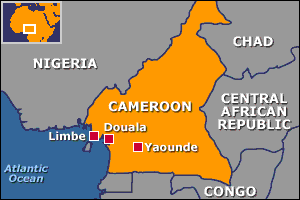
It’s always good to keep things in perspective.  One way to do that is to consider often overlooked history.  For example:Cameroon Map

The Catholic bishops of the world assembled at the Second Vatican Council voted overwhelmingly in 1964 to renew the Order of Deacons as a ministry permanently exercised.  Bishops who expressed particular interest in this renewed Order came largely from Western and Eastern Europe (the majority) followed by bishops of Latin America and Africa.  Following the Council, in 1967,  Pope Paul VI implemented this decision when he promulgated Sacrum Diaconatus Ordinem.

One of the things the bishops had agreed upon was that the decision whether or not to have (permanent) deacons had to be made by a petition from the appropriate episcopal conference to the Holy See.  Following the Pope’s motu proprio, five episcopal conferences immediately requested and received permission to ordain deacons (and the United States wasn’t one of them).  The Conferences from Germany, France, Italy, Brazil, and Cameroon.  (For those interested, the bishops of the United States studied the issue for a year and then in 1968, requested and received permission; the first deacons in the US were ordained in 1969.)

Germany had the first ordinations, on 3 November and 8 December, 1968.  But also on 8 December 1968, seven men were ordained deacons for the Diocese (now Archdiocese) of Douala in Cameroon.

Cameroon?  Why?  Context is critical.

191610-advent-procession-bamenda-cameroonColonial Cameroon achieved independence between 1955 and 1960.  Pope John, of course, had announced on 25 January 1959 his intention to convene the Council, and the early preparations began.  In Africa, the face of Catholicism, especially its episcopal leadership, was changing rapidly.  The first native African bishop in all of Africa had been ordained in Rome by Pope Pius XII in 1939; he remained the only African bishop on the continent until 1951.  Then, between 1951 and 1958 (the end of Pius XII’s papacy), 20 more were ordained, and in 1960, Pope John named one of them, Archbishop Rugambwa of Tanzania, the first native African cardinal of the church. One of those bishops was Thomas Mongo, a 41-year old priest of the Diocese of Douala, who became auxiliary bishop, and then two years later, in 1957, the diocesan bishop of Douala.

It was in this capacity that Bishop Mongo attended all four sessions of the Second Vatican Council.  He served as diocesan Bishop until ill-health forced his early retirement in 1973 at the age of 59; he lived a very simple life of service until his death in 1988.

Bishop Mongo of Douala

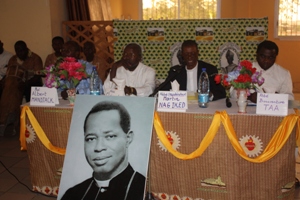
Conference in honor of Bishop Mongo whose portrait is visible in front of the panel

By all accounts, Bishop Mongo was known as a gentle and attentive leader, committed to building up the community among his people and their priests (and then, his deacons).  Unlike many other bishops, he had no advanced university education.  One biographer highlighted his exceptionally collaborative style by noting that among his closest aides, throughout his entire time as diocesan bishop, he had only one vicar general, chancellor and finance officer.  Today he remains revered as the “Father” of the Archdiocese of Douala.  Though he suffered from poor health through most of his tenure, he was famous for his focus on the poor of Cameroon, especially the children.  He worked personally in building homes for the poor, paid school fees for poor children, and even gave up his own car, preferring to walk or to ride along with someone else.  He was also the first bishop in all of Africa to ordain permanent deacons to assist him in all of this community building.  The bishop was also well-known for his political activism, an “artisan of peace” who actively engaged in political debates concerning Cameroon’s future.  In particular, he preached that the country “should be placed in God’s hands, retain its African identity and not be a replica of France.”  He opposed colonial rule and condemned any political action that would deprive people of their rights.

Deacons are still being ordained in Douala, with the latest report I have seen about an ordination in 2013.  While they are not great in numbers (approximately 20, from what I can find), they are part of the foundations of the contemporary diaconate, and we can all learn from our “founders”!

Cameroon Deacon 2013

A Simple, Lovely Gesture: Cardinal Loris Capovilla

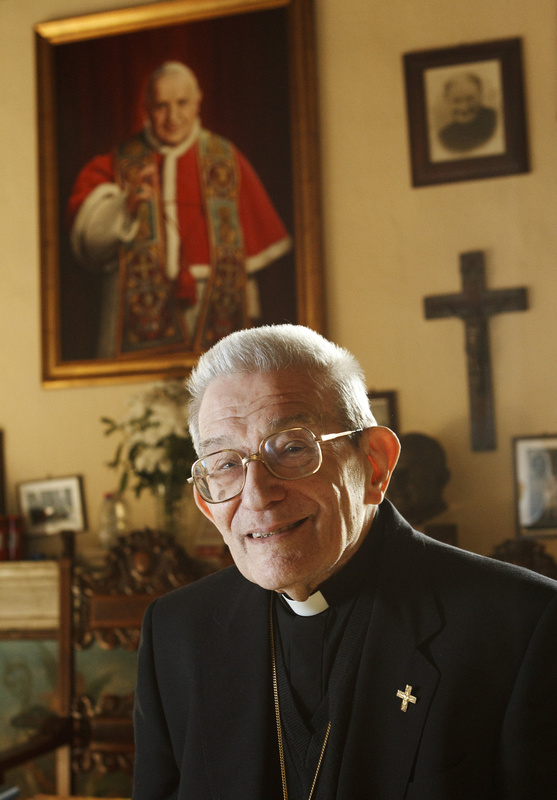
ARCHBISHOP LORIS CAPOVILLA, PERSONAL SECRETARY OF BLESSED JOHN XXIII, PICTURED AT RESIDENCE

Retired Archbishop Capovilla under Portrait of John XXIII

Pope Francis has now announced his selections to be named Cardinals at the next Consistory on 22 February 2014.  There were no real surprises in the list, but there was an unusual tribute paid to Pope John XXIII, who will be canonized in company with Pope John Paul II next April.  On the list of new cardinals was the name of Loris Francesco Capovilla, formerly a priest of the Archdiocese of Venice and long-time secretary to Cardinal Roncalli during his service as the Patriarch of Venice and then during his tenure as Pope John XXIII.

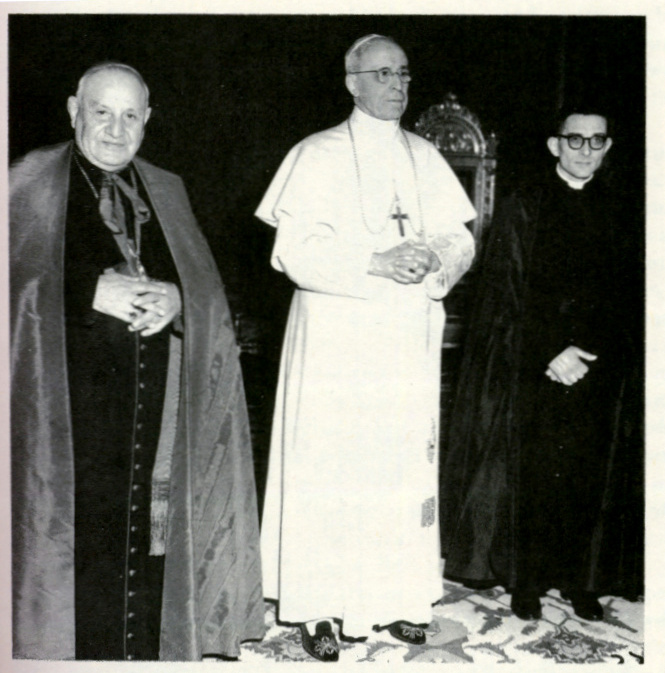
Roncalli and Capovilla and Pacelli

Last Audience with Pope Pius XII. Cardinal Roncall and Father Capovilla, 1957

Loris was ordained a priest for the Archdiocese of Venice in 1940.  When newly-appointed Cardinal Angelo Roncalli arrived in Venice in 1953 to take over as Patriarch, he tapped Fr. Capovilla to be his priest-secretary.  He accompanied the Cardinal to Rome on many occasions, including Roncalli’s trip to Rome for Conclave following the death of Pope Pius XII in 1958.  Following his boss’s election to the papacy, Fr. Loris remained at his side until Pope John’s death on the feast of Pentecost, 1963.

Father Capovilla was ordained a bishop in 1967 and retired in 1988.  He now resides in a community named after the birthplace of his old friend.  Over the years, he has been an invaluable resource for scholars studying the ministry of Papa Giovanni, and his selection to be a Cardinal is simply one more sign of Pope Francis’ own devotion to Pope John.  The pope, of course, already waived the necessity of a second miracle to be attributed to Pope John, and coupled his canonization with that Pope John Paul II.

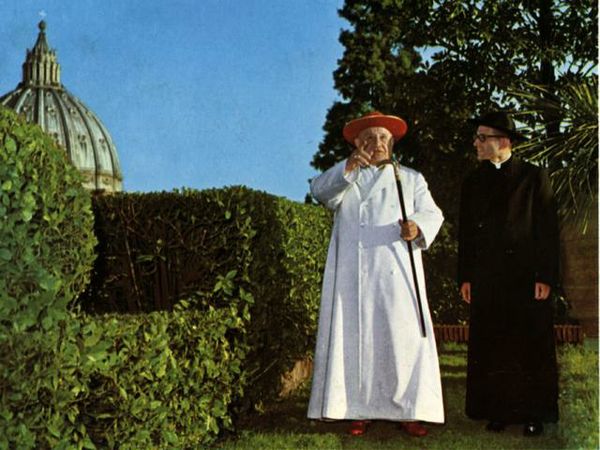
roncalli e capovilla

Capovilla walking in the Vatican Gardens with Pope John

Amidst all of the armchair analysis of the other cadinalatial selections and their possible impact on the Church, this particular selection is a simple, lovely gesture of humility and respect.


Sotto il Monte Giovanni XXIII

The Community of “Sotto il Monte Giovanni XXIII”

Some Wonderful Resolutions for the New (Internet) Year

The great God-googler, Mike Hayes over at BustedHalo.com, has put together a wonderful list of New Year’s Resolutions based on the teaching and example of Pope Francis.  Do yourself a treat, if you haven’t already, and go read the whole list here.  So, I hope that Mike won’t mind if I do a riff from his list, with particular emphasis on how we Catholics “live” on the internet these days.  The National Catholic Reporter, for example, as well as many bloggers and others, have decided to disable comments on their websites because the language used in responses crosses the line of courteous, let alone CHRISTIAN, discourse.  With a profound nod to Mike, therefore, I’d like to reflect on his seven resolutions as they might apply to internet courtesy.  My friend and brother deacon, Greg Kandra, did something similar during Advent with an Internet Examination of Conscience; read it here.

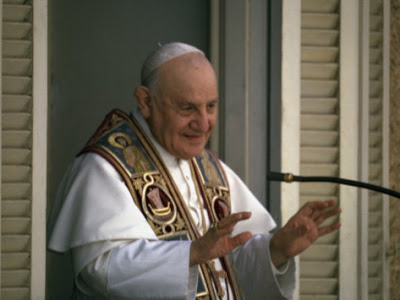
But first, a bit of fun.  As I have made clear here and elsewhere, I have a profound admiration for Pope St. John XXIII.  Mike posted a picture of Pope Francis as part of his blog post; is it just me, or is there not a remarkable similarity between Francis and John (in more ways than one)?

Pope Francis or John XXIII pope-john-xxiii-during-ecumenical-council

Here’s Mike’s list of resolutions, based on the Apostolic Exhortation, Evangelium gaudium:

Resolution #1: Be Joyful

Joy, as I pointed out in an earlier reflection on the Exhortation, is “the infallible sign of God’s presence” (to quote Teilhard).  If we truly believe the Truth of the Gospel, we should be filled with Joy and gratitude at the very core of our being!  There should be no such thing as a “sourpuss” Christian.  I resolve to reflect such joy in this blog.  I also hope that in the words used and responses to other posts will always be characterized by that joy.  I ask that visitors to this site try to do the same.

Resolution #2: Share Your Joy

The Pope is so right: We must not only BE joyful; we should all share that joy.  We should be the kind of Christian who says, “I’m good; the rest of you are on you are on your own!”  That’s one of the goals of this blog.  I am proud of our great Tradition, and I become quite frustrated at attempts to restrict the Tradition to one or another theo-political point of view!  I resolve to do my best to present the joy of the Gospel from the point of view of the whole of Scripture and Tradition.  This will be guaranteed to arouse the ire of extremists on either side of the spectrum, but so be it.  More about this later in the list.

Resolution #3: Exclude No One and Restore Dignity

The Pope has always stressed, as have his immediate predecessors, that God excludes no one from his love, and the salvation is open to all who come to God.  Perhaps it’s simply our flawed human nature that leads us to want to choose sides, one over and against another.  “We’re right and good; you’re wrong and bad.”  Another way to think about this is the tendency to have an “us versus them” attitude.  Some websites and blogs — even Catholic ones, even Catholic ones hosted by clergy! — seem to thrive on exclusionary language, mocking others who may disagree about things.  I resolve not to do such things here and invite people who may feel I have crossed such a line to draw my attention to it so I can correct it.

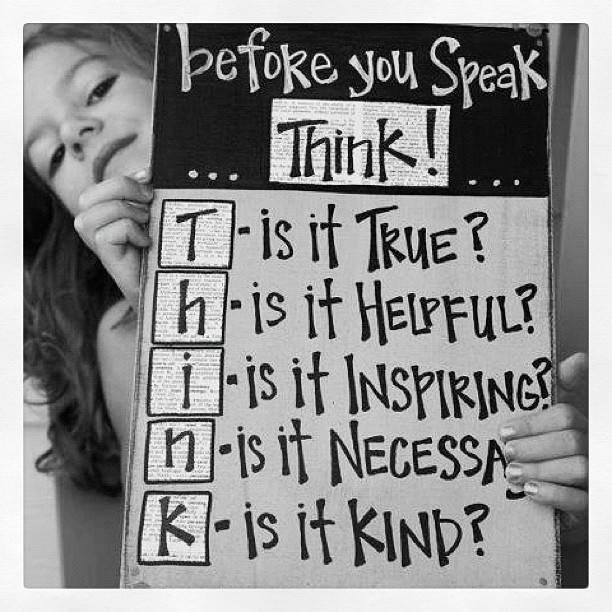
ThinkResolution #4: Diet From Devouring

While the Pope’s emphasis in this regard is largely economic, I think there’s a clear application to cyberspace as well.  A famous Catholic priest-author was once said to have “never had an unpublished thought”!  There’s simply no need to respond to every little thing (or big thing, for that matter).  I resolve to post only on things that are of particular interest or concern.  On the other hand, if folks would like to raise certain topics or suggest lines of inquiry, just let me know!  The questions would be “do I want to post on this?” and “Do I need to post on that?”

Resolution #5: Serve, Don’t Rule

OK, as one of my own teachers once opined, “The job of a professor is to profess!”  However, all such opining here is, I resolve, designed to serve the common good.  Ii hope that this blog can be a service for others, not a platform for bloviating.

Resolution #6: Practice Non-Violent Communication

Words matter; they can heal, they can hurt, they can destroy.  I resolve to attempt a level of discourse that reflects healing, peace and harmony.  Again, should readers find the language here offensive, please let me know.

Resolution #7: Combat the Tendency Toward Extremes

Extremism is almost always problematic.  As the old adage has it, “virtus in media stat”: Virtue stands in the middle.  As before, I resolve to avoid extremes and promote balance in all things.  There are so many sites in which extremes are promoted in language and attitude; I hope NOT to be one of them.  It seems to me that culturally we have lost civility and balance in discourse.  When we disagree with someone, there is a tendency to demonize them.  I hope that here we can disagree with courtesy and respect.

Thanks, Mike!

Monsignors and Serving the People of God UPDATED

monsignors

A Ceremony “Robing” New Monsignori

Big “insider baseball” church news was the decision of Pope Francis to eliminate all but the lowest “rank” of Monsignor, and then to restrict even that form to diocesan priests over 65.  There have been all kinds of interesting reactions to this news!  One one side of the spectrum are those who find the move refreshing and a good first step at eliminating a sense of medieval-ism and careerism within the clergy; on the other, heads are exploding over this smack to the side of the clerical heads of those who found becoming a monsignor an affirmation of their personal and ecclesial worth.  One priest-blogger criticized that this decision was not made by the Pope in any kind of consultative manner and that perhaps it would be best for such matters to be dealt with on a local (diocesan) level.  Sorry, Father, it couldn’t work that way: “Being a monsignor” was always a PAPAL prerogative; it was his “gift”, although bishops would nominate men for the honor.  As the maxim has it, “he who gives, takes away.”  Furthermore, the pope DID consult on this decision.  He put a months-long moratorium on making any new monsignors, and I think it’s safe to assume he discussed this with his special group of Cardinal-advisors at their recent meeting.  This shouldn’t have surprised anyone at all!

For those new to this kind of thing, what are we talking about here?

First, Christ didn’t name “monsignors” (monsignori if you want to sound like Father Z).  This was a creation by church leadership as the “course of honors” (cursus honorum) developed through the post-Constantinian marriage of church and state which lasted until the American Revolution.  Just as secular honorifics and structures were created, they were paralleled in church honorifics and structures.  The word itself simply means “my lord”, and in some countries, it is actually a title used for a bishop.  It has absolutely NO connection to the sacrament of Holy Orders, although it is restricted to men who are in the Order of Presbyters.  As a deacon, of course, I never had any hopes of ever being a Monsignor anyway!  But people should understand that if their pastor went from being called “Father” to “Monsignor”, it didn’t mean that he had any more “sacred power” than a simple priest.  It was purely an honorific, usually given to two broad categories of priests: those who were younger and being signaled as those who might someday become bishops, and on those older men whom the bishop wanted to thank for a ministry well served.  As one priest-friend put it when he became a Monsignor, “I asked the bishop why he had done this.  He told me he wanted to thank me.  I asked him, ‘Why not just take me to dinner?’ I can’t even spell ‘Monsignor’!”  Later, my friend was named a bishop.  After his episcopal ordination, he e-mailed me that “at least I can spell ‘bishop.'”

Second, a bit of contemporary perspective.  As I’ve written about before, I’ve been around church and ministry for my whole life, and was in the seminary myself for high school and college (1963-1971).  Even before that time, the majority of the priests I knew in my diocese detested the idea of becoming a Monsignor.  On the one hand, we had a great Monsignor in our parish, and we all loved him.  He was Monsignor Patrick O’Connor Culleton, ordained in Dublin in 1901, came to our Diocese in Illinois early on, and became pastor at our parish in 1920; he remained pastor there until his death in the late 1950’s.  He was the pastor when a young newly-ordained priest named Fulton Sheen came to the parish for his first assignment.  Sheen always said that the Monsignor was the holiest priest he’d ever known.  But the younger priests — most of them anyway — wanted nothing to do with this kind of honorific, claiming that it was a relic of a time gone by that had no relevance whatsoever in the Church serving in the modern world.  It made no difference at all when one was marching for civil rights, or visiting people in an inner city slum.  In short, monsignori were seen as belonging to a different era in the life of the church.

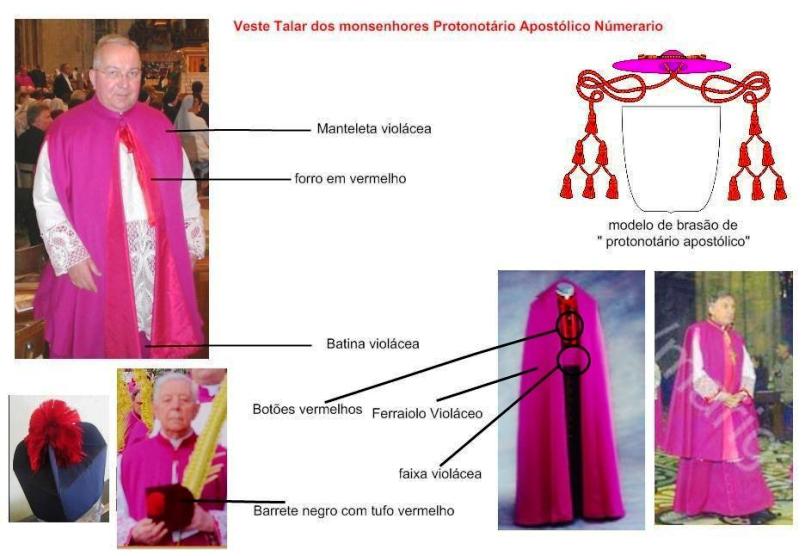
The bishops at the Second Vatican Council agreed.  They were dead set against retaining structures and processes that no longer served any practical, pastoral use in the life of the church, and they directed the Holy Father to streamline things.  Pope Paul VI took this task on, and in 1972, the whole sacrament of Holy Orders was restructured, eliminating in the Latin Church the Rite of First Tonsure, the four minor orders and the major order of the Subdiaconate.  The diaconate was now to be exercised permanently and could be opened to both celibate and married men.  The same pope also reduced the number of “classes” or “ranks” of monsignori.  No one really knows just how many classes there were!  Some sources tally fifteen different classes of monsignor, others have twelve or thirteen.  Popeprotonotarios_zpsc9e4a1b2 Paul reduced them to three only.  Now, Pope Francis has reduced this list to one, and then only for diocesan priests over the age of 65.

What difference will this make?

1) On a practical level, absolutely none.  A priest is a priest is a priest.  That’s always been the case, sacramentally.  This doesn’t change that.  The best news is that priests don’t have to go out and buy all the fancy rig that was associated with being a monsignor.

2) For those men who actually wanted to be monsignori (and, at least in my humble experience, that’s been thankfully a very small number!), it will mean that they can now refocus their efforts on being the best priests they can be without waiting for a title or new clothes.  In honor of their non-selection as monsignori, perhaps these men could join their deacons and lay folks in paying an extra visit to a homeless shelter or in lobbying for a change in unjust laws or for immigration reform.  I’m not saying that these men are not doing good things already; but if they’re not going to have to worry about being a monsignor, they’ll be free to focus on other things.  Like getting the smell of the sheep on their clothes.

Cassock_purpled_zpsc36574403) There IS a negative side to this.  Our good priests DO deserve some kind of recognition and support for their ministry; all people who serve do!  We do need to support our priests and acknowledge their service and commitment.  Some bishops, out of a lack of any other ideas, thought that at least by getting the pope to name a priest a monsignor, this could be a small way of doing that.  But here’s a chance for some grass-roots creativity and initiative!  Being a monsignor was no way to recognize anyone, and in some men it just created more difficulties that it was worth.  What CAN we do, in a positive way, to acknowledge someone’s service?  No one who serves AS CHRIST SERVED needs or wants recognition.  The only human recognition Christ got was to be nailed to a cross, after all.  Still, as human beings, it’s nice to know when something we’ve done has been effective.  What can we do, what can YOU do, to show appreciation to ALL who serve in the name of Christ and in the name of the Church?

UPDATE

As I continue to follow the various blog responses to this issue, I was struck by something.  It seems to me, anecdotally and not based on any scientific analysis, that most of the folks OBJECTING to the loss of new monsignors are people who are converts to Catholicism.  By and large, so-called “cradle Catholics” like myself are all in favor of it; those who have come later to the Church seem to be suffering the loss.  File in the “interesting, for what it’s worth” categories.

Happy New Year!

Kevin McCallister: “I’m living alone! I’m living alone!” Jesus the Christ: “I’m NOT!”

This was the homKevinily I gave last night; with a few minor changes, I gave it in similar form at the Masses today as well.

Bottom line: Young Kevin McCallister, in Home Alone, decides that when he gets big, he’s going to live alone — family life is just too tough for him to imagine!  Our God, coming to us, is exactly the opposite: Christ chooses to come to us precisely through the relationships of family and community, with all the challenges that presents!

The Once and Future Pope Francis

It seems like Pope Francis is everywhere in the media these days.  Not only is he Time Magazine’s “Person of the Year”, he was named “Person of the Year” as well by the London Times, and even “The Advocate.”  Just today, I noticed today that Esquire Magazine has name him the Best-Dressed Man of 2013!  For a man who less than a year ago was a retired Archbishop in South America, this is quite a switch.

Over on Facebook, a friend noticed wryly that the media was now focused on Pope Francis’ Urbi et Orbi (“to the city and to the world”)message of world peace, as if this were a dramatic new statement launching the Church into hitherto unknown directions seeking peace and justice around the world.  Obviously, all prior popes, especially those of the past century or so, have focused on the same themes; there is nothing new in that.

But there IS something new going on, and I think we miss it at our peril: what’s new is not what the Pope is saying, but that people are hearing what he’s saying.  Rightly or wrongly, justifiably or not, many of our contemporaries had tuned out the messages and words of previous popes; now they’re inclined to tune back in.  It’s not that the message has changed one whit.  But the messenger has, and the way the messenger crafts his message has.  The classic words of the Second Vatican Council, echoing Pope St. John XXIII, told us that the Church

has always had the duty of scrutinizing the signs of the times and of interpreting them in the light of the Gospel. Thus, in language intelligible to each generation, she can respond to the perennial questions which people ask about this present life and the life to come, and about the relationship of the one to the other. We must therefore recognize and understand the world in which we live, its explanations, its longings, and its often dramatic characteristics (Gaudium et spes, #4).

Francis2selfieIt seems to me that the key to Pope Francis lies in that paragraph.  As a Church, we’ve been blessed with popes who could, since the Council, focus on certain “signs of the times” and their interpretation.  But that’s only the first part of what we need to do if we’re going to be proper evangelizers.  Many teachers are good at giving students the facts of things, but that doesn’t guarantee that simply knowing those facts will lead to life-changing wisdom.  We have to take the next steps in addition to a “just the facts, ma’am” approach.  So, in addition to reading the signs of the times in light of the Gospel, here’s the rest:

  1. We have to find “language intelligible to each generation,” and I would further interpret this to mean “language intelligible to each generation and culture”; the fact is, all people should be able to understand and comprehend what’s being said.
  2. The point of this understanding is to find what the Church proposes in response to the basic questions of life and the meaning of life.  If this connection is not made, then we are failing at the task!  But there’s still more.
  3. In order to make this connection for folks, we need to recognize and understand the world, and what it proposes to people.  But in addition, we need to understand what people in the world are longing for, and the way the world works.  I have frequently met deacons who, somewhat proudly, proclaim that they no longer have TVs in their homes, that they don’t watch the news or other secular programming, or that they only watch religious programming.  I submit that this is a huge misjudgment, especially for ministers of the Gospel in today’s world.

This is where Pope Francis is proving himself to be a master catechist an evangelist.  He clearly understands the the scriptures (beautifully so, I might add) and official church teachings.  However, what he is bringing to the task is a profound understanding of the rest of the mission: his words, his demeanor, his life style choices, his actions, all point to a messenger that is committed to the content and the context of the mission.  This is not in the least a criticism of previous popes.  No person can do everything.  However, those who assert that the pope’s change of style is unimportant because “the message” remains the same are missing the whole point.  The message is never just about the content  the message; the style and context of the message is equally important.

We call this evangelization.  If people who previously not “heard” the message are now able to “hear” it, God bless them, and God bless the messenger!

“On the Feast of Stephen”

StephenOver the next two days, we celebrate the Feast of St. Stephen, Deacon and Protomartyr of the Christian Church.  The Western part of the church celebrates St. Stephen today, while the Eastern traditions celebrate tomorrow.  What we know of Stephen comes to us from the Acts of the Apostles.  Chapter 6 recounts the selection and ordination of “the Seven” men dedicated to caring for the needs of the Greek-speaking Christian community of Jerusalem, with Stephen the first name listed.  What I have always found fascinating is that the two members of this “deacon class” (although they’re never actually called “deacons” in the text) which we read about — Stephen and Philip — are never depicted serving only the Greek-speaking Christian community!  Stephen, of course, preaches to the entire community, which gets him in trouble with the authorities and leads eventually to his martyrdom; Philip is shown being led by the Spirit to a variety of places, including the famous encounter with the Ethiopian official.  He explains scripture to him and then baptizes him before being led by the Spirit to another place.  As Pope St. John XXIII would say later, in a different context, “In the present order of things, Divine Providence is leading us to a new order of human relations which, by men’s own efforts and even beyond their very expectations, are directed toward the fulfillment of God’s superior and inscrutable designs.”  Stephen and his brothers were being directed by the Spirit to fulfill God’s “inscrutable” designs!

Paolo_Uccello_-_Stoning_of_St_Stephen_-_WGA23196For a variety of reasons (not the least of which is his Greek name!), we may assume that Stephen was himself a Greek-speaking Jewish Christian of Jerusalem.  It may seem somewhat strange that the first person we memorialize after the great feast of Christ’s birth is the first martyr [“witness”] of the New Covenant, but it’s not really a leap at all.  Christ came to us in the fullness of humanity, with special care and concern for those most in need.  Christ’s birth was proclaimed first to shepherds “living in the fields” — rough men, living in the open, not the expected recipients of angelic messages!  Then there were the wise men who came from outside the Jewish religious and cultural tradition.  Christ came to all people, and not just to some privileged religious class or group.

Perhaps this is the legacy of Stephen: as the first witness of the New Covenant, he proclaims the universal message of Christ with his very life, with a special concern for those “unexpected” recipients of God’s care and concern.

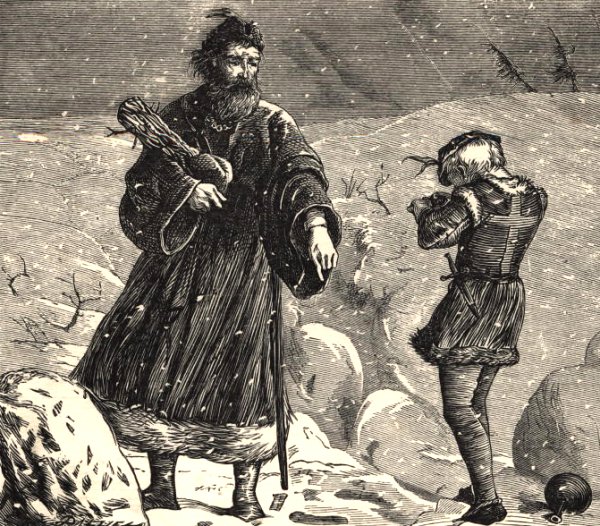
One of our most beloved “Christmas Carols” involves St. Stephen, and even before Christianity renewed a contemporary diaconate, the connection between Christ, Christmas, Stephen and the poor is made beautifully clear.  In “Good King Wenceslaus,” the saintly monarch connects Christ’s birth immediately to the care of the poor man.  I, for one, don’t find the fact that this takes place “on the feast of Stephen” to be accidental at all.

Christ comes for all; we serve all.  It’s not the end of the story, but the beginning.

So, in honor of one of our great patrons — as Christians and as Deacons — pray and sing along!

Good King Wenceslas looked out

On the feast of Stephen

When the snow lay round about

Deep and crisp and even

Brightly shone the moon that night

Though the frost was cruel

When a poor man came in sight

Gath’ring winter fuel

“Hither, page, and stand by me

If thou know’st it, telling

Yonder peasant, who is he?

Where and what his dwelling?”

“Sire, he lives a good league hence

Underneath the mountain

Right against the forest fence

By Saint Agnes’ fountain.”

“Bring me flesh and bring me wine

Bring me pine logs hither

Thou and I will see him dine

When we bear him thither.”

Page and monarch forth they went

Forth they went together

Through the rude wind’s wild lament

And the bitter weather

“Sire, the night is darker now

And the wind blows stronger

Fails my heart, I know not how,

I can go no longer.”

“Mark my footsteps, my good page

Tread thou in them boldly

Thou shalt find the winter’s rage

Freeze thy blood less coldly.”

In his master’s steps he trod

Where the snow lay dinted

Heat was in the very sod

Which the Saint had printed

Therefore, Christian men, be sure

Wealth or rank possessing

Ye who now will bless the poor

Shall yourselves find blessing.

wenceslas