Deacons and the Synod, Part Three: Concrete Consequences for the People of God

 This will be the third and final essay in a series on “Deacons and the Synod.” The first essay focused on the apparent lack of deacon participants in the upcoming October General Assembly of the Synod on Synodality and related issues. In the second essay, I suggested that there might be productive ways for deacons to participate in this October’s synodal process going on in Rome without being there in person. In my opinion, it is vital for deacons to be a voice in the synodal process given the nature and sacramental significance of the diaconate itself. From the earliest days of Christianity, deacons were to be the “eyes and ears, heart and soul” of the bishop” (see, for just one example, the mid-3rd Century Syrian Didascalia Apostolorum, “Let let the deacon be the hearing of the bishop, and his mouth and his heart and his soul; for when you are both of one mind, through your agreement there will be peace in the Church”). We are ordained by the bishop to participate in his own pastoral ministry. This occurs not only by serving the specific needs of others but also by making those needs known to the bishop. None of us, bishops, deacons, presbyters, religious, and lay people, serve in a vacuum. In this case, our bishops cannot serve needs they do not know about. How can we bishops and deacons be “both of one mind” if we do not share what burdens our hearts in the care of others?

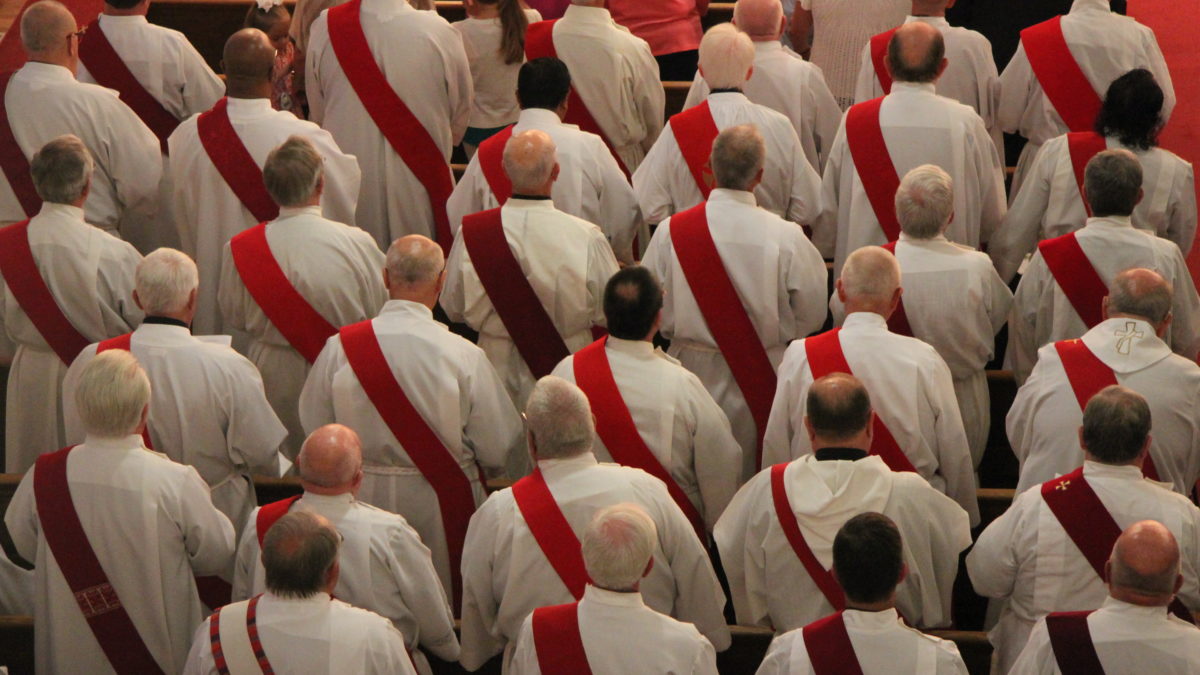
And so we arrive at this third and final essay. Deacons exist, deacons are ordained, for others. They need to be part of the synodal process not for themselves but for the entire People of God. St. Paul VI referred to deacons as “the animators of the Church’s diakonia,” and St. John Paul II further explained that deacons “are the Church’s service sacramentalized.” Through their ordination, deacons take on a servant-leadership role in the Church. In this essay, therefore, we consider ways in which deacons might lead the entire community of faith in developing a synodal Church. To paraphrase Pope Paul and Pope John Paul: deacons can be understood as “the animators of the Church’s synodality,” and that deacons “are the Church’s synodality sacramentalized.”

I suggest deacons find ways to identify areas of need and concern as their pastoral experience and prayerful reflection indicate and to communicate these experiences and reflections, through appropriate channels, to their bishops. However, they should not stop there. It is not sufficient for deacons to be in a kind of “closed loop” with their bishops. How can deacons help lead others in a synodal path, especially all of those people who will not be present in Rome in October? I offer again the five suggestions I offered previously, slightly expanded. These and similar suggestions can serve as a foundation not only for the Church’s deacons but for the wider community of faith as well. As I wrote before, this list is not exhaustive. Feel free to add to it!

  1. Follow the progress of the Assembly through the media. Don’t trust unofficial sources. Follow the releases from the Holy See. As someone who studies and teaches Ecclesiology, I have spent considerable time checking out a variety of sources, generally online, to see what our parishioners and others may be encountering. I have found it disturbing, aggravating, and infuriating to see what nonsense is spewed by so many “commentators.” Sometimes, there is simply a presentation of factual errors and myths. Still, those errors and myths are now “out there” for anyone to see and hear. People in good faith are therefore misled without even realizing it, and they then make judgments about what they’re hearing from our pulpits and classrooms. “Father must be wrong in his homily because Dr. So-in-So on YouTube said the opposite.” And these are the more benign consequences!

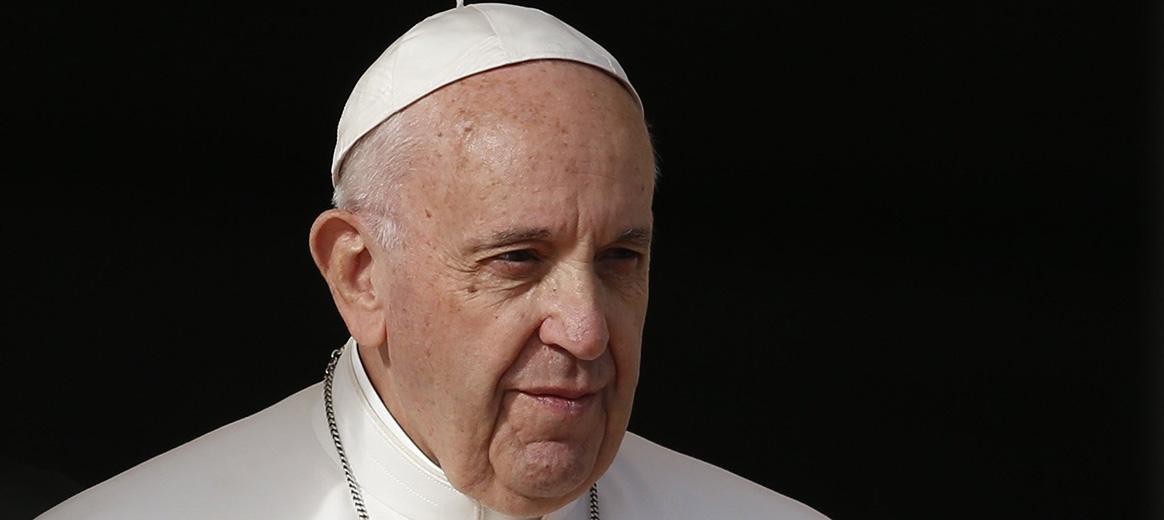
Far more disturbing are those “experts” who are bad-mouthing Pope Francis, his pontificate, and most of the world’s bishops. Can a pope be criticized? Of course. But there is a difference between legitimate concerns over certain aspects of a papacy and crossing the line into schism. Some commentators, for example, refuse to refer to Pope Francis by his papal title and use only his birth name. Again, on one level, that is not the end of the world; but more often than not, it is a way to minimize or even question the ecclesial legitimacy of Pope Francis.

We deacons need to view such “experts” with great caution. Not only our parishioners are vulnerable to such poisonous commentary, thinking it to be accurate, but so too can clergy. In this essay, I don’t want to deviate from the subject at hand and name some names of these “commentators.” Perhaps that can be the subject of a later essay. For now, I simply advise great caution in finding accurate resources on the papacy and on the synodal process itself. Do not trust any sources that might lead others into serious error and even schism. Just as a reminder, c. 751 defines schism as “the refusal of submission to the Supreme Pontiff or of communion with the members of the Church subject to him.” Lack of submission and communion is the foundation of schism.
Therefore, I recommend using only the best resources moving forward, starting with the official documents related to the Synod itself. These may be resources offered by the Holy See, the various episcopal Conferences (such as our own USCCB), or official statements of our own diocesan bishops.

  1. Study the Instrumentum Laboris. Here’s a link to it. How do you respond to these issues and questions yourself? I will develop this item shortly. Imagine that you were there “in the room where it happened” at the Synod Assembly. The Instrumentum Laboris outlines the various topics to be discussed during the Assembly. There is no reason why each and every one of us can’t have these discussions ourselves, and lots of reasons why we should! More later.
  2. Deacon Directors or other leaders in the diaconal community: Consider having weekly sessions (perhaps via ZOOM) for the deacon community to discuss the highlights of the past week. Not much to add to this suggestion. Every diocese has different options available to it that might facilitate such discussions. The diaconate community might decide to hold these discussions, not simply among themselves, but also with other members of the parish or deanery. Just as the bishops have invited other participants into their Synod (It is called the “Synod of Bishops,” after all), having people other than deacons joining in our local meetings can be productive and necessary.
  3. Perhaps pastors and deacons might do something similar for the entire parish and deanery. Bishops may initiate a diocesan process as well for their dioceses.
  4. in opening the Synod, Pope Francis spoke of the three-fold focus of communion, participation, and mission. He pointed out that “the words ‘communion’ and ‘mission’ can risk remaining somewhat abstract, unless we cultivate an ecclesial praxis that expresses the concreteness of synodality at every step of our journey and activity, encouraging real involvement on the part of each and all. Here is where deacons can be particularly helpful. As the Assembly progresses, deacons and others can discuss the practical realities of implementing the issues being discussed. I have subtitled this third essay “Concrete Consequences.” I take that verbiage from the late German theologian Herbert Vorgrimler who once wrote that deacons are to develop and demonstrate the “concrete consequences” of the Eucharist on the lives of our communities. This is where we can make our most unique contributions, where we take theory and aspiration and make it tangible.         

WORKSHEETS FOR THE SYNODAL ASSEMBLY

The Instrumentum Laboris contains fifteen worksheets that will guide the Assembly’s discussions. The same worksheets could guide local and regional processes. While this is not the place to review each worksheet in detail, I offer some comments on their general organization.

Notice there are three groups of five worksheets. Group B1 concerns communion, Group B2 addresses co-responsibility, and Group B3 involves participation, governance, and authority. All of these themes flow directly and intentionally from the work of the Second Vatican Council. As Pope Francis and the Synod coordinators have stressed, the upcoming Assembly is not a general council of the Church; it is not Vatican III! Pope Francis recently observed that the work of Vatican II remains incomplete, and the themes for the Synod Assembly reflect a two-fold concern. First, that the work of the Council itself remains a work in progress, and second, that the Synod should be understood against the background of the Council, and building on a Conciliar foundation.

 Finally, once these discussions are held, the results should be offered to our diocesan bishops for his own reflection, use, and decision-making. This is one way for us deacons in particular to offer our service as his “eyes, ears, voice, heart, and soul,” the traditional roles of the deacon.

Conclusion

Each and every one of us is called to be part of a synodal Church. Several hundred people have been invited to participate in a remarkable gathering in October. The vast majority of us will not be there in person. That does not mean we do not have a responsibility to participate in our own ways. Instead of feeling “left out” we should embrace our baptismal inclusion in the People of God, and for deacons, our vocational call to animate the Church’s diakonia — and synodality.

Deacons and the Synod, Part Two: A Path Forward

My recent essay on the apparent lack of deacons at the upcoming Assembly of the Synod on Synodality caused some interesting responses. First, I was informed by an authoritative source that “deacons” would indeed be a part of the Assembly, just none from North America. However, in the succeeding days, it seems that only one deacon (from Europe) has been identified as a participant. This was discovered only because he came forward and identified himself. The official list of participants identified other clergy as presbyters or bishops; the deacon was simply listed without any indication that he was a deacon. It should also be mentioned that well over half of the world’s 50,000 deacons live and minister in North America. Not to include some kind of deacon participation from all the continental synodal regions, including participation from North America, is a missed opportunity.

Active participation by the world’s deacons would be a two-fold benefit. First, the Assembly could consider the various questions of the Instrumentum Laboris through the lens of ministers whose very raison d’etre is to be the “eyes, ears, heart, and soul” of the bishop, identifying the needs of the church and the world, and providing servant leadership to meet those needs. Their experience could be invaluable. Second, and perhaps even more important, deacons would be able to listen and learn, through the Assembly process, from the wisdom and insights of the rest of the participants. As I noted in the previous essay, every other conceivable group is included in the “guest list”: lay women and men, women and men religious, bishops, presbyters, youth, and scholars. These fortunate people will share and learn, reflect, and discern together the “joys, hopes, griefs and anxieties of the people of this age” (Gaudium et Spes, #1).

Other respondents to my essay, both clergy and laity, reacted variously. Some simply agreed that not having deacons at the Assembly was a serious shortcoming that should be corrected. Others just rolled their eyes, shrugged their shoulders, and pointed out that this exclusion is nothing new, that deacons are often overlooked at every level of Church life: parish, deanery, diocese, and universally. Still others wrote that such an absence was really a good thing. That, as deacons, we are called to remain with the marginalized and the poor who were also not invited to the Assembly. Other deacons agreed that it was a good thing we are not there, so we can simply continue to focus on the immediate and practical needs of the people we serve. A French deacon wrote an article for La Croix International, in his own cri de coeur (“Priests Should Stop Pushing Deacons to One Side”) published on 20 July, which reminds us that experiences of diaconal marginalization are not focused on any particular region of the world.

This brief essay attempts two things. First, to sketch why I believe it is a most unfortunate oversight and a lost opportunity not to have the intentional participation of deacons at the Assembly. Second, since we are not in a position to change this situation, I want to offer a few suggestions on how deacons might still participate, even unofficially, in the Assembly and the subsequent steps in the synodal process.

Why should deacons be at the assembly? Why not?

Let’s first consider why deacons should not be at the Assembly. They should not be there from a sense of clericalism or entitlement: “We’re ordained so we should be represented.” No one has a right to be at the Assembly on such terms. The argument for participation is not based on clericalism, power, or ego.

So why should they be there? Deacons should be there because Pope Francis said so. He has emphasized that the current synodal path is “an exercise in mutual listening. I want to emphasize this. It is an exercise of mutual listening, conducted at all levels of the Church and involving the entire People of God.” Though unnamed, the diaconate is certainly part of “the entire People of God”! Deacons should be at the Assembly precisely because the pope wants “all levels of the Church” involved. Yet most lists related to the Synod are silent on the diaconate. Not so about any other group in the Church: but deacons are not mentioned. Why would this be?

There seem to be several possible explanations, none of them good. First, the order of deacons might be misperceived as a minor form of the priesthood and therefore included within the presbyterate. Ecclesiology has long since demonstrated that deacons “are not ordained unto the priesthood,” and do not participate in the ministerial priesthood. Unfortunately, too many people still see the diaconate merely as an “apprentice model” of the priesthood. It most certainly is not. Second, and equally problematic would be the opposite misunderstanding that deacons are simply some kind of “super-laity” and therefore need not be numbered among the clergy. Many deacons still encounter this mistaken notion, even among priests. Third, it could be that, even after more than fifty years since the diaconate’s renewal, it has simply not captured the ecclesial imagination; simply put, deacons don’t easily fit into many people’s categories of ordained ministry.

Church teaching has no such ambiguity. The Second Vatican Council refers to the sacramental grace of Holy Orders as applied to the diaconate: “For strengthened by sacramental grace, in communion with the bishop and his group of priests they serve in a diaconate of liturgy, of word, and of charity to the people of God” [Lumen gentium #29]. The same text refers to the functions of the diaconate as “supremely necessary” in the life of the Church. In the 1998 Directory for the Ministry and Life of Permanent Deacons [DMLPD], the Congregation for Clergy stated, “The origin of the diaconate is the consecration and mission of Christ, in which the deacon is called to share. Through the imposition of hands and the prayer of consecration, he is constituted a sacred minister and a member of the hierarchy. This condition determines his theological and juridical status in the Church” [DMLPD, #1]. In a particularly striking passage, the Congregation taught:

In every case it is important, however, that deacons fully exercise their ministry, in preaching, in the liturgy and in charity to the extent that circumstances permit. They should not be relegated to marginal duties, be made merely to act as substitutes, nor discharge duties normally entrusted to non-ordained members of the faithful. Only in this way will the true identity of permanent deacons as ministers of Christ become apparent and the impression avoided that deacons are simply lay people particularly involved in the life of the Church.

In short, the diaconate is not an optional, “nice-to-have” volunteer organization. As St. John Paul II taught frequently, “The diaconate is not a job; it is a vocation.”

A Unique Vocation

The tradition of the Church has always maintained that deacons have a unique character, related to but distinct from the presbyterate. And the most ancient sources emphasize the relationship that should exist between the deacon and the bishop, with the deacon serving as the bishop’s “eyes, ears, heart, and soul.” This is demonstrated during the deacon’s ordination when, from time immemorial, only the bishop lays hands on the ordinand. In the ordinations of presbyters, all priests present lay hands on the new priests; for new bishops, all bishops present lay hands on their new brothers. Not so with the deacon. The deacon is focused uniquely on the bishop.

The deacon is ordained to participate in his own way in the three-fold ministry of the bishop: Word, Sacrament, and Charity. The entire Church is called to be a servant church, a diaconal church. Pope Paul VI repeatedly taught that deacons are to be “the animators of the Church’s service,” and St. John Paul II carried it a step further when he referred to the diaconate as “the Church’s service sacramentalized.” He would later recall:

A particularly felt need in the decision to re-establish the permanent diaconate was and is that of the greater and more direct presence of ministers of the Church in the various environments of the family, work, school, etc., as well as in the established pastoral structures.

John Paul II General Audience, “Deacons Serve the Kingdom of God,” 6 October 1993

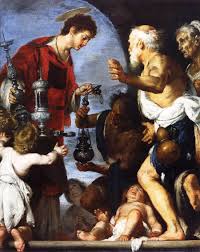
Deacons are called to feed the hungry, but also to address the cause of that hunger. Deacons are advocates for those who are voiceless; defenders of those who are powerless. As Father Joseph Komonchak once said, “Vatican II didn’t renew the diaconate because of a shortage of priests, but because of a shortage of deacons.” He was right then, and the need persists today. Certainly, there is a shortage of deacons at the Assembly!

Therefore, deacons should be active participants throughout the whole synodal process for two critical reasons, alluded to above. First, since deacons have a “greater and more direct presence” in the lives of the faithful they serve at home, in schools, the workplace, and in their professions, they can bring this pastoral experience and the needs of the people to the Assembly table. Second, deacons should be present to listen, share in the process of discernment, and learn from the other participants. The “agenda” of the deacon’s service is determined by the needs of others.

Deacons: How to Participate From Home

Since deacons are not currently on the guest list for the Assembly as of this writing (with one exception), how can we still contribute to the process? Consider the following suggestions, and feel free to add to the list!.

  1. Follow the progress of the Assembly through the media. Don’t trust unofficial sources. Follow the releases from the Holy See.
  2. Study the Instrumentum Laboris. Here’s a link to it. How do you respond to these issues and questions yourself?
  3. Deacon Directors or other leaders in the diaconal community: Consider having weekly sessions (perhaps via ZOOM) for the deacon community to discuss the highlights of the past week.
  4. Perhaps pastors and deacons might do something similar for the parish.
  5. in opening the Synod, Pope Francis spoke of the three-fold focus of communion, participation, and mission. He pointed out that “the words ‘communion’ and ‘mission’ can risk remaining somewhat abstract, unless we cultivate an ecclesial praxis that expresses the concreteness of synodality at every step of our journey and activity, encouraging real involvement on the part of each and all. Here is where deacons can be particularly helpful. As the Assembly progresses, deacons can discuss the practical realities of implementing the issues being discussed.

In short, even though we won’t be in the Assembly itself, we can still be active in our response to it. In doing so, we should attend to the three potential risks identified by Pope Francis: formalism, intellectualism, and complacency. His words speak for themselves.

The first is formalism. The Synod could be reduced to an extraordinary event, but only externally; that would be like admiring the magnificent facade of a church without ever actually stepping inside. . . . If we want to speak of a synodal Church, we cannot remain satisfied with appearances alone; we need content, means and structures that can facilitate dialogue and interaction within the People of God, especially between priests and laity.  Why do I insist on this?  Because sometimes there can be a certain elitism in the presbyteral order that detaches it from the laity; the priest ultimately becomes more a “landlord” than a pastor of a whole community as it moves forward.  This will require changing certain overly vertical, distorted and partial visions of the Church, the priestly ministry, the role of the laity, ecclesial responsibilities, roles of governance and so forth.

Can we deacons help in developing the “content, means, and structures” Pope Francis mentions? What would this mean in your parish or other ministries? What about the elitism he mentions? He specifically refers to the priesthood; are we able to help in addressing that? And, we should also address similar elitism that may be present in our own order.

A second risk is intellectualism.  Reality turns into abstraction and we, with our reflections, end up going in the opposite direction.  This would turn the Synod into a kind of study group, offering learned but abstract approaches to the problems of the Church and the evils in our world.  The usual people saying the usual things, without great depth or spiritual insight, and ending up along familiar and unfruitful ideological and partisan divides, far removed from the reality of the holy People of God and the concrete life of communities around the world.

Here is where deacons can offer special help. Given our lifestyles, we live, work, and minister in the midst of the laity in a way other clergy may not be able to. While we can still fall into the trap of intellectualism, it is more than likely that we will get called out on it by our friends, families, and neighbors. We need concrete approaches to today’s problems, and we are in a good position to do that.

Finally, the temptation of complacency, the attitude that says: “We have always done it this way” (Evangelii Gaudium, 33) and it is better not to change.  That expression – “We have always done it that way” – is poison for the life of the Church.  Those who think this way, perhaps without even realizing it, make the mistake of not taking seriously the times in which we are living.  The danger, in the end, is to apply old solutions to new problems. 

Let’s face it: it’s easy to fall into this trap of complacency. Our secular experience already tells us this can be deadly. We need to guard against it within the Church as well. Deacons are uniquely positioned to be a guardrail against all these risks.

Conclusion

I believe that the best way for deacons to proceed at this point is to become, if we are not already, active supporters of every aspect of the synodal process. This is a critical moment in the life of the Church, and the call to animate the Church’s diakonia remains, wherever we are.

Pray, serve, study, create, exhort, hope, and love. Repeat!

A Shepherd’s Voice: One Diocesan Bishop’s Pastoral Plan for Implementing “Amoris Laetitia”: First Look


Wuerl         Cardinal Donald Wuerl, the Cardinal-Archbishop of the Archdiocese of Washington, DC has just released Sharing in the Joy of Love in Marriage and Family: A Pastoral Plan to Implement Amoris Laetitia.  You may access the full document here.  This may be the first parish-centered pastoral plan on this subject in the United States, and I thank Deacon Greg Kandra for posting about this significant event.  This has personal implications for me,  since I am a deacon of the Archdiocese of Washington, DC so the new document has particular personal and ministerial relevance; Cardinal Wuerl is my bishop!

I think it is important to note from the outset that Cardinal Wuerl is a master teacher and a faithful, precise theologian.  Indeed, long before he became a bishop, he was well-known to be a skilled catechist, gifted teacher and respected author.  This catechetical perspective informs his entire approach to ministry, so it comes as no surprise that he would create a pastoral resource for the clergy, religious and laity of the Archdiocese, and that this resource would be grounded in a faithful presentation of the teaching of the Church on marriage and family life.  He provides clear guidance and direction for all Catholics of the Archdiocese, which should serve to prevent confusion while also serving wuerlsynodas an aid for everyone seeking to strengthen their own marriages and families, and the pastoral ministers who are supporting them.  These initial comments can only skim the surface of what is a much more substantive document, and I encourage everyone to take the time to read the Pastoral Plan in detail.  Let’s take a closer look.
More than fifty pages in length, the Pastoral Plan consists of a preface, some introductory reflections, five “parts”, a conclusion and an executive summary.  The five major sections are: Amoris Laetitia’s Teaching, the Way of Faith and Contemporary Culture, the Way of Accompaniment, the Importance of Parish Life, and finally, In Service of the Ministry of Accompaniment, which consists of an extensive list of resources available to pastoral ministers.

The contributions of the Pastoral Plan revolve around several key themes: context, accompaniment, conscience, and practical care.

CONTEXT

The document’s first significant contribution is context.  In the Preface, Cardinal Wuerl makes clear that the Plan incorporates not only the teaching of Amoris Laetitia itself, but also the two Synods which preceded and inspired it.  For me this is a most important reminder.  Far too frequently, observers have attempted to read and comprehend the pope’s Exhortation without this context, and that, in my opinion, is not only inadequate VaticanSynodofMarriageandFamilybut dangerous.  “Text” always requires “context”, and the Cardinal makes this clear: to understand and to implement Amoris Laetitia, one must situate it within that broader global synodal process.  Amoris Laetitia, precisely as a post-synodal apostolic exhortation, reflects not merely the personal teaching of the Holy Father himself; it is that, certainly, but so much more.  The work of the preceding synods involved representatives of the world’s episcopal conferences, extensive consultation and research over several years, and intense discussions during the synods themselves.  All of this reflected both the importance of the challenges facing contemporary families and the diversity of pastoral responses needed to help them.  As Cardinal Wuerl notes, “Many collaborators have worked to provide elements of a pastoral plan to implement this expression of the Papal Magisterium that follows on two gatherings of bishops, the 2014 Synod on the Pastoral Challenges of the Family in the Context of Evangelization and the 2015 Synod on the Vocation and Mission of the Family in the Church and in the Contemporary World” (Preface, 3).

There is a sense in which the right understanding of the work of both the 2014 and 2015 synods and their fruit, Amoris Laetitia, depends upon the recognition of this interactive dynamic between teaching, experiencing the teaching, and the living out of the teaching in light of how it is understood and able to be received. This recognition is perhaps the most challenging aspect of Amoris Laetitia. It calls for a conversion of heart. The minister is called to recognize that beyond the assurance of doctrinal statements he has to encounter the people entrusted to his care in the concrete situations they live and to accompany them on a journey of growth in the faith.

VATICAN-POPE-AUDIENCEACCOMPANIMENT

The Cardinal outlines the approach of his Pastoral Plan in terms of accompaniment, which is of course, a major theme of Amoris Laetitia itself.  The theme of pastoral accompaniment is, indeed, the foundation and the goal of the entire Plan.  The Cardinal writes,

Not every marriage, however, goes forward with “they lived happily ever after.”  In fact, for many, in our heavily secular culture today, there is little understanding of the true nature of love, marriage, commitment, and self-giving which are all part of the Catholic vision of love. Yet, while their lives and experiences may have drawn many far away from the Church’s message, we are all the more called to reach out to them, to invite and accompany them on the journey that should help bring them to the joy of love that is also the joy of the Church.

He reminds us that we must approach everyone “with humility and compassion,” remembering that all the baptized are members of Christ’s body, and that we are all brothers and sisters to one another, regardless of circumstance.  He recalls the invitation of Pope Francis “to value the gifts of marriage and family. . .  (and) to encourage everyone to be a sign of mercy and closeness wherever family life remains imperfect or lacks peace and joy” (AL, 5).

The Cardinal directs that the implementation of Amoris Laetitia  in the Archdiocese of Washington, DC be based on the following points.

  • First, it must begin with the Church’s teaching on love, marriage, family, faith and mercy. In particular, he points out that a key insight of the pope’s teaching was a proper understanding of the family “as the site of God’s revelation lived out in practice.”  To this end, the Cardinal joins with Pope Francis in exhorting all ministers of the Archdiocese to a deeper knowledge and formation on marriage and family life.  The richness of the Church’s teaching on marriage and family is a gift to be treasured and shared, especially in light of the many challenges faced by people in today’s world which can distract or even alienate people from each other and from loving commitments.  However, the Cardinal points out, “our task is not complete if we only limit ourselves to faith statements. The goal is the salvation of souls and it is a far more complex effort than simply restating Church doctrine.”
  • Therefore, “it is essential to recognize that our teaching is received by individuals according to their own situation, experience and life. Whatever is received is received according to the ability of the receiver, to paraphrase Aristotle and Saint Thomas Aquinas. This is our starting point for pastoral ministry.” The Cardinal points out that this “interation” between the proclamation of the church’s teaching and the lived experience of those who hear that teaching was a critical insight from both of the synods.

There is a sense in which the right understanding of the work of both the 2014 and 2015 synods and their fruit, Amoris Laetitia, depends upon the recognition of this interactive dynamic between teaching, experiencing the teaching, and the living out of the teaching in light of how it is understood and able to be received.  This recognition is perhaps the most challenging aspect of Amoris Laetitia. It calls for a conversion of heart. The minister is called to recognize that beyond the assurance of doctrinal statements he has to encounter the people entrusted to his care in the concrete situations they live and to accompany them on a journey of growth in the faith.

Here we see the master catechist at work.  The Cardinal expresses the Church’s constant tradition that at the heart of our faith lies a relationship with Christ, and that one does not establish or nourish such a relationship without the conversion of the human heart.  Teaching alone, as central as it is, will be heard and received within very different life situations, and he challenges all of us who minister “to encounter and to accompany” the people we serve where they are in their journey.

CONSCIENCE7889200

Central to Amoris Laetitia and to this pastoral plan is the role of conscience.  St. John Paul II referred to the conscience as “the ultimate concrete judgment” in Veritatis Splendor 63, while the Catechism of the Catholic Church (both of which are cited by Cardinal Wuerl) describes conscience as “a judgment of reason by which the human person recognizes the moral quality of a concrete act” (CCC, 1796).  Therefore, stressing always fidelity to the Church’s teaching on marriage and family along with the pastoral awareness of how that teaching “is being received or even able to be perceived,” there is something more.  “An equally important part of our Catholic faith is the recognition that personal culpability rests with the individual. We have always made the distinction between objective wrong and personal or subjective culpability.”  The Cardinal continues:

          Our personal culpability of any of us does not depend solely on exposure to the teaching. It is not enough simply to hear the teaching. Each of us has to be helped to grasp it and appropriate it.  We have to have “experiential” and not just “objective” moral knowledge, to use the language of Saint John Paul II. . . .  Our consideration of our standing before God recognizes all these elements. We cannot enter the soul of another and make that judgment for someone else. As Pope Francis teaches, “We have been called to form consciences, not to replace them” (AL, 37).

The Cardinal’s treatment of “conscience” is, for me, a highlight of the pastoral plan, since it is at the level of conscience that our pastoral activity will be centered, and I hope that everyone will study this section reflectively and carefully.

Many will be curious about the question of the possibility of divorced-and-remarried persons receiving Communion, so let me address this in more detail.   This question itself is not specifically addressed in the Plan.  However, much as the treatment of the subject in Amoris Laetitia, I do not find this particularly troubling, for the following reasons.  Traditional Catholic teaching has always stressed a balanced approach between objective moral principles and subjective moral culpability.  There is nothing new in this, and the current Catechism of the Catholic Church repeats it clearly (see, for example, paragraphs 1857-1859).  What prevents us from receiving communion ccc-photois being in a state of mortal sin.  The tradition holds that for a sin to mortal, “three conditions must together be met: grave matter which is also committed with full knowledge and deliberate consent.” The Catechism continues, “Grave matter is specified by the Ten Commandments, corresponding to the answer of Jesus to the rich young man: ‘Do not kill, do not commit adultery, do not steal, do not bear false witness, do not defraud, honor your father and your mother. . . .”  But mortal sin is more than an objectively grave act.  “Mortal sin [also] requires full knowledge and complete consent. It presupposes knowledge of the sinful character of the act, of its opposition to God’s law. It also implies a consent sufficiently deliberate to be a personal choice” (CCC, 1857-1859).
What Cardinal Wuerl has done is to echo this traditional teaching.  How one forms spiritual directionone’s conscience is a complex matrix involving experience, formation, and discernment guided by one’s pastor.  Objective moral principles are one thing, but a person’s moral culpability for those acts or omissions is another, since “full knowledge” and “complete consent” are subjective issues.  The state of one’s soul before God, then, is deeply personal between the person and God, which again is the traditional teaching of the Church.  The decisions a person makes under the guidance of a pastor are matters of a deeply internal spiritual nature and can vary from person to person.  The responsibilities of a pastor in these matters are most crucial and weighty, and the Cardinal stresses all of this in the document.  No one answer will suffice in every case.  He writes, “Here Amoris Laetitia confirms the longstanding teaching of the Church and encourages pastors to see through the lens of Christ’s mercy and compassion rather than through a rigorous legalism.”  He continues:
Pastoral dialogue and accompaniment involve the development of conscience and also the expression of a level of support or confirmation for the judgment the individual is making about the state of his soul or her soul.  That judgment is the act of the individual and is the basis for their accountability before God.

In practice, this means that while some may be secure in their understanding and appropriation of the faith and the call of the Christian way of life, not all of our spiritual family can say the same thing. Even how we receive and understand the faith and its impact on our lives varies according to our situation, circumstances and life experiences.

While some people might prefer that both Amoris Laetitia and this Pastoral Plan might more directly “answer the question” about the reception of communion, such a response would not respect the primacy of the individual conscience under the guidance of the Church’s pastors, and the traditional understanding of moral decision-making in the Catholic Church.

PRACTICAL CAREwuerl3

Finally, as suggested by all that has gone before, the Plan offers very concrete resources for all those in pastoral ministry.  A primary “resource” is, of course, the parish itself.  The Plan suggests myriad ways in which various people within the parish might catechize, encourage, and accompany each other.  The parish is “the home of pastoral accompaniment, where we can all experience the love and healing mercy of Jesus Christ.”  The Cardinal directs that “Our parishes, as the place where people most experience the life of the Church, must be places of welcome, where everyone is invited, particularly anyone who might be disillusioned or disaffected by contemporary society or even by our faith community. The Church assures all that there is a place for everyone here in our spiritual home.”

7-Church-Walk           The section on the parish is extremely practical, with suggestions on how the various members of the parish and pastoral team might create this “culture of accompaniment” for others.  There are paragraphs for pastors and other priests, parish leaders and staffs, youth and young adults, engaged couples, newly married couples, young families, older couples and adults, and families in special circumstances.  It is only here that I would have wished for just one addition to the text.  Deacons are not mentioned in any context, and yet deacons, who are generally married with families of their own, are frequently engaged in ministries to couples preparing for marriage as well as other forms of family-related ministry.  In one sense, of course, the words of encouragement offered by the Plan to pastors, priests and parish staffs can – and do! – apply to the deacons.  Still, it does seem a missed opportunity to develop specific ways in which the diaconate, given its unique features within marriage and family life, might contribute to these ministries.
Finally, the last section of the plan offers a kind of “bibliography” of sources available from a variety of places, including the offices of the archdiocese itself, the United States Conference of Catholic Bishops, and various national and regional groups.  The resources identified cover the waterfront and there is something for everyone, in every kind of need.

          In short, this Pastoral Plan, while prepared for the Archdiocese of Washington, DC, is an excellent resource for Catholics everywhere, and I hope that other bishops will follow suit with similar initiatives in their own dioceses.  This Plan reflects significant collaboration on the part of the archdiocesan staff as the Cardinal prepared this multi-layered pastoral response to Amoris Laetitia.  I encourage everyone to read it, study it, and use it!

ADW Seal

On the road again — but not too far!

lectionarySorry I haven’t posted in a couple of days, but we have been preparing for our annual retreat for our current deacon candidate class, coming up next weekend, during which they will be installed in the ministry of Lector by the bishop.  I’ve also headed to the neighboring Diocese of Fresno to facilitate their annual Clergy Convocation.  Today I met with Bishop Armando Ochoa and the presbyterate of the Diocese.  Since tArmando Ochoahe diaconate is still relatively new in the Diocese, we spent the day talking about the diaconate in general and responding to questions and concerns that the priests had.  But this is all preliminary to the matters we’ll work on tomorrow: pastoral planning in the Diocese.  Tomorrow the deacons join us and we’re going to talk about the annual pastoral planning process we’re developing in the Diocese of Monterey and see how a similar process might help in Fresno.

So, as the clergy of the Diocese prayerfully discern their next steps in strategic pastoral planning, please keep all of us in your prayers!  Please pray for our deacon candidates and their families in Monterey, and for our neighbors in Fresno!