“Non Sibi Sed Patriae”: A Reflection on Patriotism

4 July 2025

Commander William T. Ditewig, United States Navy (ret.)

            Most citizens of the United States are disheartened by the current state of political affairs in our country. There appears to be no gradation of belief and opinion, no political “spectrum”: one is either at one polar end of this non-existent spectrum or the other. One extreme holds that we are doomed by the other extreme, that those who hold opposing views are ignorant, evil, disloyal, dangerous, and deadly to the principles of our founders. The opposing extreme holds the same. On a personal level, I recently wore my Navy uniform as part of a Memorial Day ceremony. I was actually taken to task by several loved ones for doing so, apparently because they felt I would be misunderstood as supporting one political entity over another. Still others have expressed such dismay over the current state of political and cultural affairs that they not only have no interest in celebrating the Fourth of July, but they actually oppose its observance altogether. Their distress has prompted me to consider the nature of true patriotism itself.

            At the heart of this reflection is a motto used by our Navy and others when describing national service: “non sibi sed patriae” – “Not for self but for country.” In my twenty-two years of Naval service, and this is the point of view of many with whom I served, I rarely knew the political leanings of others in uniform. It was not something we saw as important in our service. We careerists, serving for decades, had many commanders-in-chief, often as different as night and day. It really mattered little since our service is to the Constitution, not to an individual, any individual, and certainly not to any political party, personality cult, or popular opinion. We were willing to put our lives on the line for each other and “in order to create a more perfect union.” It was never about awards, medals, or promotions. The higher one’s rank, the greater measure of service was expected, not for ourselves but for the country.
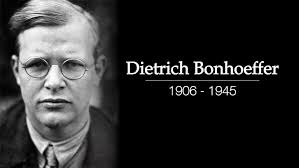
            German Protestant pastor and theologian Dietrich Bonhoeffer, arrested, imprisoned, and eventually murdered in 1945 by the Nazis, wrote eloquently about many things, including what he called “the cost of discipleship.” One of his most widely quoted insights concerns his distinction between “cheap” and “costly” grace. According to Bonhoeffer, cheap grace is the preaching of forgiveness without repentance, baptism without discipline, communion without confession. Cheap grace is grace without discipleship, grace without the cross, grace without Jesus Christ. Regardless of one’s religious beliefs, I think all can appreciate the notion that our beliefs about anything carry with them a responsibility to act accordingly, that our beliefs are more than simple “cheap” words, devoid of concrete impact.

It strikes me that one might make a similar distinction between “cheap” patriotism and “costly” patriotism. Cheap patriotism is the jingoistic bluster of the bully, toxic forms of masculinity, and appeals to violence as a first resort rather than the last. This is not true patriotism. It is demagoguery. Costly patriotism looks beyond all of that. The cost of true patriotism is found in acting despite one’s own fear of injury or death, of realizing that there are people and principles more important than oneself, people and principles worth dying for.

Cheap patriotism is about waving the flag without honor. Cheap patriotism holds loyalty to a leader as a prime virtue. Cheap patriotism wears the uniform as a sign of personal status. Costly patriotism is about the people of the country, not an individual. Costly patriotism never lets the flag we honor “touch the ground” of personal greed, political posturing, or be used as a tool of violent revolt. As I watched in horror the events of January 6, 2021, two images still haunt me. First was the use of the flag as a weapon, as a tool of violence in every sense of those words. Second was watching others replace the flag of our country with a personal “flag” of the man who had lost the presidential election: he was being elevated, literally, above our own national ensign. Such cheap patriotism should have no place in our country, a country founded on principles of service over self.

This brings us back to the Fourth of July. If we let those who proclaim “cheap” patriotism have their way, we lose as a country and as individuals. If we don’t remember and celebrate “costly” patriotism, the bullies win. On the other hand, if we do remember and celebrate true and costly patriotism, we proclaim in word and deed that we are more than our worst instincts, more than empty posturing, and that we will redouble our efforts, individually and collectively, to create the more perfect union our Constitution calls us to. For me, personally, this is what it means to wear the uniform of my country’s Navy again. It connects me with the generations of family and friends who have shared that same commitment to service over self.

On this Fourth of July, may we take time to reflect on costly patriotism: “non sibi sed patriae”. And after reflection, action.

Prayers for Pilgrims: The Journeys Begin

This coming Thursday, three friends set out on three very different journeys, but each path has a single goal: to serve God and others. I ask for prayers of blessing for the three of us, those we will encounter along the way, and our families who cannot join us physically on the journey.

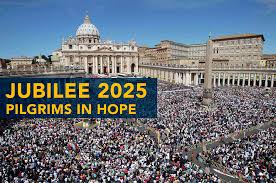
My friend and brother Deacon Greg, leaves on Thursday in preparation to lead a group of pilgrims to Rome for the Jubilee called by Pope Francis. The pope has asked this to be a Jubilee Year for Hope, and God knows we all could use hope in our lives! So this will be a unique journey for Greg and his fellow pilgrims as they pray for us in joy and hope in the splendor and glamour of the Eternal City.

My friend and shipmate Jim will leave on Thursday on his 20th mission trip to Zimbabwe. During and following an illustrious Navy career, he has been most active in the ministries of the Methodist Church, and it is under their auspices he and his fellow missionaries have served. For more than sixteen years, Jim and his team have built clinics, schools, accommodations, and anything else the communities need.

My own journey of discovery also begins on Thursday, leading first to Hawaii, where I will again have the opportunity to work with the newest group of people starting their own journey toward possible ordination as deacons. From there, I return to Australia, where I’ll speak with deacons and deacon candidates, their families, and seminarians in Sydney, Melbourne, Adelaide, Brisbane, and Parramatta before returning home.

Three very different journeys, but each a pilgrimage of faith and hope.

Please pray for us!

Deacons and the Synod? One proposal. . . .

Deacon Dom Cerrato, editor of The Deacon, is spreading the word about his suggestion of a letter His Eminence Cardinal Mario Grech, the General Secretary of the Synod of Bishops concerning the lack of deacons in the General Assemblies of the Synod on Synodality. You can read more about his project at his blog here: https://www.diaconalministries.org/synod. In part, he writes

In our endeavor to humbly highlight the absence of the diaconate in our Church’s dialogue, we are preparing to send a heartfelt letter to His Eminence Cardinal Mario Grech, General Secretary of the Synod of Bishops. After you’ve had a chance to read the letter below, should you feel moved to join us in this respectful gesture, we warmly invite you to express your support by clicking the button below.

Understand, this gesture is not a petition but rather a symbol of our collective respect, support, and our shared commitment to prayerfully accompany the Church through the Synodal Process. If you choose to stand with us in this effort, we will be honored to include your name alongside this letter when it is presented to Cardinal Grech on May 1, 2024. Your participation would deeply signify our unity and heartfelt support for the invaluable role of the diaconate within our Church.

Read the whole blog post, including the proposed letter, here:

Where Are the Deacons — Again?

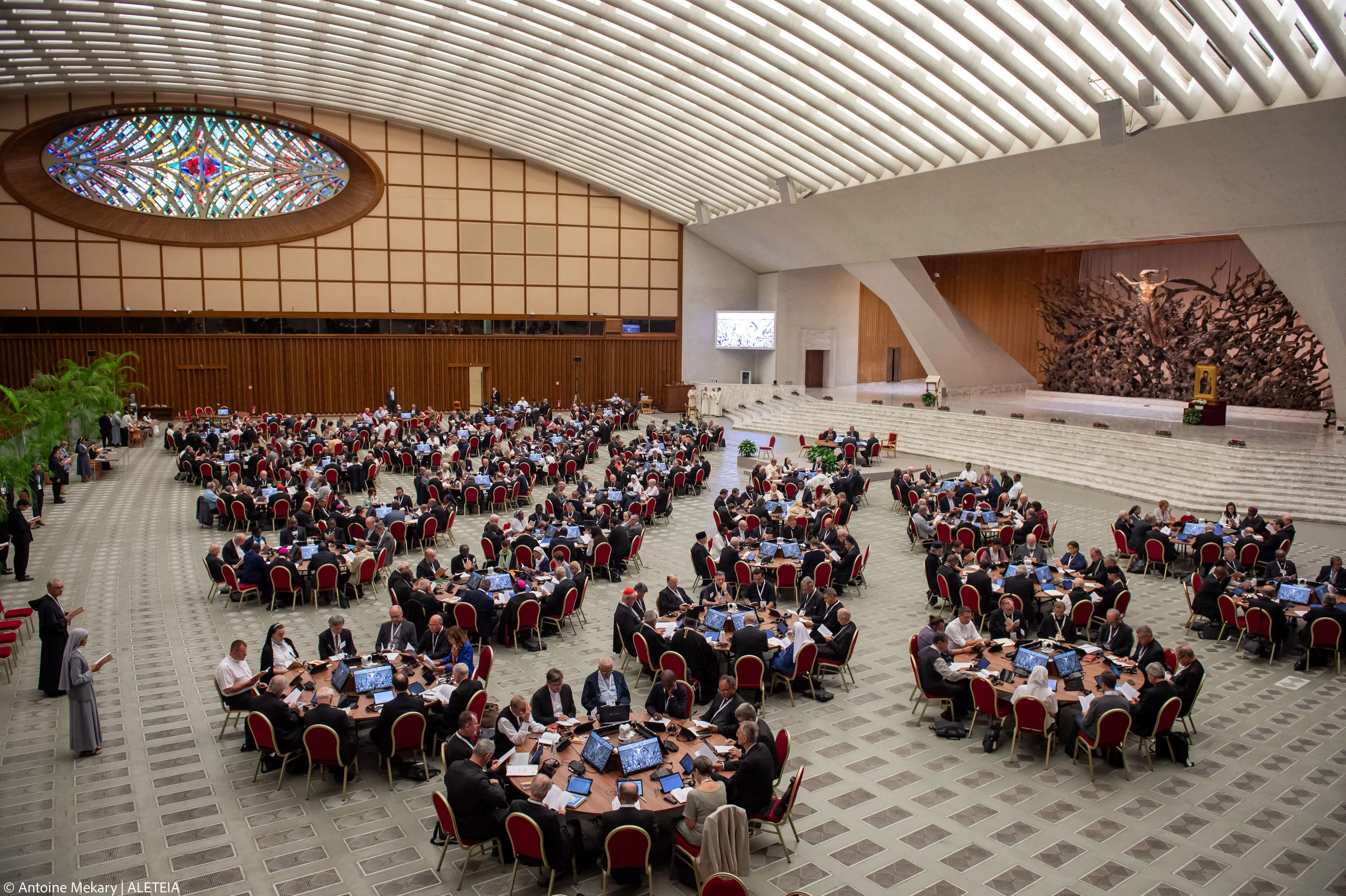
When the 2023 General Assembly of the Synod on Synodality convened, many observers noted the absence of deacons and priests. In the case of deacons, for example, one (“permanent”) deacon was in attendance, along with another deacon soon to be ordained to the presbyterate. Now, the Synod Secretariat has announced an extraordinary 5-day gathering of some 300 priests convening in late April 2024. This assembly is being held, according to the Secretariat, to respond to the desire of the Synod participants to “develop ways for a more active involvement of deacons, priests, and bishops in the synodal process during the coming year. A synodal Church cannot do without their voices, their experiences, and their contribution.” The announced gathering is therefore good news. But once again the same question recurs: Where are the deacons?

            If the participants desired “more active involvement” of deacons, where are they? Perhaps more important, why is the participation of deacons so problematic? The words of the announcement and the Synthesis Report are clear enough but, yet again, the actions – or inaction – belie those words. When you tell someone that they are valued and that “their voices, their experiences, and their contribution” are vital, and then do nothing to open the door to those voices, why should the nice words be believed?

            Having little to no substantive participation by deacons at the 2023 Assembly could be explained as a painful oversight. Once this lacuna is pointed out, however, to be excluded from the process yet again is deliberately hurtful and dismissive, conveying clearly that deacons simply have no voice worth hearing, no experience worth sharing, and no insights to give or to receive. In short, when every other possible group of participants and theological experts are literally at the table of the synod, the absence of deacons sends the clear message that deacons are unnecessary, with nothing to contribute. How glaringly different from our history! Those deacons were the “eyes and ears, heart and soul” of the bishop, with one source (the mid-3rd Century Syrian Didascalia Apostolorum) proclaiming, “Let let the deacon be the hearing of the bishop, and his mouth and his heart and his soul; for when you are both of one mind, through your agreement there will be peace in the Church”.

    Although the Second Vatican Council, in renewing a diaconate to be permanently exercised, said that the ministries of the deacon are “so very necessary to the life of the Church,” it would seem this statement is no longer to be valued.

            Perhaps the more important question is not “Where are the deacons?” but rather, “Why, just why, are deacons not part of the vision of the Synod?”

Join Me on a Pilgrimage to Italy!

I’ve posted this before, but I want to invite you to join me on a pilgrimage to Italy from April 15-26. You’ll have so much fun that we’re adding a three-day optional extension to visit Paris from 26-29 April! We still have plenty of room for more pilgrims. Even if you’ve been to Italy before, I promise this will be unique. We will start in Milan, and head to places like Bergamo, Sotto il Monte, Venice, Assisi, and Rome. Three whole days in Rome, in fact. So, don’t miss this chance to have a prayerful, reflective post-Easter pilgrimage — and also enjoy the fun, food, and beauty that is Italy. And don’t forget to invite family members and friends along on a trip of a lifetime. Here’s a link to our trip’s website where you can get all the details and even enroll.

https://selectinternationaltours.com/product/a-pilgrimage-in-the-footsteps-of-pope-st-john-the-xxiii-in-italy-april-15-26-2024-24mj04itbd/

On the Eve of the Synod: Papal Bookends and Diakonia

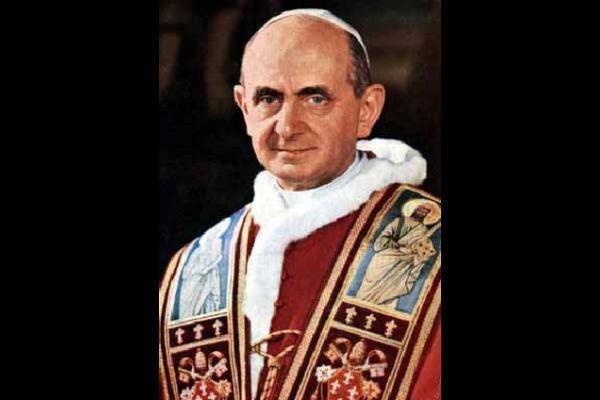
St. John XXIII and St. Paul VI

In convening the latest Synod of Bishops, Pope Francis is drawing insight and inspiration from his predecessors. Today, on the verge of the solemn opening of the General Assembly of the Synod of Bishops, I want to highlight two of them: the popes of the Second Vatican Council, St. John XXIII and St. Paul VI. The current Synod of Bishops is not, of course, a general Council of the Church. However, it is my judgment that to understand the Synod and its work, one must be thoroughly grounded in the work of the global episcopate at Vatican II. While that is a project far beyond the scope of this essay, we can find inspiration in the papal bookends of St. John XXIII’s address opening to the Council and then, following the intense work of the bishops over four years, St. Paul VI’s address at the final general session of the Council.

Saint John had faced considerable skepticism, and far worse, for his decision to call the Council. The world seemed to have gone mad throughout the 20th Century, with its global conflicts, economic collapse, and war on an unimaginable scale. The Holocaust and then the beginning of the atomic age changed the world forever. It is important to remember that the Second World War had only been over for fourteen years when he announced the Council. Vatican II, in many ways, was the Church’s response to the horrors and devastation of the Second World War and the world that emerged following it.

The Council Opens

It was against this backdrop that the majority of the world’s bishops assembled in Saint Peter’s Basilica after three years of intense preparation. Following the lengthy procession and then Mass, Saint John addressed the bishops — and the world. “Holy Mother Church rejoices,” he began. He presented a hopeful outlook for the Council, and that it would be a blessing to the Church so that the Church could “look to the future without fear.”

He then acknowledged the existence of those who persisted in a different, negative, and pessimistic view of the Church and the world. This is a well-known passage, but on the eve of the Assembly of the Synod of Bishops, it bears a prayerful, reflective examination.

The Prophets of Gloom: Then and Now

In the daily exercise of our pastoral office, we sometimes have to listen, much to our regret, to the voices of persons who, though burning with zeal, are not endowed with too much sense of discretion or measure. In these modern times, they can see nothing but prevarication and ruin. They say that our era, in comparison with past eras, is getting worse, and they behave as though they have learned nothing from history, which is, nonetheless, the teacher of life. They behave as though at the time of former Councils everything was a full triumph for the Christian idea and life and for proper religious liberty.

What a remarkable passage. Pope John is blunt in his description of the skeptics. They want to live in the past, and yet “they have learned nothing” from that history “which is nonetheless the teacher of life.” They have so “canonized” the past that they distort it beyond recognition. We hear similar voices today, especially some of the rather notorious “dads with webcams” who populate the internet and spend their time mocking, insulting, and even threatening Pope Francis and the Synod. Pope John did more than just call out his critics:

We feel we must disagree with those prophets of gloom, who are always forecasting disaster, as though the end of the world were at hand.

We can echo Pope John in our own day, disagreeing with today’s “prophets of gloom”. Like their predecessors, they too persist in forecasting disaster. Several of these contemporary “prophets of gloom” are Cardinals who have raised dubia (questions, doubts) to Pope Francis. In the earlier submission, Pope Francis wisely declined to respond. In the recent second submission, the pope chose to respond so there would be clarity prior to the impending Synod Assembly. Now, these same cardinals don’t like the pope’s responses and are now asking him to respond “yes” or “no.” To be accurate, dubia are generally responded to as either “yes” (affirmative) or “no” (negative). However, the issues raised by the Cardinals (and consequently by their junior prophets of gloom on the internet) defy such simplistic responses, and the pope was wise and prudent not to fall into such a trap. Like Pope John before him, Pope Francis is leading us to the novus habitus mentis called for by every pope since Pope John, a new way of thinking that offers a vision of hope based on the constant presence and providence of God:

In the present order of things, Divine Providence is leading us to a new order of human relations which, by men’s own efforts and even beyond their very expectations, are directed toward the fulfillment of God’s superior and inscrutable designs. And everything, even human differences, leads to the greater good of the Church.

Council and Synod: Doing the Will of God Yesterday, Today, Tomorrow

First, this is God’s gracious initiative, not ours. Yes, there are people around the world who have specific dreams for the Church in the future. We, the Church, must listen intently, discern prayerfully, and cooperate creatively with God’s will. Second, look again at that remarkable sentence that “everything, even human differences, leads to the greater good of the Church.” The unity of the Church is expressed in its diversity since all of it comes from the One God. Some people today would struggle with Pope John’s statement which is, nonetheless, true. He continues to detail his vision for the goals of the Council, and again, these words could apply to the Synod.

Our duty is not only to guard this precious treasure, as if we were concerned only with antiquity but to dedicate ourselves with an earnest will and without fear to that work which our era demands of us, pursuing thus the path which the Church has followed for twenty centuries. The salient point of this Council is not, therefore, a discussion of one article or another of the fundamental doctrine of the Church which has repeatedly been taught by the Fathers and by ancient and modern theologians, and which is presumed to be well-known and familiar to all. For this, a Council was not necessary.

[T]he Christian, Catholic, and apostolic spirit of the whole world expects a step forward toward a doctrinal penetration and a formation of consciousness in faithful and perfect conformity to the authentic doctrine, which, however, should be studied and expounded through the methods of research and through the literary forms of modern thought. The substance of the ancient doctrine of the deposit of faith is one thing, and the way in which it is presented is another.

Several points suggest themselves for the Synod based on this passage:

  1. We must go beyond a simple “maintenance” of antiquity.
  2. Our times demand walking a path “which the Church has followed for twenty centuries.”
  3. There is no need for a Synod to discuss and debate fundamental doctrine.
  4. The whole world (“the Christian, Catholic, and apostolic spirit”) expects a step forward.
  5. “The substance of the ancient doctrine of the deposit of faith is one thing, and the way in which it is presented is another.”

Implementing the Servant Identity of the Church

After four years of listening, debate, discussion, and discernment, the Council came to an end. On 7 December 1965, Pope Paul VI gathered with the world’s bishops for the final general meeting of the Council and to promulgate the documents approved during the fourth and final session of the Council. Standing before his brother bishops, Pope Paul summarized the work of the Council. A key passage sets the Church — and her deacons — onto a new path.

Another point we must stress is this: all this rich teaching is channeled in one direction, the service of mankind, of every condition, in every weakness and need. The Church has, so to say, declared herself the servant of humanity, at the very time when her teaching role and her pastoral government have, by reason of the council’s solemnity, assumed greater splendor and vigor: the idea of service has been central.

Gone was the perfectas societas approach to ecclesiology. Now the very nature of the Church is that of a servant, a servant of all of humanity. The mission of the Church is to evangelize; that mission is a diakonia, a sacrificial service rendered to all of God’s creation. Into this new direction announced by Pope Paul and the Council Fathers, the renewed diaconate emerges from the shadows of history. And, once again, it is Pope Paul who makes the critical connection between the diakonia of the Church and and the renewed diaconate. He described deacons as “the animators of the Church’s diakonia.” Not many years later, St. John Paul II quoted Paul VI, and added that deacons “are the Church’s service sacramentalized.” Through their ordination, deacons take on a servant-leadership role in the Church. But we are ordained, not to exercise diakonia so that others do not have to. Rather, we exist to assist, empower, and inspire others to fulfill their baptismal obligation to serve God and one another.

Conclusion

The Synod is not a Council. It is, however, a powerful exercise of the Church’s synodal character. The lessons we can learn from the modus operandi and the vision of the Council can still serve as valuable markers on the synodal process. It must be remembered that this Synod is continuing a journey demanded by the bishops of the Council and implemented by Pope Paul. It is not emerging from a vacuum.

As with most things in life, attitude can be everything. If one approaches the Synod with a negative attitude, the acts of the Synod will almost certainly be perceived as negative. Prophets of gloom will find the gloom they seek. However, if approached with the attitude of Pope John, as a new day in the life of the Church (“and now is just the dawn!”), the possibilities are almost endless.

“Tantum Aurora Est!”

For Your Consideration

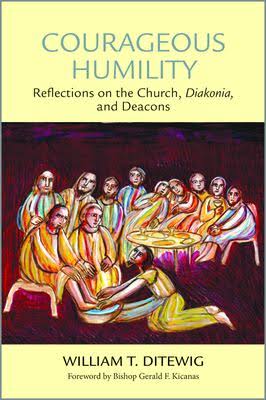
I am pleased to announce the publication of my latest book by Paulist Press, Courageous Humility: Reflections on the Church, Diakonia, and Deacons. It is available directly from Paulist, or from Amazon, or wherever you buy your books.

This is a book about the Church. The early chapters reflect on the nature and structures of the Church, and the remaining chapters build on this foundation to focus on the nature and ministry of the renewed diaconate. Here is the table of contents:

CONTENTS

Foreword by Gerald F. Kicanas, Bishop Emeritus of Tucson

Preface

Chapter One–A Humble Church as Icon of the Humble Trinity

Chapter Two–Ecclesial 12-Step Program: Humility in the Rule of St. Benedict

Chapter Three–Renewing Structures for a Humble and Diaconal Church: In Tribute to John Quinn

Chapter Four–Strengthened by Sacramental Grace: The Sacramentality of the Diaconate

Chapter Five–The Code of Canon Law, a Servant Church, and Diaconate–A Proposal in Honor of James Provost

Chapter Six–Ordaining Deacons in a Humble Church: Proposed Revisions to the Rite of Ordination

Chapter Seven–Recurring Questions on the Diaconate

Chapter Eight–Concluding Reflections: Tapping the Potential of the Diaconate

I hope you find it helpful!

Sign of a Humble Church: Bring Back the Confiteor

Introduction

Every day, it seems, we hear of some new travesty committed by the human members of the Church. Less dramatic, of course, are the constant reminders we all have of our human nature, weakened by sin. As we prepare for our solemn celebration of Christmas, of Emmanuel (“God-with-us,”), now is a perfect time to express our constant need for God’s mercy and forgiveness.  We do this as individuals and as Church. We are a humble and humbled Church, and like our ancient ancestors in the faith, we acknowledge our sinfulness publicly. The tradition of the Latin Rite includes a penitential rite as part of the introductory rites of every Mass.

For the record, I fully embrace the teachings of the Second Vatican Council; all of them. As Pope Francis said recently, the teachings of the Council are the magisterium of the Church. Significant among those teachings are the principles of liturgical reform established in Sacrosanctum Concilium. In the subsequent liturgical reforms based on these conciliar principles, the former “prayers at the foot of the altar” were removed, except for an abridged form of the Confiteor. This became part of an expanded penitential rite, consisting of several forms available to the priest, with the simplified Confiteor being simply one of those options. Thus, the Confiteor may be prayed in some locations and not others, or at certain times of the year and not others. What I am about to suggest may surprise some people. Nevertheless, as I have reflected on the current state of the Church, it seems appropriate to restore the Confiteor as a mandatory part of every celebration of the Mass of St. Paul VI. To be clear, what I am suggesting is a modest revision to the Mass of St. Paul VI. I am most certainly not proposing a wholesale return to the pre-Conciliar Missale Romanum.

What follows is an excerpt from my forthcoming book from Paulist Press (paulistpress.com), Courageous Humility: Reflections on the Church, Diakonia, and Deacons.

A Humble Church Confesses

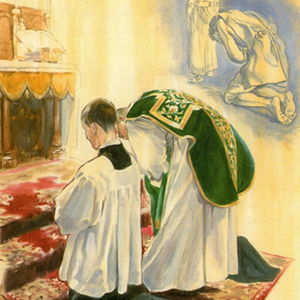
There is a longstanding liturgical tradition that offers, I believe, a rich opportunity to express personal and communal acknowledgment of our sinfulness and need for God’s mercy and forgiveness. For many centuries, before the post-conciliar liturgical changes, the Mass of the Roman Rite included preparatory prayers known as the “Prayers at the Foot of the Altar.” They involved the priest and the altar servers; the servers represented the people and spoke on their behalf. Often, the priest and servers were the only people present at the Mass. Even on Sundays, with greater numbers of the laity present, they were silent; it was still the servers who spoke the prayers on their behalf. With the priest and servers praying antiphonally (in Latin, of course), the prayers consisted of two major groups of prayers: first, Psalm (42) 43 (Introibo ad altare Dei), and second, the Confiteor. Today, in the reformed liturgy, we still have the option of praying a shortened form of the Confiteor as part of the Penitential Rite at Mass; however, the former practice was much more expressive.

At the end of Psalm (42) 43, the priest bowed with a “profound bow” and began the Confiteor. It is a fuller, richer form of the prayer than we use today:

I confess to Almighty God, to blessed Mary ever Virgin, to blessed Michael the Archangel, to blessed John the Baptist, to the holy Apostles Peter and Paul, to all the Saints, and to you, my brothers [et vobis, fratres], that I have sinned exceedingly, in thought, word and deed: through my fault, through my fault, through my most grievous fault. Therefore I beseech blessed Mary ever Virgin, blessed Michael the Archangel, blessed John the Baptist, the holy Apostles Peter and Paul, all the Saints, and you, brothers [et vos, fratres], to pray to the Lord our God for me.

The “brothers” to whom the priest is speaking are the servers (or, at a Solemn High Mass, the Deacon and Subdeacon). When he refers to them (twice), the priest—still bowing—rotates to each server in turn. As soon as the priest finished the Confiteor, the servers immediately prayed, “May Almighty God have mercy upon you, forgive you your sins, and bring you to life everlasting.” The priest then stood upright, and the servers took their turn, bowed profoundly, and prayed the same Confiteor, only this time referring to the priest (et tibi, Pater and et te, Pater) rotating toward him as he had toward them. When the prayer was complete, the priest offered the same prayer that the servers had prayed for him: “May Almighty God have mercy upon you, forgive you your sins, and bring you to life everlasting.”

I have provided this detailed description to apply it, with some modification, to our Mass today. Of course, today, we celebrate the Ordinary Form of the Mass in the vernacular; there is no need to change that. Similarly, in the past, the priest and servers were facing ad orientem. Today the Ordinary Form is usually celebrated versus populum, and this would continue. My suggestion works most powerfully if bishops, presbyters, deacons, and other ministers face the people and vice versa. Finally, the servers will no longer speak for the assembly; the assembly will speak for themselves.

Here’s my suggestion. The Mass begins as customary. The presider then invites the assembly to penitence, as we do now. However, after the invitation, the clergy (any and all bishops, presbyters, and deacons) would bow profoundly toward the altar (representing Christ) and the people (also a sign of Christ’s presence), praying the full, older version of the Confiteor. When the clergy have finished, and while they are still bowing, the whole assembly would pray over them: “May Almighty God have mercy upon you, forgive you your sins, and bring you to life everlasting.” (For anyone concerned about laypersons and deacons offering this prayer, I would simply point out that it was the young altar servers who offered it for centuries!) Then the clergy would stand upright while the assembly bows profoundly and prays the full, older Confiteor in turn, with the priest praying for God’s mercy when they are finished. In today’s world, such an act of mutual confession and plea for God’s mercy would be a powerful and much-needed form of reconciliation.

Conclusion

            I am posting this on a day when a new report has been released that details still more dissatisfaction with organized religion in the United States and a dramatic increase in those who refer to themselves as “nones.” The question people of faith must answer is, “Why do people no longer find religious faith necessary in their lives?” Certain commentators like to blame cultural influences. While this may be accurate to some degree, I believe it is wrong to absolve organized religion from all blame. As church, we no longer capture the imagination of people. St. Augustine wrote of the “attractiveness” of the church and its message; that attractiveness has been lost for  many people. “Church” is identified as corrupt, criminal, irrelevant, and hypocritical.

            What I am suggesting is not a panacea. However, restoring a profound and solemn expression of our sinfulness and need for constant conversion may go a long way in restoring some measure of confidence in a humble Church. Let’s bring back the Confiteor.

The Limits of Choice: Personal Freedom and the Common Good

I was speaking recently with a fellow Catholic who is against mandates concerning vaccinations or masks during this time of COVID-19. The language was interesting. “It’s all about my personal freedom. As Catholics, we have free will and as Americans we have individual rights. I should be able to make my own decisions without anyone else (especially the government) taking that freedom away. It’s my body; it’s my choice.”

It may be hard to believe, but I was speechless. The person I was speaking with is staunchly anti-abortion and anti-choice. He is part of a group that wants to deny Holy Communion to Catholic politicians who are pro-choice regarding abortion. But the very pro-choice position he abhors when discussing abortion is now the exact same argument he is using to justify his anti-vax, anti-mask mandate stance. So, he is anti-choice in one case, pro-choice in another.

How is this in any way coherent? It isn’t.

People who are anti-abortion make the case that “my body, my choice” is an insufficient claim for two reasons. First, they hold that there is more than one body involved: the unborn child as well as the mother. Second, even the claim of “my body, my choice” — disregarding for the moment the presence of the unborn child — is simply not true or absolute. Our experience tells us this readily. We accept without question and without distress that there are certain things that we may not do to our bodies; there are limits to the choices we can make. For example, if we saw a person about to harm themselves in some way, we would do whatever we could to stop them. Some personal choices are even subject to society’s laws: a person may “choose” to murder another person, but no one would say that this would be moral or legal. We readily accept limits on personal freedom. It is not an absolute right. Think of all the other restrictions we accept on our personal freedom: obtaining a driver’s license, for example, or the travel restrictions we endure to ensure the safety of all. Just because our personal freedom suggests we do something (or not do something), thinking adults realize that personal freedom is not an absolute.

How might this fact — that all rights have limits and commensurate responsibilities — affect the abortion debate? How might this fact — that all rights have limits and commensurate responsibilities — affect the vaccination debate?

Do I have a right to refuse to take the vaccine? The answer is not an absolute yes or no, but maybe. Does society have a right to regulate my behavior despite my personal freedom? “My body, my choice” is again insufficient. My personal freedom extends only as far as the personal freedom of others. At some point, the moral choice is to surrender a measure of personal freedom for the common good of all. Consider how we veterans are often greeted: “Thank you for your service!” It is acknowledged that, as a class of people, military personnel put their own personal freedom aside to a degree in order to benefit their comrades and the country. Taking the vaccination, even under a mandate, is less about one’s personal good than it is about the good of others. For people of faith, we need only look to St. Paul, who reminded the Philippians: “Do nothing from selfish ambition or conceit, but in humility regard others as better than yourselves. Let each of you look not to your own interests, but to the interests of others.” (Philippians 2:3-4).

The bottom line is that “my body, my choice” is an inadequate and flawed argument no matter who makes it.

“Rightful liberty is unobstructed action according to our will within limits drawn around by the equal rights of others.”

Thomas Jefferson

Women in Ministries of Lector and Acolyte: Some Background

Pope Francis has responded affirmatively to the recommendations made through the Synod of Bishops that women be admitted to the ministries of Lector and Acolyte. In an Apostolic Letter issued motu proprio titled “Spiritus Domini” [The Spirit of the Lord], published yesterday, 10 January 2021, the pope modified the Code of Canon Law (c. 230.1). Now, all qualified persons may be admitted to those ministries. To put this decision into perspective, several points need to be understood.

  1. Prior to 1972, ministries were seen as the province of the ordained, and “the ordained” in the Latin Church consisted of seven ranks of ordained ministers. This was known as the cursus honorum, the “course of honors” by which a man “rose through the ranks” to the Order of Presbyters. A man became a cleric through a rite known as “first tonsure.” This liturgical rite was not itself an ordination, but it opened the door to subsequent ordinations; it made a man capax — capable — of receiving ordination. The orders themselves were divided into four minor orders and three major orders. The minor orders were porter, lector, exorcist, and acolyte; the major orders were subdeacon, deacon, and presbyter [priest]. This system was in place for many centuries. It is important to recognize that the minor and major orders were, in fact, ordinations.
  2. In 1972, St. Pope Paul VI responded to the recommendations of the bishops of Vatican II (1962-1965) that the sacrament of Holy Orders be streamlined to better meet the needs of the Church. The fact is, the various orders, except for the priesthood, had become little more than liturgical rituals celebrated in the seminaries before a man was eventually ordained a priest. No parish, for example, had the ordained ministry of a porter! Pope Paul, after considerable consultation with the world’s bishops, issued motu proprio the document Ministeria quaedam in 1972. This was tied with an additional document, Ad pascendum, which addressed some aspects of the newly-renewed order of deacons, which Paul implemented in 1967. Ministeria quaedam did a number of things.
  • Tonsure and Subdeacon were suppressed. A man now became a cleric upon ordination as Deacon.
  • The minor orders were also eliminated. At the same time, Pope Paul recognized the practical need for lectors and acolytes in parish life. However, rather than continuing as ordained ministries, he established these two ministries as rightfully lay ministries. So, they were no longer to be conferred through ordination but through installation by the bishop as lay ministries. It is significant to note that that these two installed ministries were open to men alone. This is what Pope Francis has now addressed.
  • Pope Paul further required that those in formation for ordination (to the diaconate and to the presbyterate) were to be installed in the ministries (not ordained) prior to ordination as Deacons. This was practical: these lay ministries offer valuable ministerial experience, and that is why the pope established this norm.

There are several things we need to keep in mind about the action taken by Pope Francis.

First, being installed a lector or acolyte is much more than just “reading at Mass” or “being an altar server.” We already have men and women who do that on a regular basis in our parishes. Being installed by the bishop into these ministries carries additional responsibilities, as outlined in Pope Paul’s Ministeria quaedam. Installed lectors and acolytes are diocesan ministers; one is not installed simply to serve in one parish.

Second, there is an expectation of leadership by these installed ministers. They are to assist in training other ministers of the Word and the Altar. They are to be knowledgeable of all aspects of their ministries and of the sacramental life of the Church. In fact, Pope Paul wrote that the responsibilities formerly assigned to Subdeacons could be assigned to these installed Lectors and Acolytes. [Ed. note: My fingers got away from me in the original post and said that the functions of the Subdeacon could NOT be assigned to installed Lectors and Acolytes; sorry for any confusion.]

Third, why have these lay ministries been experienced largely as liturgical steps required only for those on the road to ordination? The answers are complex, but many bishops did not see an immediate need to install lectors and acolytes formally because pastoral needs were being largely met by the ad hoc lectors and altar servers already serving in most parishes, and which involved both men and women. Many bishops were also reluctant to install lectors and acolytes formally because they could not admit women as well as men. Now, they can.

This is a good move, and one that should be applauded, not feared. It is consistent with what Pope Paul VI began, at the request of the world’s bishops, back in 1972.