 The Extraordinary Jubilee of Mercy focused over the last few days on the ministry of deacons. Today the Holy Father celebrated Mass in Saint Peter’s Square and thousands of the world’s deacons were there. The Holy Father’s homily is a short but powerful lesson in diakonia.
In one sense, Pope Francis picks up where St. John Paul II left off sixteen years ago at the 2000 Jubilee. In his address to deacons during this audience with us, Pope John Paul challenged deacons to be “active apostles of the New Evangelization.” Today Pope Francis began his homily by quoting St. Paul:
“A servant of Jesus Christ” (Gal 1:10). We have listened to these words that the Apostle Paul, writing to the Galatians, uses to describe himself. At the beginning of his Letter, he had presented himself as “an apostle” by the will of the Lord Jesus (cf. Gal1:1). These two terms – apostle and servant – go together. They can never be separated. They are like the two sides of a medal. Those who proclaim Jesus are called to serve, and those who serve proclaim Jesus.
Active apostles, active servants: no better challenge for deacons! Not surprisingly Pope Francis reflects what Pope-emeritus Benedict once referred to as “the great et. . .et” (both-and) as contrasted to “aut. . . aut” (either-or). Pope Benedict was responding to a question from an older priest who had recalled that his seminary spiritual director had once criticized him for preferring playing football over studying, and Pope Benedict rather humorously reassured the priest:
Catholicism. . . has always been considered the religion of the great “et. . . et” [“both-and”]: not of great forms of exclusivism but of synthesis. The exact meaning of “Catholic” is “synthesis”. I would therefore be against having to choose between either playing football or studying Sacred Scripture or Canon Law.

Today, Pope Francis says the same thing about apostles and servants. We are called to be both, not one or the other. His simple simile captures it perfectly: apostle and servant “are like the two sides of a medal.” “A disciple of Jesus cannot take a road other than that of the Master. If he wants to proclaim him, he must imitate him. Like Paul, he must strive to become a servant. In other words, if evangelizing is the mission entrusted at baptism to each Christian, serving is the way that mission is carried out.”
Pope Francis offers three ways deacons can live this great “et. . . et” in our lives:
- Be Available. Most deacons I’ve known over the years readily joke that there’s no such thing as a deacon’s “day off”! Between responsibilities for our families, our various jobs and professions, as well as ministries, most deacons wouldn’t know what a real “day off” feels like, any more than we can take a “sabbatical” from any of those responsibilities. I’m sure that Pope Francis’ words touched many a deacon and his family when he observed:
A servant daily learns detachment from doing everything his own way and living his life as he would. . . . [He] has to give up the idea of being the master of his day. He knows that his time is not his own, but a gift from God which is then offered back to him. Only in this way will it bear fruit. One who serves is not a slave to his own agenda, but ever ready to deal with the unexpected, ever available to his brothers and sisters and ever open to God’s constant surprises.
The pope had some words about trying to keep to a “timetable” for service, too:
One who serves is not worried about the timetable. It deeply troubles me when I see a timetable in a parish: “From such a time to such a time”. And then? There is no open door, no priest, no deacon, no layperson to receive people… This is not good. Don’t worry about the timetable: have the courage to look past the timetable. In this way, dear deacons, if you show that you are available to others, your ministry will not be self-serving, but evangelically fruitful.
2. Be Meek. Using the example of the centurion who pleads with Jesus to save his servant, the pope stresses that even though the centurion was a man in authority, he was also a man under authority. The centurion could have thrown his weight around to get help for his servant, but he did not: he approached the Lord meekly and in acknowledgment of Christ’s authority, power, and mercy. “Meekness,” says Francis, “is one of the virtues of deacons.”
When a deacon is meek, then he is one who serves, who is not trying to “mimic” priests; no, he is meek. . . . For God, who is love, out of love is ever ready to serve us. He is patient, kind and always there for us; he suffers for our mistakes and seeks the way to help us improve. These are the characteristics of Christian service; meek and humble, it imitates God by serving others: by welcoming them with patient love and unflagging sympathy, by making them feel welcome and at home in the ecclesial community, where the greatest are not those who command but those who serve (cf. Lk 22:26). And never shout, never. This, dear deacons, is how your vocation as ministers of charity will mature: in meekness.
3. Be Healed. Finally, Pope Francis turns to the example of the servant whom Christ heals.
The Gospel tells us that he was dear to his master and was sick, without naming his grave illness (v. 2). In a certain sense, we can see ourselves in that servant. Each of us is very dear to God, who loves us, chooses us and calls us to serve. Yet each of us needs first to be healed inwardly. To be ready to serve, we need a healthy heart: a heart healed by God. . . . .
Dear deacons, this is a grace you can implore daily in prayer. You can offer the Lord your work, your little inconveniences, your weariness and your hopes in an authentic prayer that brings your life to the Lord and the Lord to your life. When you serve at the table of the Eucharist, there you will find the presence of Jesus, who gives himself to you so that you can give yourselves to others. . . , to encounter and caress the flesh of the Lord in the poor of our time.
Those final words echo the promise we make at ordination. The bishop asks, “Are you resolved to shape your way of life always according to the example of Christ, whose body and blood you will give to the people?” We respond:”I am, with the help of God.” This Jubilee — this holy season of Mercy — gives us a chance to re-affirm that promise:
“I am, with the help of God!”



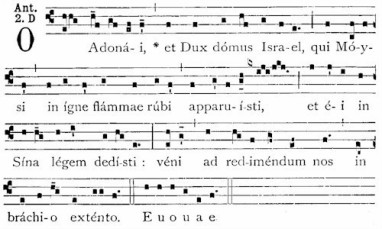 The “O Antiphons” are titles to be associated with the Messiah, the Anointed One; on 18 December, the Messiah is linked to the Lord of Israel who saved Israel. The connection continues through the allusion to Moses, called to lead the people to freedom in God’s name, and to whom God would give the Torah on Sinai. Although in English we tend to interpret “law” in a sense of “rules”, that is not the way it is understood in Hebrew and the Jewish tradition. Torah refers to instruction or teaching. In the covenant relationship with God, these instructions describe the practical nature of how the covenant is to be lived.
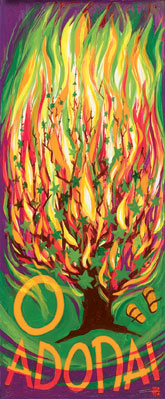 God’s part of the covenant is to rescue us. When Pope Francis promulgated Misericordiae Vultus announcing the Extraordinary Year of Mercy, he chose to evoke this scene of the all-powerful God with Moses: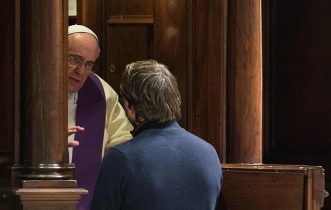
 The Church, the pope reminds his readers, is always open because God is always open to all. “The Church is called to be the house of the Father, with doors always wide open” (#47). In addressing the pastoral consequences of this radical openness, the pope tackles a current issue head on:



 Today in Rome the Vatican’s Commission for Religious Relations with Jews released a new document exploring unresolved theological questions at the heart of Christian-Jewish dialogue. According to Vatican Radio,
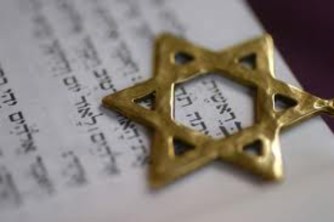 It has been a distinct privilege for me over the years to serve as a Hebrew linguist in a variety of contexts, and five years ago I was asked by the Center for Catholic-Jewish Studies to give a very brief reflection on “The Significance of Nostra Aetate” on the occasion of the 45th anniversary of its promulgation by the Second Vatican Council. So what I am about to write should not be read in any way as a criticism of the great efforts that have been made over the past fifty years to celebrate the relationship of Jews and Catholics! And, as the new document released today underscores, so much more remains to be done in this regard, and I fully embrace that effort.
 Let’s take a closer look at the document itself. Much has been written about the genesis of the document, so there is no need to rehearse all of that here. Suffice it to say that Nostra Aetate, in the final analysis, is not the work of one person, as influential as so many individuals were in its inception and development: John XXIII himself, Jules Isaac, Augustin Bea, to name just a few.
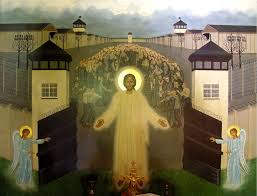 The reason that Pope John called the Council in the first place was so that all the bishops from around the world could together tackle the very real life and death issues that were affecting all people, not just Catholics. This was not some simple superficial ceremonial event; it was, in fact, an attempt to make faith in God something transformative so that the world would never again find itself in the midst of the tragedies of the first half of the 20th century. It is in this light, then, that the significance of Nostra Aetate must be seen.
 So far, then, the Council is focused on all people. Now, in paragraph #2 the bishops turn to people who have found “a certain perception of that hidden power which hovers over the course of things and over the events of human history; at times some indeed have come to the recognition of a Supreme Being, or even of a Father. This perception and recognition penetrates their lives with a profound religious sense.” These comments apply to a wide variety of religious expression, from various Eastern forms to Native American and on and on. Then they turn specifically to certain Eastern religions:
 Buddhism, in its various forms, realizes the radical insufficiency of this changeable world; it teaches a way by which people, in a devout and confident spirit, may be able either to acquire the state of perfect liberation, or attain, by their own efforts or through higher help, supreme illumination.
 Paragraph #3 specifically addresses Islam:
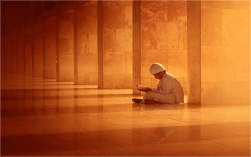 And in language made even more poignant over the last generation, the bishops write:


 The Extraordinary Jubilee of Mercy, proclaimed by Pope Francis today in Rome, actually began fifty years ago with the solemn closing of the Second Vatican Council on 8 December 1965. When dealing with the Catholic Church it is always good to step back and take a long view on what is going on, and today’s events in Rome are no exception. Let’s connect some dots.
 The Church’s teaching about Mary was originally crafted as a separate document by the curia before the Council began. However, the world’s bishops rejected this arrangement, rightly including Mary at the heart and climax of its dogmatic Constitution on the Church, Lumen gentium. Mary, our sister and our mother, the first disciple of the Christ, is held up to all as the model of Christian discipleship. Fifty years ago, therefore, standing on the same spot where Pope Francis stood earlier this morning, Pope Paul VI ended his homily with the following observation:
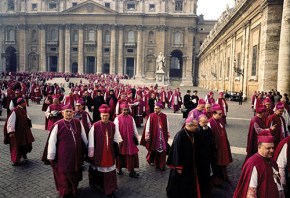 Vatican II is a gift that keeps on giving. The great historian of the Church, Hubert Jedin, once observed that it takes at least a century to implement the teachings and decisions of a general Council. If he is correct, and I believe he is, we have only now just reached the fifty yard line as we say in American football. For all the progress made, much more remains to be done. Let’s take a closer look at those closing ceremonies to the Council, because there are some significant elements there that point the way to what happened earlier today.
 Another point we must stress is this: all this rich teaching is channeled in one direction, the service of mankind, of every condition, in every weakness and need. The Church has, so to say, declared herself the servant of humanity, at the very time when her teaching role and her pastoral government have, by reason of the council’s solemnity, assumed greater splendor and vigor: the idea of service has been central.
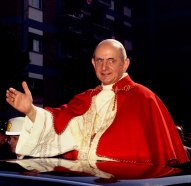 Pope Paul digs deeper, using the image of a bell:
 Finally, at the end of the Mass closing the Council, a remarkable thing happened. Most people today are unaware that it even took place, and that is a real tragedy, for it sheds a light on the whole proceedings, and points the way to our contemporary Jubilee. A series of messages from the Council Fathers was read to the world. The bishops of the Council prepared these messages because they wanted the world to realize that the Council had not been simply an exercise of ecclesiastical navel-gazing; rather, the work of the Council was focused outward, to the very real needs of the people and the world. In the introduction to the messages, the bishops write:
 Today, here in Rome and in all the dioceses of the world, as we pass through the Holy Door, we also want to remember another door, which fifty years ago the Fathers of the Second Vatican Council opened to the world. This anniversary cannot be remembered only for the legacy of the Council’s documents, which testify to a great advance in faith. Before all else the Council was an encounter. A genuine encounter between the Church and the men and women of our time. An encounter marked by the power of the Spirit, who impelled the Church to emerge from the shoals which for years had kept her self-enclosed so as to set out once again, with enthusiasm, on her missionary journey. . . Wherever there are people, the Church is called to reach out to them and to bring the joy of the Gospel, ,and the mercy and forgiveness of God. After these decades, we again take up this missionary drive with the same power and enthusiasm. The Jubilee challenges us to this openness, and demands that we not neglect the spirit which emerged from Vatican II, the spirit of the Samaritan, as Blessed Paul VI expressed it at the conclusion of the Council. May our passing through the Holy Door today commit us to making our own the mercy of the Good Samaritan.
 Deacons Today: Servants in a Servant Church