Over the last several weeks, deacons and others have been wrestling with the notion of deacons assisting at the various live-streamed Masses going on around the country. Two major questions have emerged:
- Should deacons be assisting at all at these Masses?
- If deacons are present at Mass, should they abstain from receiving Holy Communion?

First, should deacons (or, really, ANY other ministers besides the priest) be assisting at a live-streamed Mass?
I would begin with a caveat. It depends! There may be logistical or other factors which would make the assistance by a deacon problematic. For example, if a sanctuary is so small (such as a private chapel in the rectory) that the deacon cannot remain some feet away from the priest, then perhaps he should forego assisting.
However, in general, it seems to me that whenever possible, the deacon should be present and assist at Mass. The liturgical witness of the deacon’s ministry at the Eucharist is important and a vital sign of the diaconal identity of the Church. As one of the bishops said at the Second Vatican Council, “The Church has a right to all of the graces given to her by God, and the diaconate is one of those graces.”
On a practical level, of course, the priest and deacon should be sure to discuss in advance the specifics of their liturgical “choreography.” As most of us realize, our normal positions vis-a-vis the presider can easily be adapted keeping “social distancing” in mind. Sure, we will temporarily be a bit closer when we hand the gifts to Father, but we can immediately return to a safer distance. On a personal level, I assisted and preached at last Sunday’s live streamed Mass from our parish, and Father and I were able to maintain a safe distance from each other while still carrying out our respective ministries. Given the layout of our sanctuary, it took very little adaptation to make it work.
Second, if deacons are present, what about Holy Communion? Should deacons abstain from receiving Holy Communion; in fact, CAN the deacon abstain?
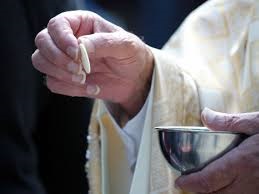
Looking at these questions from a technical perspective, it is possible for the deacon to abstain from receiving Holy Communion. The only minister who MUST receive Communion is the priest-presider, since it is he who is offering the sacrifice in persona Christi — and the sacrifice must be consumed. This, however, is a minimalist approach to the Eucharist. For many years, many people did not receive Communion at every Mass for a variety of reasons. It was Pope Pius X who encouraged a greater reception of Communion by the people; this effort continued and was emphasized at the Second Vatican Council, so that now nearly everyone receives Communion at every Mass they attend.
But what about the Deacon, especially in today’s situation? I think we would all agree that it is best if the assisting deacon were to receive Holy Communion. This is true on many levels, including the sign value of seeing the deacon receive. Now, how might that be done safely today? It seems to me that one legitimate option would be for both priest and deacon to receive by means of intinction, with the deacon then consuming the remaining Precious Blood and purifying the sacred vessels. I realize that other deacons and priests are using the more traditional (at least in the Latin Church) approach, but intinction seems to offer the safest method, in my opinion.
I used the expression “sign value” above, and I think that’s an important consideration. Our sacraments are public; they are, as the Baltimore Catechism used to have it: “outward signs instituted by Christ to give grace.” Part of the outward sign of the Eucharist is the ministry of the ordained, which should be exercised in as complete and fulsome way as possible.
So, if at all possible, “it is good for us to be here” at the side of our priest-brother for the Eucharist, even while we remember to stay at a safe distance. And, if we’re there, we should receive Holy Communion, using the safest means available.
Just one deacon’s opinion.







 A friend wrote recently, “What a Lent this has been!” The Coronavirus pandemic is affecting life — and death — worldwide, and in ways few could have imagined a few short months ago. Those suffering from the virus are quarantined at home and in hospitals, with others “in an abundance of caution” are quarantining themselves at home. As I write this, several cities have effectually shut down, with all of us being asked to remain at home except for essentials like food and medicine. A new term, “social distancing” has found its way into our lexicon.
 declared the sacraments of initiation which would normally be celebrated during the Easter Vigil will now be postponed until Pentecost. For those of us in ministry, clergy and laity alike, all of this goes against every fiber of our being. This is just not the way things are supposed to be! And yet, here we are. “What a Lent this has been!”
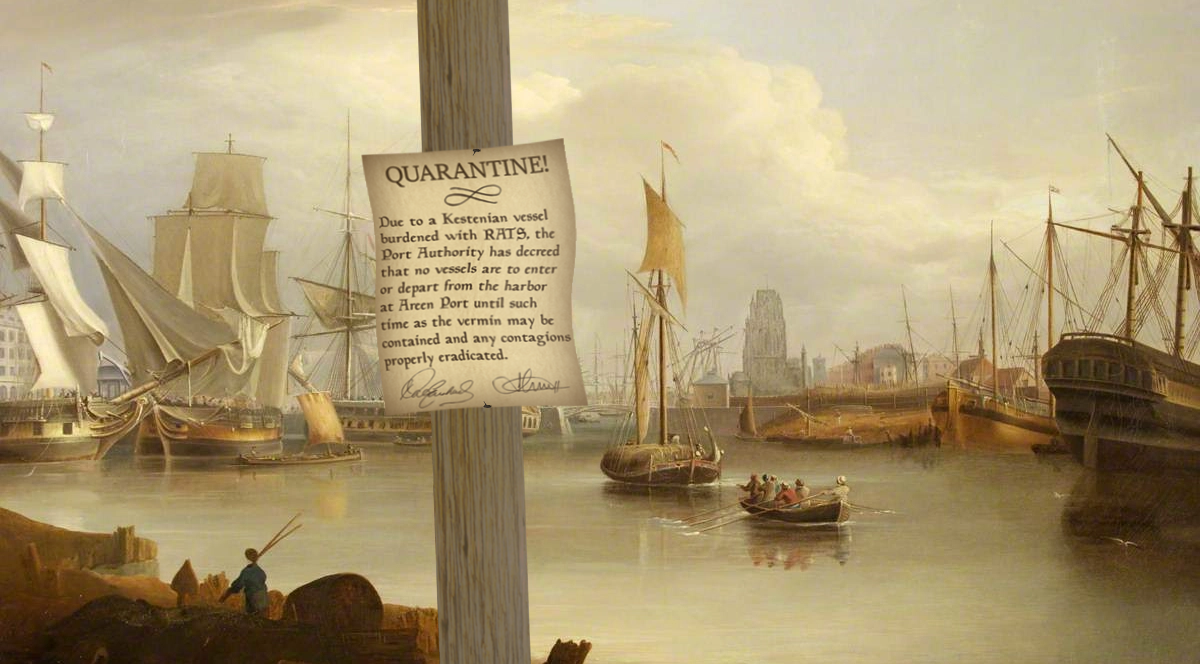 Lent but also with something completely different. Ships arriving from foreign ports to ports such as Venice would be forced to remain offshore for forty days to make sure they were not carriers of plague or other illnesses. Only later did “quarantine” come to mean any period of enforced isolation. It’s original meaning revolved around those forty days.
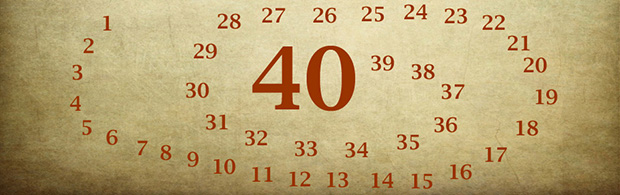 the forty days Jesus spent in the desert before beginning his public ministry. In every case, the people involved were not merely times of penitence and testing. There was more to it than that: there was always a significant new mission or relationship at the end of the forty days: the Israelites entered in the Promised Land; after the Flood, God enters into a new covenant with Noah and his descendants; and, after his temptations, Christ begins his public ministry. Our forty days of Lent lead us to the new life given to us at Easter, a new life that is intended to be lived out in a new way in our relationships and caring for each other.
 It is here that perhaps our current reality can piece all of this together. Lent is, in truth, a quarantine. It is a period of forty days in which we forsake our normal ways of doing things in order to prepare for the new life of Easter. We endure isolation and discomfort during this quarantine, not simply for the good of our physical health but our spiritual as well. This quarantine, we hope, gives us a chance to eliminate the disease of sin in our lives, and to help us grow stronger and ready to meet the demands of living as the “priests, prophets and kings” our baptisms have called us to be. We have been immersed into the life of the Trinity, which means we too must live as the Trinity lives: by giving life to others and providing for them (God the Father), by pouring out our own lives for others (God the Son), and for advocating for and enflaming others with the love of God (God the Spirit). That’s quite a task, and it demands that we be in good shape to carry it out! That’s the purpose of Lent; that’s the purpose of our spiritual quarantine: to rid us of the disease of sin and grow in spiritual health.
 Deacons Today: Servants in a Servant Church